

Pakistan capital body defends decision to cut down trees for India war monument
Capital Development Authority tells Islamabad High Court it removed only allergenic paper mulberry trees under scientific guidance

Huzaifa Rathore
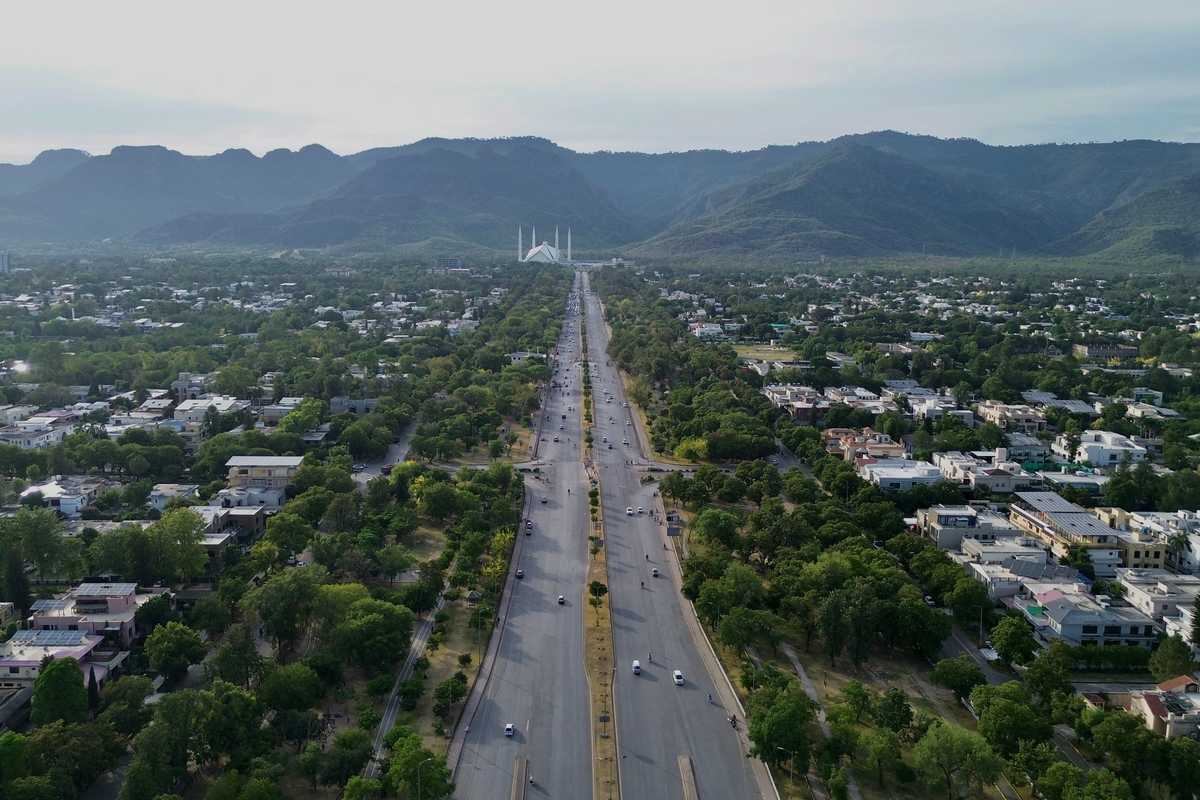
Pakistan’s capital city authority has defended its controversial tree removal campaign before a high court, rejecting claims of illegal deforestation as judges consider a petition challenging the legality of cutting trees near a proposed national monument site.
The petition questions the removal of trees along Islamabad Highway, including near the planned Marka-e-Haq Monument, alleging environmental damage and violations of procedure.
“Marka-e-Haq,” or “battle for truth,” is the term Pakistani authorities use to describe a military operation against India.
‘Campaign targeted only paper mulberry trees’
In a detailed response submitted to the Islamabad High Court, the Capital Development Authority — the government body responsible for managing and developing Pakistan’s capital — said the campaign targeted only paper mulberry trees, which it described as invasive, non-native and a major cause of seasonal allergies.
The authority sought dismissal of the writ petition, saying allegations of “mass deforestation” were false and misleading.
The legal challenge was filed by Chaudhary Mubashir Qayyum under Writ Petition No. 183/2026, after residents and environmental activists accused authorities of clearing large areas of forest land across Islamabad under the pretext of removing paper mulberry trees.
The CDA rejected those claims, saying only allergenic paper mulberry trees were removed as part of a public health initiative.
According to the authority, the issue dates back to 2022, when the Islamabad High Court took notice of rising pollen allergy cases in the capital and ordered the formation of a multi-stakeholder environmental committee.
The committee included representatives from the CDA, Pakistan’s Environmental Protection Agency and other relevant institutions.
After scientific assessments and expert consultations, the committee concluded in 2023 that paper mulberry trees were a major contributor to Islamabad’s seasonal pollen crisis, the CDA said.
A public hearing was also held, including at F-9 Park, a major public park in Islamabad, to explain why removing paper mulberry trees was being considered necessary to reduce respiratory illnesses, asthma attacks and allergy-related hospital visits.
The authority said its actions were based on scientific research linking high pollen concentrations to increased respiratory health risks in the capital.
Project approvals and health data cited in court
The issue gained further attention in 2024 after a newspaper column by senior journalist Saleem Safi highlighted the severity of pollen allergies in Islamabad.
Following the column, the Prime Minister’s Office took notice and directed coordinated action by relevant authorities, the CDA said in its court submission.
The authority emphasized that the decision followed superior court directives, scientific research, stakeholder consultations and formal approval from the Prime Minister’s Office.
Addressing concerns raised in the petition, the CDA told the court that only paper mulberry trees were removed.
It said trees at the Marka-e-Haq Monument site, including those from Shakarparian, a protected hill area overlooking Islamabad, were transplanted to other locations where possible.
The authority said land for the monument project had been handed over to the Planning Ministry before construction began and that the design includes eco-friendly landscaping.
It also argued that no separate environmental approval was required because the Environmental Protection Agency was part of the oversight committee formed under court orders.
On replantation, the CDA said its policy requires planting multiple indigenous trees for each paper mulberry removed and that photographic evidence of plantation and transplantation was submitted to the court.
The authority also cited allergy testing data from 2023 to 2025, which it said shows a decline in pollen-related cases, attributing the trend to the gradual removal of paper mulberry trees.
In its legal arguments, the CDA said fundamental rights under Pakistan’s 1973 Constitution are subject to reasonable restrictions imposed in the public interest, particularly to protect public health.
The Islamabad High Court will now review the submissions to determine whether the petition should proceed or be dismissed.





Comments
See what people are discussing