

Pakistan textile exporters warn India-EU trade deal threatens EU market share
Industry group says tariff-free access for India could erode $9 billion exports

Business Desk
The Business Desk tracks economic trends, market movements, and business developments, offering analysis of both local and global financial news.
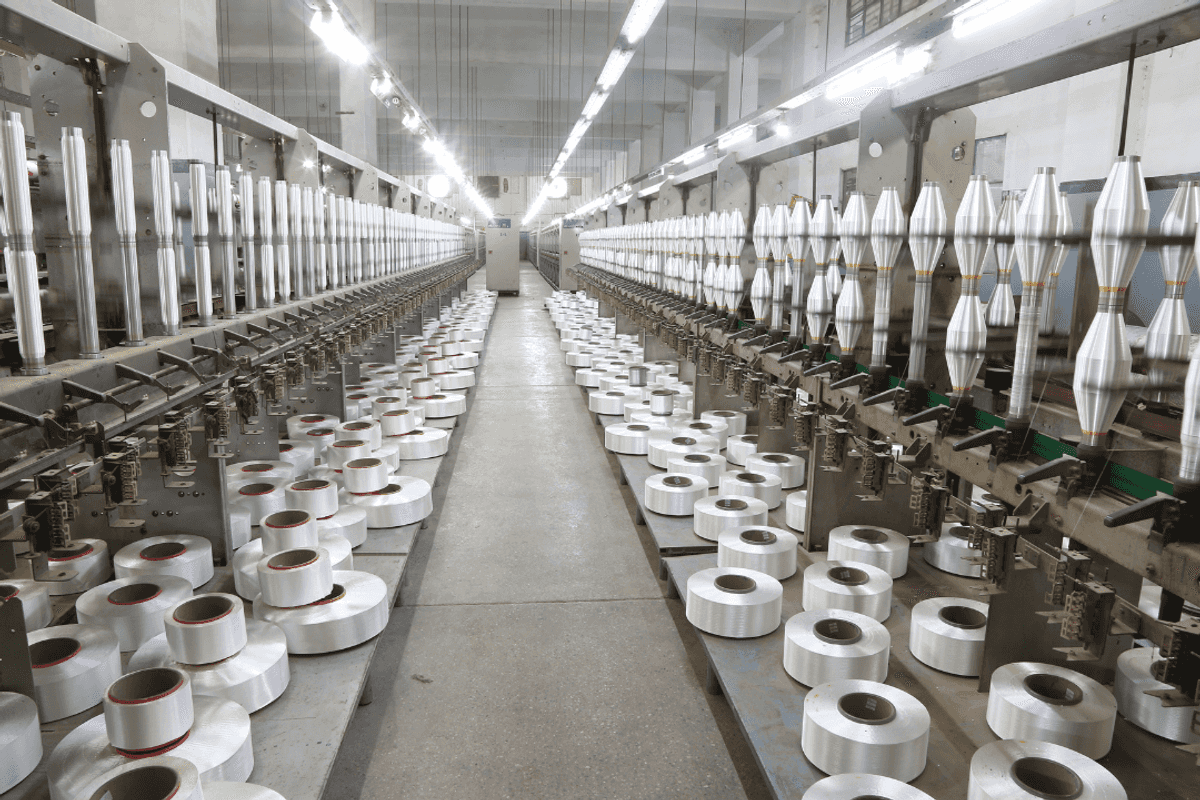
The chairman of the Pakistan Textile Council has warned that a recently concluded free trade agreement between India and the European Union could seriously undermine Pakistan’s competitiveness in the EU market, posing what he described as an existential threat to the country’s export-oriented textile and apparel sector.
Fawad Anwar said Pakistan exports about $9 billion worth of goods to the European Union, nearly 65% of which consists of value-added textile and apparel products. He said Pakistan’s competitive edge over India in the EU market was already narrow and largely driven by preferential access rather than structural advantages.
“Even before the India-EU FTA, Pakistan’s edge over India in the EU market was extremely thin and preference-driven,” Anwar said. “That narrow margin is now at serious risk.”
Trade data shows Pakistan’s textile and apparel exports to the EU stood at $6.2 billion in 2024, only slightly higher than India’s $5.6 billion. Anwar said the gap existed mainly because Pakistan benefited from duty-free access under the EU’s GSP Plus scheme, while Indian apparel exports faced tariffs of up to 12%.
“With the India-EU FTA granting zero-duty access to Indian garments across all tariff lines, that advantage has effectively disappeared,” he said. He added that Pakistan’s GSP Plus status is also under close review, raising the risk of stricter conditions or possible withdrawal.
“The combination of these two developments places Pakistan’s EU exports in a highly vulnerable position,” Anwar said.
He said India is now well positioned to expand its market share in the EU, supported not only by tariff elimination but also by lower energy costs, more competitive wages, government support for man-made fibers and aggressive industrial incentive schemes.
By contrast, Anwar said Pakistan’s exporters face uncompetitive energy tariffs, rising minimum wages that are not aligned with productivity and a heavy and complex tax burden.
He warned that without swift corrective measures, Pakistan could lose hard-won market share in value-added segments such as knitwear, woven apparel and made-ups, which are key sources of industrial employment and foreign exchange earnings.
“This is no longer a future risk, it is a present danger,” Anwar said. “If critical cost-of-doing-business issues are not urgently resolved, Pakistan’s $9 billion export relationship with the EU could erode rapidly, with severe consequences for jobs, investment and external account stability.”
He urged the government to cut taxes on export-oriented manufacturing, review wage policies to better reflect productivity, bring industrial energy tariffs closer to regional benchmarks and adopt what he described as an export emergency approach focused on retaining EU market share.
“Preferential access alone cannot sustain exports,” Anwar said. “Without decisive domestic reforms, Pakistan will struggle to compete in a post-FTA EU market where efficiency, scale and cost competitiveness — not sympathy — will determine sourcing decisions.”



Comments
See what people are discussing