

Pakistan’s ports paralyzed as countrywide transporters’ strike threatens economy
Pakistan’s $92M daily exports, including $52M from textiles, face serious disruption.

Haris Zamir
Business Editor
Experience of almost 33 years where started the journey of financial journalism from Business Recorder in 1992. From 2006 onwards attached with Television Media worked at Sun Tv, Dawn Tv, Geo Tv and Dunya Tv. During the period also worked as a stringer for Bloomberg for seven years and Dow Jones for five years. Also wrote articles for several highly acclaimed periodicals like the Newsline, Pakistan Gulf Economist and Money Matters (The News publications)
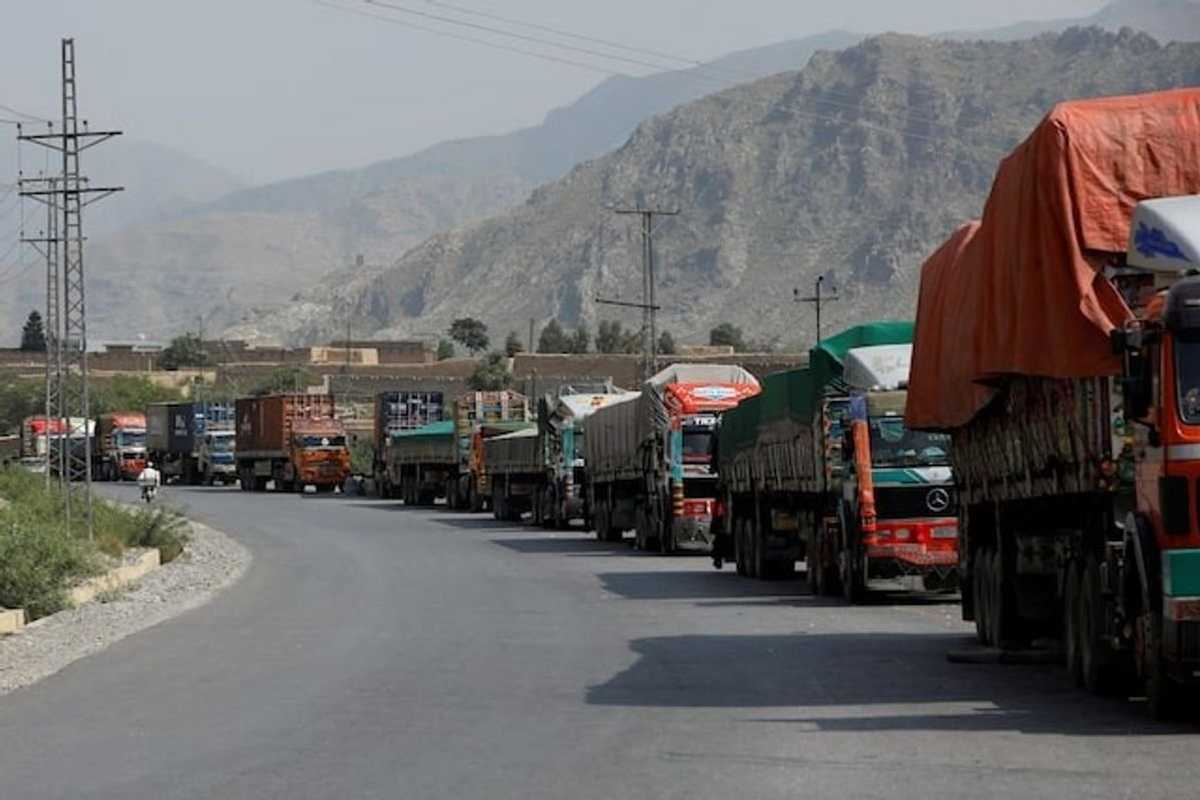
The transporters are protesting the new rules announced by the provincial governments of Punjab and Sindh.
Reuters/File
Pakistan’s major container terminals, which collectively handle more than 6,300 twenty-foot equivalent units (TEUs) of import and export cargo daily, have come to a standstill due to a nationwide transporters’ strike, pushing national trade toward paralysis and causing what business leaders describe as severe and potentially irreparable economic damage.
Muhammad Jawed Bilwani, patron-in-chief and former chairman of the Pakistan Hosiery Manufacturers & Exporters Association and former president of the Karachi Chamber of Commerce & Industry, described the halt in port and transport operations as “economic sabotage.” He warned that exports and imports are on the brink of collapse as the country’s entire supply chain remains disrupted.
Bilwani said exporters are facing massive financial losses and a sharp depletion of foreign exchange due to the unavailability of transport and containers for shipments to global markets. With each passing day, exporters are forced to consider costly and risky air freight to meet delivery deadlines.
He emphasized that continued government inaction could cause irreversible damage, noting that port operations have ground to a halt, leaving thousands of import and export containers stranded at terminals, while hundreds of containers already loaded on vessels remain at sea awaiting berthing space.
Economic impact on exports and industry
Pakistan’s average daily exports are valued at $92 million, totaling about $2.85 billion per month, all now at serious risk. The textile sector alone contributes $52 million daily, or roughly $1.62 billion monthly, making it particularly vulnerable to prolonged disruption.
Bilwani highlighted that the supply chain breakdown has severely affected manufacturing and agriculture by interrupting the movement of raw materials and finished goods. Export-oriented factories face halted production, missed vessel departures, mounting demurrage and detention charges, increased reliance on expensive air freight, and potential cancellations of confirmed export orders.
He appealed to Prime Minister Shehbaz Sharif for immediate intervention, warning that Pakistan’s logistics and transport system has “virtually come to a standstill,” adding further stress to an already fragile economy.
Ports and container terminals halted
Operations have ceased at all major ports, including South Asia Pakistan Terminal (SAPT), Qasim International Container Terminal (QICT), Pakistan International Container Terminal (PICT), and Karachi Gateway Terminal Limited (KGTL). Bilwani cited figures showing the daily TEU capacities of these ports and warned that vessels are increasingly leaving without export containers, compounding difficulties for exporters.
Even after normal operations resume, clearing the cargo backlog could take several months. Prolonged shipment delays risk missed deadlines, canceled orders, and the permanent loss of international buyers, undermining Pakistan’s credibility as a reliable trading partner when foreign exchange earnings are critical.
Impact on imports and agriculture
Stalled container movement has also choked supply chains on the import side, delayed production, and plunged industries into operational chaos. Bilwani questioned who would bear the escalating demurrage and detention charges imposed by port authorities and foreign shipping lines, noting that payments in U.S. dollars would further strain Pakistan’s foreign reserves.
Agriculture is particularly affected, with fruit and vegetable exports reliant on refrigerated containers perishing due to delays. Consignments are being rejected abroad, causing heavy losses and long-term damage to Pakistan’s reputation and potentially threatening food security.
Call for government intervention
Bilwani expressed alarm at what he described as a lack of serious response from federal and provincial authorities. He warned that poor coordination and delayed decision-making are pushing businesses toward collapse, layoffs, and long-term harm to the formal economy.
He urged the prime minister to immediately convene transporters and stakeholders, seek relief from unjustified demurrage and detention charges, and ensure swift clearance of the mounting cargo backlog, warning that failure to act promptly would amount to “nothing less than complete economic sabotage.”





Comments
See what people are discussing