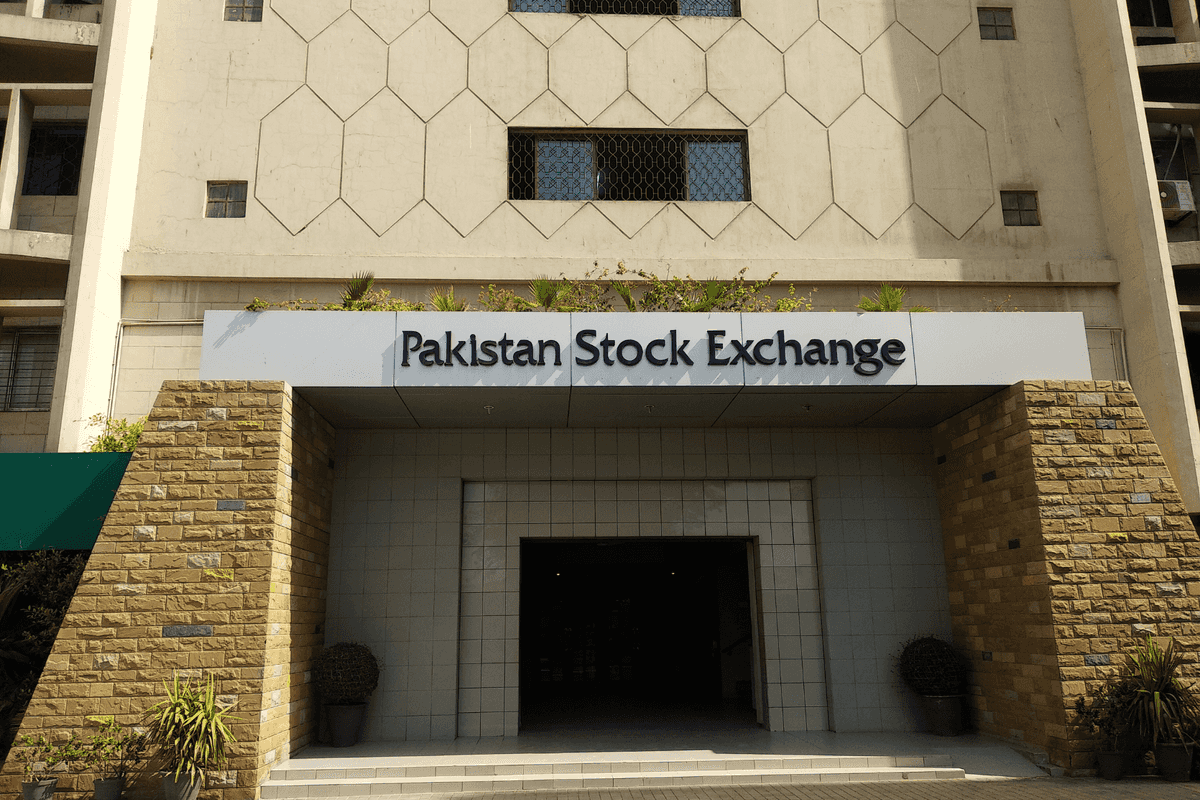
Pakistan’s benchmark KSE-100 Index posted a strong gain in January, rising more than 10,000 points over the month as improving liquidity, steady corporate earnings announcements and easing inflation underpinned investor confidence despite the absence of an expected policy rate cut.
The index climbed 10,120 points month-on-month to close above 184,174, delivering returns of 5.8% in rupee terms and 5.9% in dollar terms.
Analysts said sentiment remained broadly constructive even as markets navigated intermittent geopolitical concerns and mixed earnings results.
Inflation data added to the positive backdrop. Consumer prices rose 5.6% year-on-year in December 2025, down from 6.1% in November.
Average inflation for calendar year 2025 stood at 3.5%, the lowest in a decade, supported by favorable base effects, softer food prices and lower petroleum costs, keeping headline inflation at multi-year lows.
On the external front, Pakistan recorded a current account deficit of $244 million in December, reversing recent monthly surpluses. For the first half of fiscal year 2026, the current account swung to a deficit of $1.17 billion, compared with a surplus of $957 million in the same period last year.
Economic activity indicators showed signs of recovery.
Large-scale manufacturing output rose 10.4% year-on-year in November 2025, with a modest 0.2% increase from the previous month. Worker remittances climbed to $3.6 billion in December, up 17% from a year earlier, while inflows during the first half of FY26 reached $19.7 billion, an 11% annual increase.
The banking sector continued to expand, with deposits rising 23.6% year-on-year to 37.4 trillion rupees by December, compared with 30.3 trillion rupees a year earlier. Bank investments also increased sharply, up 30.1% year-on-year to 37.9 trillion rupees.
Trading activity on the Pakistan Stock Exchange accelerated during the month.
Average daily volumes rose 23% to 1.09 billion shares, while average traded value jumped 43% to $224 million. Power, technology, banking, food and investment banking stocks led volumes, while banking, exploration and production, power, cement and fertilizer stocks dominated by value.
On a stock-specific basis, Karachi Electric, Hascol Petroleum and Bank of Punjab were among the most actively traded by volume, while Fauji Fertilizer, Pakistan Petroleum and Oil and Gas Development Co. led turnover by value.
Banks made the largest positive contribution to the index in January, adding more than 5,000 points, followed by the energy and investment banking sectors. Auto assemblers also supported gains. Technology, miscellaneous and food sectors weighed modestly on the index.
Among individual stocks, United Bank, Pakistan Petroleum, Oil and Gas Development Co., Engro Holdings and Meezan Bank were the biggest positive contributors, while Systems Ltd., Pak Suzuki, Pioneer Cement and D.G. Khan Cement were among the laggards.
Sector performance remained mixed during the month.
Insurance, auto parts, refineries, auto assemblers and exploration and production companies recorded double-digit gains during the month, while textile spinning, synthetic textiles and weaving stocks underperformed.
Foreign portfolio investors remained net sellers on the domestic exchange, offloading $66.5 million worth of equities in January, with the bulk of outflows from banking, food and cement stocks. Modest foreign buying was seen in exploration and production shares. In contrast, local funds, companies and individual investors were net buyers, offsetting foreign selling pressure.
Regionally, foreign investors were net buyers across Asia-Pacific markets, led by Taiwan, South Korea and Malaysia, reflecting a broader improvement in risk appetite during the month.







Comments
See what people are discussing