

As UAE shows interest, what's the true size of listed Fauji group companies?
The Fauji Foundation group is one of the country’s largest business conglomerates

Haris Zamir
Business Editor
Experience of almost 33 years where started the journey of financial journalism from Business Recorder in 1992. From 2006 onwards attached with Television Media worked at Sun Tv, Dawn Tv, Geo Tv and Dunya Tv. During the period also worked as a stringer for Bloomberg for seven years and Dow Jones for five years. Also wrote articles for several highly acclaimed periodicals like the Newsline, Pakistan Gulf Economist and Money Matters (The News publications)
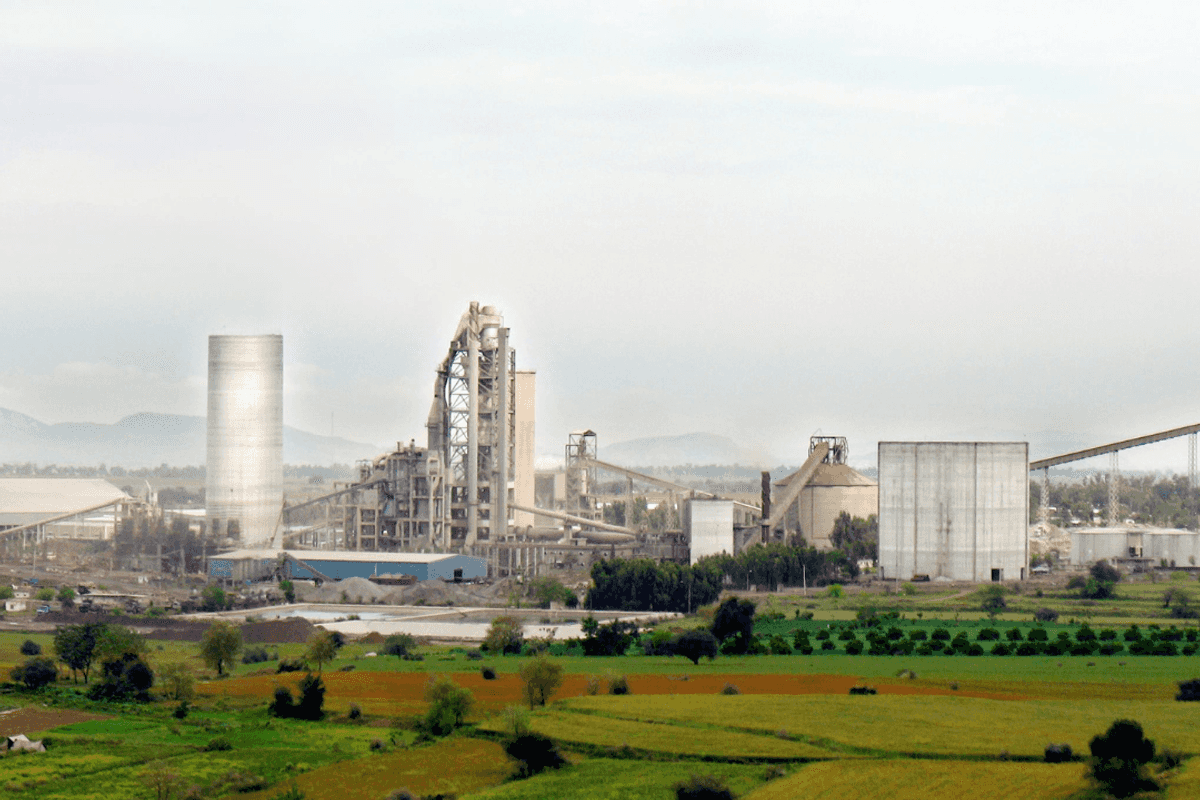
A Fauji Cement plant in Pakistan
Fauji Cement Facebook
Pakistan’s decision to convert a $1 billion deposit from the United Arab Emirates into equity stakes in the Fauji Foundation Group is drawing fresh attention to the size and strategic importance of one of the country’s largest business conglomerates, whose listed companies together command a market capitalization of more than $3.3 billion.
Data compiled by brokerage house Al Habib Capital Markets shows that seven Fauji Group companies listed on the Pakistan Stock Exchange have a combined market capitalization of about $3.312 billion. Shares of Fauji Fertilizer Company and Mari Energies account for the bulk of that value, together totaling roughly $2.3 billion.
Fauji Fertilizer Company is the group’s largest listed entity, with a market capitalization of about $1.285 billion, or nearly PKR 362 billion. Mari Energies follows closely at about $1.198 billion. Fauji Cement is valued at roughly $327 million, while Askari Bank has a market capitalization of about $325 million. Other listed companies include Fauji Foods, Fauji Fertilizer Bin Qasim’s AgriTech segment and Hub Power Company.
The valuation details come as Pakistan and the UAE finalize a landmark agreement to convert a $1 billion UAE deposit into equity stakes in the Fauji Foundation Group, a diversified conglomerate with interests spanning fertilizers, energy, food and banking. The transaction is expected to be completed by March 31, 2026.
Under the deal, Pakistan will remove a short-term external liability from its balance sheet and replace it with long-term equity investment, a move officials say will ease pressure on foreign exchange reserves and the balance of payments.
In parallel, Pakistan has secured assurances from the UAE for the rollover of an additional $2 billion loan maturing in 2026, providing medium-term financial relief.
'Smart maneuver'
“This is a smart balance-sheet maneuver,” said an Islamabad-based macroeconomic analyst. “Turning debt into equity lowers repayment pressure while bringing in patient capital at a time when Pakistan’s access to global markets is constrained.”
Beyond its listed firms, the Fauji Group has extensive investments in subsidiaries and associates. As of 2024, it holds 100% ownership in companies including FFC Energy, Fauji Fresh and Freeze, Foundation Wind Energy I and Olive Technical Services. The group owns 75% of FFBL Power Company, about 80% of Foundation Wind Energy II, around 30% of Thar Energy Ltd., and a 38% stake in Pakistan Maroc Phosphore, a joint venture with Morocco.
For the UAE, analysts say the transaction marks a strategic shift from short-term sovereign lending to long-term asset ownership in a key regional partner. The equity stakes provide exposure to established, cash-generating businesses central to Pakistan’s economy, particularly in energy and food security.
“This aligns with the UAE’s broader sovereign investment strategy,” said a Gulf-based investment strategist. “Instead of holding deposits, they are converting financial claims into tangible assets with recurring revenue and strategic importance.”
Market participants expect the UAE’s involvement to have broader implications for Pakistan’s capital markets. Fauji Group companies are widely regarded as sector leaders, and the entry of a sovereign investor is seen as a potential boost to governance standards and investor confidence.
“The presence of a high-profile sovereign investor can be a game-changer,” said a Karachi-based equity analyst. “It can de-risk these companies, support a valuation re-rating and create positive spillovers for the wider market.”
Pakistan has long grappled with persistent trade deficits, heavy external debt and reliance on short-term financing. While analysts caution that the UAE deal alone will not resolve these structural challenges, they say it signals a gradual shift toward more sustainable financing models.
“If this approach is replicated with other partners, it could meaningfully reduce Pakistan’s vulnerability to external shocks,” the analyst said. “It’s a modest step, but an important one.”


Comments
See what people are discussing