

How would a US-Iran war affect Pakistan economically?
Analysts warn of inflation, currency pressure and equity losses if Brent surges toward $90

Haris Zamir
Business Editor
Experience of almost 33 years where started the journey of financial journalism from Business Recorder in 1992. From 2006 onwards attached with Television Media worked at Sun Tv, Dawn Tv, Geo Tv and Dunya Tv. During the period also worked as a stringer for Bloomberg for seven years and Dow Jones for five years. Also wrote articles for several highly acclaimed periodicals like the Newsline, Pakistan Gulf Economist and Money Matters (The News publications)
Shutterstock
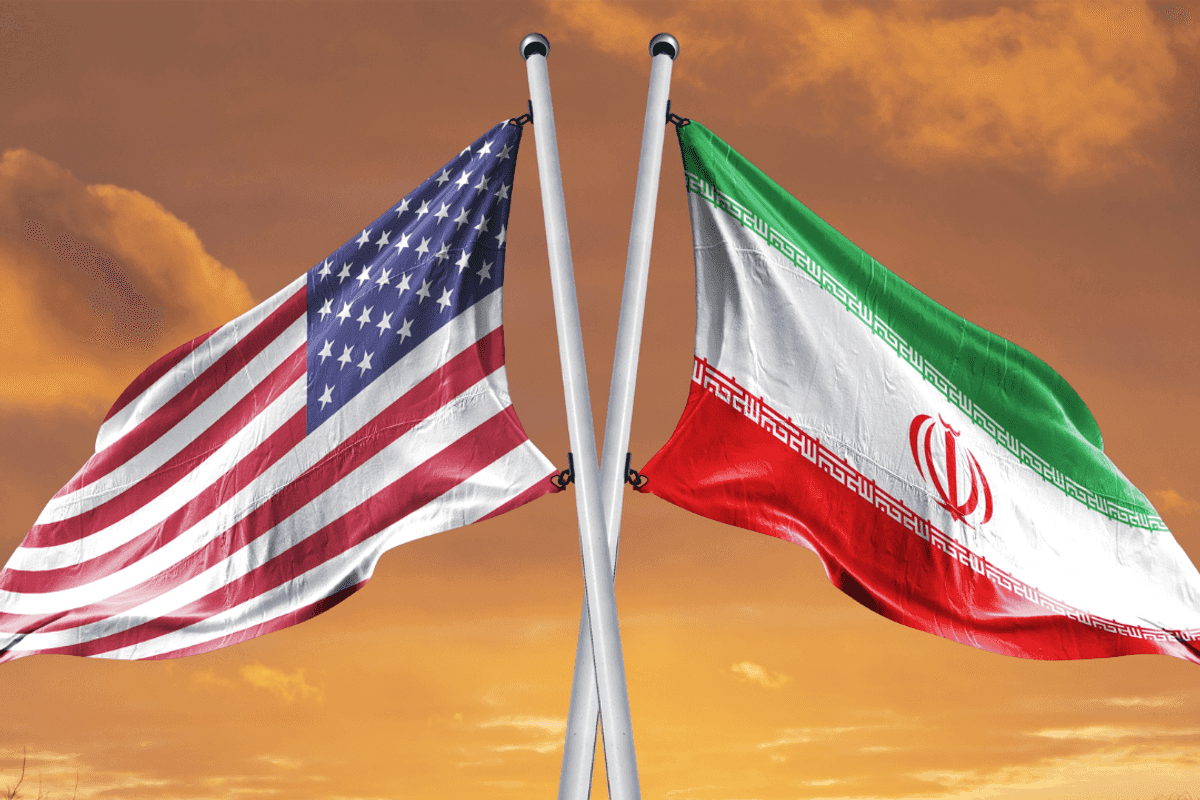
Pakistan remains a structurally import-driven economy, heavily reliant on remittances and exports to finance its sizeable import bill. Any prolonged geopolitical conflict between the United States and Iran — particularly if it drags on for weeks — could create significant economic tremors for Pakistan through higher oil prices, inflationary pressure, currency volatility and stress on financial markets.
Nukta spoke to leading analysts and economists to assess the potential fallout.
Oil seen as decisive risk
Analysts broadly agree that oil prices represent the most immediate vulnerability.
A.A.H. Soomro, independent economist, warned: “There is a high risk of oil prices going above $90 per barrel, potentially increasing Pakistan’s import bill by $5 billion per year. Inflation could rise beyond 12-15%, the rupee could come under pressure below PKR 300, and we may see 2-3% interest rate hikes.”
Pakistan imports the majority of its energy needs. A sustained spike toward $90 Brent would significantly widen the trade deficit and complicate monetary easing.
Syed Fawad Basir, Head of Research at KTrade Securities, said: “The biggest concern for Pakistan will be the oil price. Recently, oil hovered around $60 per barrel. Over $70/bbl, Pakistan’s current account balance starts to widen, with far-reaching consequences across the economy — inflation, foreign exchange reserves, and large-scale manufacturing all get adversely impacted.”
He also noted that rising international freight rates during conflict periods could further amplify inflation, as witnessed in previous global disruptions.
However, not all analysts are equally alarmed.
Farhan Mehmood, Head of Research at Sherman Securities, said: “In such events oil prices used to spike, but I think international oil markets have adequate supplies, so there is no major risk to oil prices. In this case, Pakistan may not get affected economically.”
The divergence reflects uncertainty over whether any conflict would meaningfully disrupt supply chains or remain geographically contained.
Remittances and external account pressures
Remittances — nearly $30 billion annually — form a critical cushion for Pakistan’s external account.
Soomro said: “There could be a negative impact on remittances if war spreads to other Gulf countries, which collectively contribute 50% of remittances worth $20-21 billion. Any 15% decline could shave off $3 billion.”
He added that if remittances fall by $3 billion while imports rise by $5 billion, Pakistan could face a current account deficit of $10-12 billion over the next 12 months.
Given that Gulf economies host millions of Pakistani workers, any regional instability could directly affect employment, wage flows and remittance stability.
From a macroeconomic perspective, Pakistan’s vulnerability stems from three structural features: energy import dependence, thin external buffers and sensitivity of inflation to oil shocks.
An oil spike would affect Pakistan in multiple waves, including a higher import bill, pressure on the current account, rupee depreciation risk, imported inflation, tighter monetary policy, slower GDP growth and corporate margin compression.
If inflation climbs back into the 12-15% range, as Soomro warns, it could delay monetary easing and weigh on investment and consumption.
Markets already reacting
Faisal Mamsa, CEO at Tresmark, said markets have already begun adjusting: “Over the past few days, Brent has firmed by 8-10%. Gold has risen $100-150 an ounce. The dollar index has firmed by about 1%. Markets still move before governments do.”
Referring to last year’s June conflict episode, he said, “The rupee moved from 283 to 283.75 — a contained and largely managed adjustment. The KSE-100 corrected from 124,000 to 116,000 within days.”
He explained: “Pakistan’s foreign exchange tends to adjust cautiously when reserves and flows are stable, but the equity market reacts faster to oil risk, liquidity tightening, and shifts in rate expectations.”
Under a contained scenario, Tresmark expects:
- Rupee depreciation limited to 25-75 paisa
- Stability supported by reserves strength
- Current account management
- IMF backing
However, sustained oil spikes would widen the import bill, re-anchor inflation expectations upward, and fade SBP rate-cut hopes. Equities typically react before macro data reflects economic stress.
Mohammad Waqas Ghani, Head of Research at JS Global, said: “In such a scenario, the equity market would likely decline immediately on heightened geopolitical risk and uncertainty, even before inflation and trade data reflect the impact.”
He added that rising oil prices and slower growth would then reinforce negative sentiment in the following months.
Meanwhile, Soomro presented a more severe market scenario. “The PSX rally to 8x price-to-earnings ratio could easily fall to 6.5x, potentially erasing 30,000 points from the KSE-100, bringing it toward 140,000-150,000 levels.”
Mamsa noted that during the June episode, the KSE-100 fell 6-7% within days, but said a “meaningful portion of geopolitical fear has already been priced in through the recent correction.”
Mehmood expects a relatively moderate impact. “The market may trim by 5-7% as it is already down.”
Contained shock or structural setback?
The consensus among analysts is that oil remains the decisive variable.
If Brent remains below $75, Pakistan may face limited market volatility. If prices surge toward $90 and remain elevated, the country could see a wider current account deficit, inflation above 12%, pressure on the rupee, 2-3% rate hikes and a meaningful correction in equities.
The currency may adjust gradually, but equities are likely to reprice immediately.
For Pakistan — an import-heavy, remittance-reliant economy — a prolonged US-Iran conflict would test the resilience built over the past year. Whether the impact remains a temporary tremor or evolves into a broader macroeconomic setback will depend largely on how long tensions persist and how oil markets respond.



Comments
See what people are discussing