

FBR proposes livestock export scheme for imported animals
Draft rules would allow cattle, buffaloes, sheep and goats to enter under tax facilitation for re-export or production of meat and meat products for overseas markets

Business Desk
The Business Desk tracks economic trends, market movements, and business developments, offering analysis of both local and global financial news.
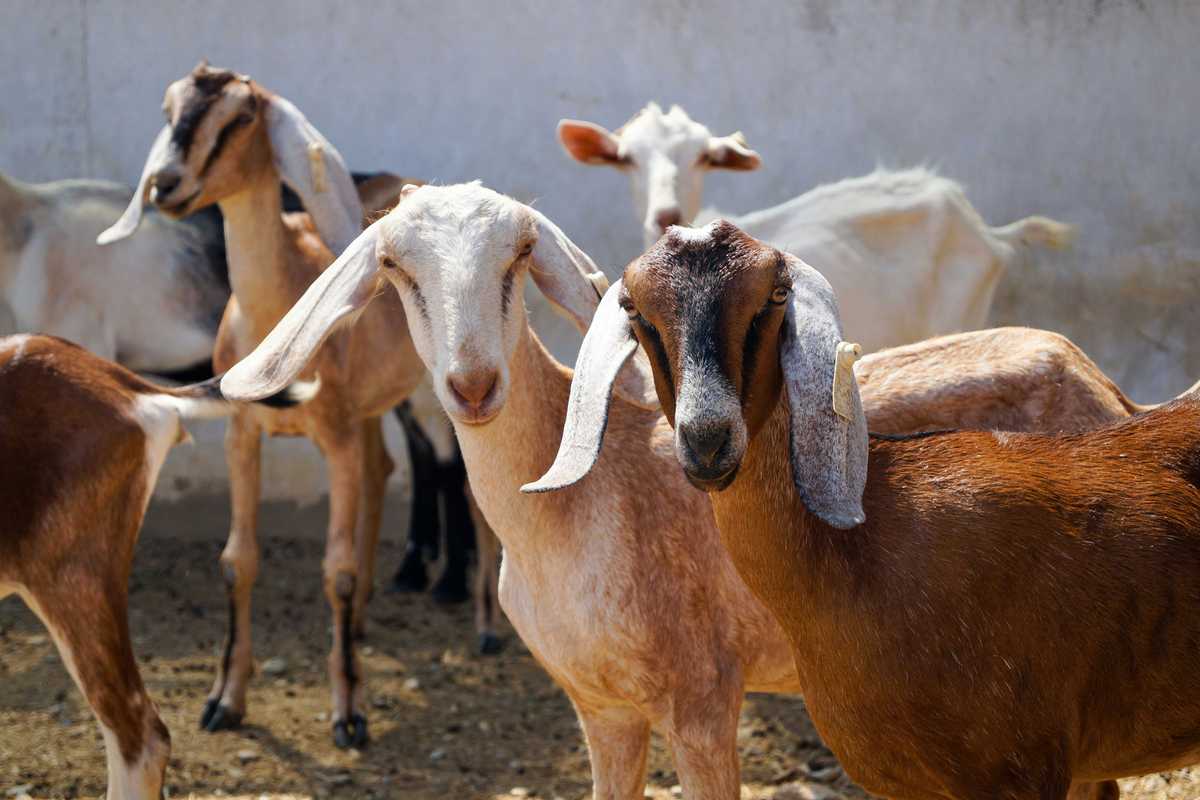
The framework would cover cattle and buffaloes, as well as sheep and goats.
Pakistan’s Federal Board of Revenue (FBR) has proposed amendments to the Customs Rules, 2001, to extend the Export Facilitation Scheme to businesses importing live animals for fattening and re-export or for slaughter, processing and export of meat and meat products.
The proposed amendments would establish two export tracks: re-exporting imported animals after fattening and exporting meat and meat products obtained from imported livestock.
The framework would cover live bovine animals, including cattle and buffaloes, as well as sheep and goats, while excluding purebred breeding animals.
It would also cover feed, veterinary medicines and other fattening inputs, as well as plant, machinery and equipment for approved facilities.
Authorized users would be able to import live animals without upfront payment of customs duty, additional customs duty, regulatory duty, sales tax, federal excise duty and withholding tax. The liability would be recorded against the user’s security and discharged when the relevant export requirements are met.
FBR published the draft amendments under the relevant provisions of the Customs Act, 1969, Sales Tax Act, 1990, Federal Excise Act, 2005, and Income Tax Ordinance, 2001.
It has invited objections and suggestions from affected parties within seven days of publication in the official Gazette.
How would FBR’s proposed livestock export scheme work?
The proposed framework would create two tracks for imported cattle, buffaloes, sheep and goats. Track A would allow animals to be fattened at approved facilities and re-exported alive, while Track B would cover fattening, slaughter and processing before meat, meat products and animal by-products are exported.
Imported animals and fattening inputs would be treated as input goods under the existing scheme.
Under Track A, fattening would qualify as processing and re-exported animals would be treated as output goods.
Under Track B, fattening, slaughter and processing would qualify as manufacturing, while exported meat, meat products and animal by-products would be treated as output goods.
Approved fattening inputs could also be imported or acquired without payment of duties and taxes, provided they are used only on imported animals covered by the scheme.
Bovine animals generally would have to be re-exported or slaughtered within 180 days of release from quarantine, while sheep and goats would have 120 days. Extensions could be granted on specified veterinary, shipping, market or exceptional grounds.
For Track B, meat and meat products would have to be exported within 120 days of slaughter.
The scheme generally would not cover animals born in Pakistan. However, offspring born to imported animals would be tagged, recorded as foreign-origin and deemed imported under the mother’s import declaration.
Authorization and safeguards
Businesses seeking to participate would need to be registered under the Sales Tax Act and Income Tax Ordinance and operate approved premises or a registered export establishment.
Applicants would be required to specify the export track, approved facilities, animal species, annual import quotas by species and quantities of fattening inputs.
Applications would be submitted online to the Regulatory Collector, supported by the required animal-health registrations and provincial or territorial licenses.
The proposed rules require security against duties and taxes payable on authorized imports.
Depending on the applicant’s category, this could take the form of an indemnity bond, an indemnity bond backed by a post-dated cheque, an insurance guarantee or a bank guarantee.
The Regulatory Collector would have to decide on a complete application within 30 days following verification, including a physical inspection jointly conducted with the competent animal-health authority.
Reasons would have to be recorded if an application is refused.
Authorized businesses would maintain a separate account under the scheme in the Web-Based One Customs, or WeBOC, or Pakistan Single Window system.
Authorization would remain conditional on businesses retaining the required registrations and licenses.
Any lapse or suspension would have to be reported to the Regulatory Collector within seven days, while further imports and acquisitions under the scheme would be suspended until the relevant approvals were restored.
Imported animals would also have to be registered in the traceability system and kept separately from domestic livestock. The rules provide for quarterly and annual reconciliation of animals, inputs and exported products, with post-clearance audit authorities empowered to verify records and physically check animals and cold-storage stocks.
New facilities and export infrastructure
The draft also proposes a project-authorization mechanism for businesses setting up or expanding feedlots, pre-export quarantine facilities and abattoirs with meat-processing plants intended for export.
Applicants would need to submit a project report detailing the proposed location, capacity by animal species, processing arrangements, biosecurity measures, cold-chain facilities, rendering and effluent-management systems where applicable, and a list and valuation of machinery and equipment to be imported or acquired.
They would also have to provide the relevant animal-health authority’s provisional registration or letter of intent, a no-objection certificate from the provincial or territorial authority, a commissioning plan, evidence of financial capacity and a bank or insurance guarantee covering applicable duties and taxes.
The Regulatory Collector would have to decide on a complete project-authorization application within 30 days.
Approved projects would generally have 24 months to commission the facility, with the Chief Collector able to grant an extension of up to 12 months for recorded reasons.
After commissioning, a project would have to export at least 80% of imported animals fattened by head under Track A, or 80% of total production by value under Track B, in its first full financial year and maintain that ratio for the following four financial years.
Plant, machinery and equipment obtained under the project authorization would have to remain at the premises for five years from commissioning.
The proposed framework defines approved premises as authorized feedlots or pre-export quarantine facilities for imported animals, or registered export establishments.
Export establishments would have to be licensed under provincial or territorial law and registered with the competent animal-health authority to export meat and meat products.
The rules also provide for animal identification and traceability through a register maintained by or on behalf of the competent animal-health authority.
Existing export restrictions to remain in force
The draft makes clear that the proposed scheme would not override restrictions under Pakistan’s import and export policies, animal-quarantine requirements, traceability and food-safety laws, or provincial legislation governing livestock, animal health, slaughter and animal movement.
Provisions covering Track B, project authorizations and plant, machinery, equipment and fattening inputs would take effect from the date of the final notification.
Re-export of live animals under Track A would begin separately for each species only after FBR announces an effective date following permission under the Export Policy Order and certification of the animals’ registration and health status.
The proposed amendments are intended to establish a regulated framework for using imported livestock in export-oriented fattening and meat-processing operations, subject to authorization, traceability and applicable tax and regulatory requirements.
The measures remain proposals in the draft notification and may be finalized only after FBR considers objections and suggestions received within the prescribed period.




Comments
See what people are discussing