

France deploys 70,000 police, elite tactical squads, and drones to thwart weekend protest unrest
French Interior Minister Laurent Nuñez mobilized 70,000 police officers and gendarmes alongside aerial surveillance and rapid-intervention teams ahead of Saturday's nationwide demonstrations

Razi Wani
Producer - News Desk
Razi Ud Din Ahmed Wani is a multimedia journalist and digital storyteller with a strong background in fact-checking, South Asian politics, documentary filmmaking, scriptwriting, and digital content production. With an MA in Mass Communication from the University of Karachi, he has experience directing and scripting web series and socio-political satires. And has worked across various media and digital platforms, focusing on emerging trends and storytelling formats.
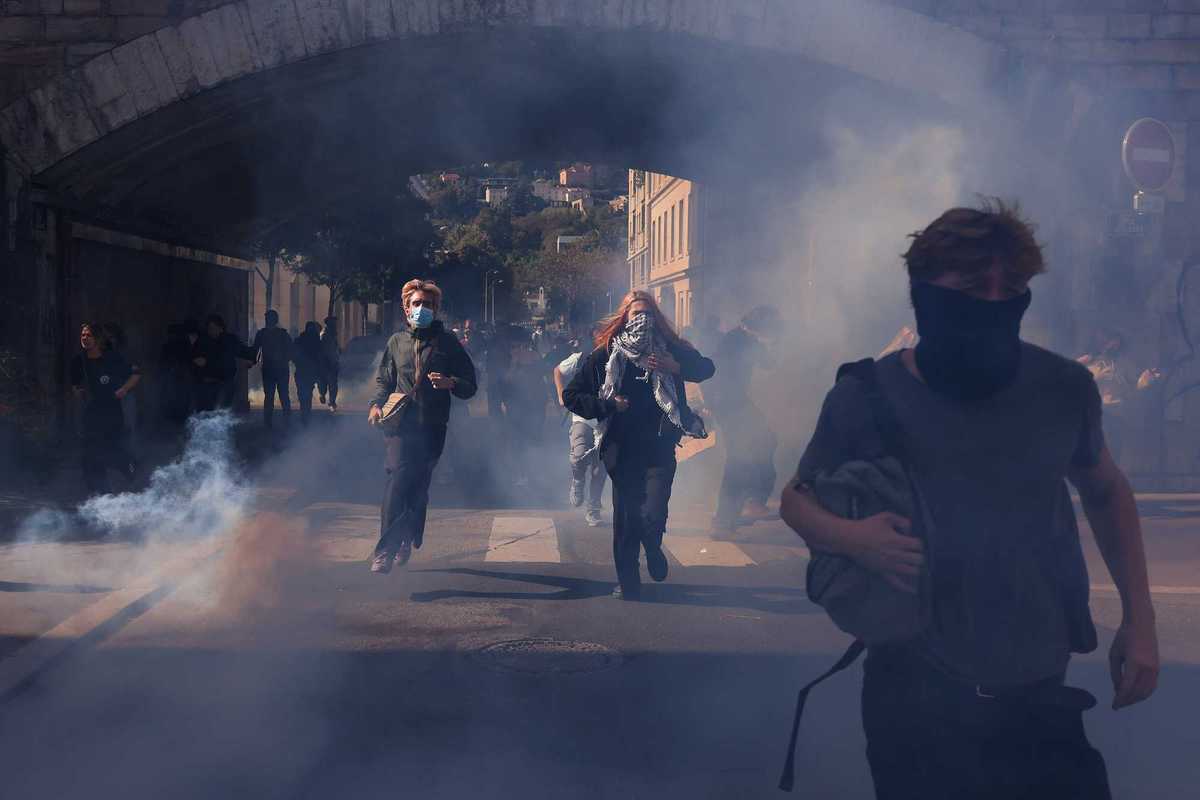
The French government mobilized 70,000 police officers and gendarmes nationwide on Friday, October 23, deploying elite tactical teams, surveillance drones, and helicopters in an effort to suppress rioting, looting, and coordinated attacks on public infrastructure ahead of another wave of demonstrations.
What security measures and tactical assets has the Interior Ministry mobilized?
Addressing an emergency press briefing in Paris, Interior Minister Laurent Nuñez warned that intelligence agencies had tracked extensive calls on social media by ultra-left and anarchist networks urging sympathizers to assault municipal buildings, commercial centers, and law enforcement personnel. "We are not talking about a nice, friendly demonstration," Nuñez told reporters. "Look at social media: the far left has called for attacks on public buildings. I am issuing a warning to those who might come and commit acts of violence: we will show no leniency. We will be extremely, extremely, extremely firm tomorrow, and we will let absolutely nothing pass."
According to reporting by Reuters, Saturday’s containment plan departs from conventional crowd-control postures by integrating specialized airborne and counter-insurgency assets rarely utilized during public demonstrations.
The Interior Ministry confirmed that pre-positioned tactical squads, rapid-response intervention teams, and a surveillance fleet of drones and helicopters will patrol urban centers to disperse high-risk agitators before marches converge. "I have designed this operation to be highly mobile, agile, and forceful," Nuñez emphasized. "All high-risk groups will be targeted."
To avoid the judicial bottlenecks that followed thousands of arrests earlier in the week, the government established dedicated legal processing centers within police prefectures across the country. "We have set up dedicated units in every department, including at the Paris Police Prefecture, to process arrests as quickly as possible and bring those arrested before the courts without delay," Nuñez stated.
How did high school unrest expand into a volatile cost-of-living crisis?
The widespread mobilization marks a critical escalation in a weeks-long confrontation that began as high school and university walkouts over decaying educational infrastructure, staff shortages, and admission system flaws before merging with broader trade union strikes over high inflation and deteriorating purchasing power. Over the preceding days, violent clashes erupted in multiple urban hubs, with demonstrators burning barricades across Paris’s Place de la République, setting fire to a town hall in Limoges, and blockading hundreds of secondary schools.
According to the Associated Press (AP), public friction deepened sharply following reports of severe injuries among teenage demonstrators. Anger surged after a 15-year-old student lost a hand to a police-issued riot-control device, forcing the Interior Ministry to announce an immediate suspension of the controversial explosive munition pending an administrative review.
In an official public address, President Emmanuel Macron defended the democratic framework of peaceful demonstration while warning against violence and vandalism. "There is a constitutional right to protest and to express oneself," Macron stated. "But this right comes with the need to respect, respect for people, respect for property, and therefore a commitment not to insult or destroy."
What municipal curbs have been enforced, and how has the political opposition reacted?
Prefectures across major metropolitan areas, including Paris, Lyon, and Rennes, issued emergency decrees ahead of Saturday's rallies. Authorities prohibited the retail sale and vehicular transport of portable fuel canisters, commercial fireworks mortars, and flammable liquids, alongside imposing localized curfews near high-risk transit hubs and ordering the closure of metro stations adjacent to state ministries and presidential offices. The Paris Police Prefecture rerouted authorized labor union marches to eastern corridors between Place de la Bastille and Place de la Nation, barring all assemblies near the Élysée Palace, parliament, and major museum districts.
However, the state's security apparatus has faced pushback from civil liberties groups and parliamentary opposition figures. According to Channel NewsAsia (CNA), left-wing leaders dismissed government claims of foreign or extremist manipulation, arguing that the expanding protests reflect working-class distress over living costs and social spending reductions that cannot be suppressed through executive decrees and riot barricades. Concurrently, the far-right National Rally led by Marine Le Pen—who is convening a party congress in Orléans this weekend—has used the security breakdown to attack the government’s domestic authority six months ahead of the presidential election.
European interior ministries are monitoring the developments closely, as related cost-of-living and student demonstrations are scheduled to take place across Italy, Spain, Austria, and Portugal this weekend.


Comments
See what people are discussing