

Rubio opens Central Asia talks in Samarkand to counter Chinese influence before India trade mission
US Secretary of State Marco Rubio began high-level diplomatic and commercial talks in Uzbekistan with five Central Asian nations to secure energy and critical mineral partnerships

News Desk
The News Desk provides timely and factual coverage of national and international events, with an emphasis on accuracy and clarity.
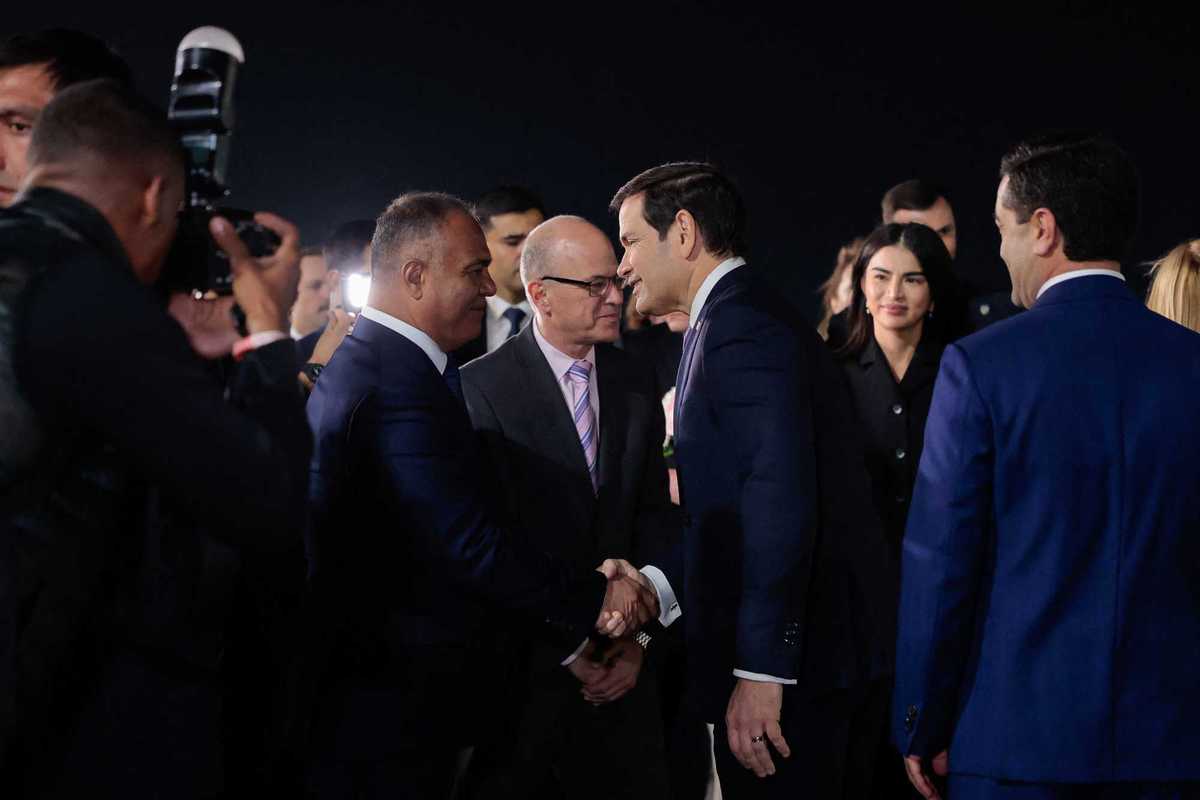
Governor of Samarkand Adiz Boboev welcomes US Secretary of State Marco Rubio as he arrives at the airport to participate in the C5+1 Ministerial meeting in Samarkand, Uzbekistan, on October 18, 2026.
AFP
United States Secretary of State Marco Rubio launched high-level diplomatic consultations in the historic Silk Road city of Samarkand on Monday, October 19, meeting with leaders across Central Asia to deepen economic ties and counter Beijing’s regional footprint before traveling to India.
Why is Washington expanding diplomatic and commercial ties in Central Asia?
Rubio arrived in Samarkand late Sunday at the head of a major US trade and diplomatic delegation that includes 200 corporate executives. The talks bring together top officials from Uzbekistan, Kazakhstan, Kyrgyzstan, Tajikistan, and Turkmenistan—revisiting momentum from a November 2025 summit hosted by President Donald Trump at the White House.
The outreach comes at a critical geopolitical inflection point for the resource-rich region. While the five former Soviet republics maintain traditional energy pipelines and security connections with Moscow, Russian influence has progressively waned since it invaded Ukraine.
China has stepped into the void as the primary trading partner for all five nations, locking in long-term natural gas contracts in Turkmenistan, uranium concessions in Kazakhstan, and rare-earth extraction agreements in Tajikistan.
A senior State Department official emphasized that the visit signals Washington's intent to establish viable supply chain alternatives and direct commercial partnerships, particularly in critical energy and mineral sectors.
Addressing the strategic mission, Rubio described the regional relationship as vital to long-term US security interests, noting that Washington remains focused on expanding partnerships across Eurasia even as the administration manages ongoing military confrontations with Iran and domestic political campaigns ahead of the US midterm elections.
What is at stake during Rubio’s upcoming trade tour of India?
Following the Samarkand summit, Rubio will travel to India, where he is scheduled to hold strategic discussions in the commercial and industrial maritime hubs of Mumbai and Jamnagar in Gujarat state. He will be joined by US Ambassador Sergio Gor, who also serves as Washington’s special envoy for Central Asia.
The India leg centers on resolving protracted negotiations over a comprehensive bilateral trade agreement. Senior US officials indicated that both governments are "very close" to an agreement that builds upon a provisional framework established in February to lower US tariffs on Indian exports.
Bilateral trade friction flared earlier after President Trump imposed 25 percent retaliatory tariffs on Indian goods over New Delhi's continued purchases of Russian crude oil. While those specific duties have since been rescinded, broader ongoing legal disputes in US domestic courts regarding presidential tariff authorities continue to introduce complexity into the timeline for formal implementation.
Rubio's dual-region mission reflects an effort to integrate Central Asian mineral transit corridors with South Asian maritime supply networks.



Comments
See what people are discussing