

JPMorgan warns of global oil supply shock driven by supertanker shortage and soaring freight costs
Investment bank JPMorgan cautioned that global oil markets face a severe supply bottleneck caused by an acute deficit of available supertankers rather than crude production, driving delivered crude prices above $100 a barrel and reigniting global inflationary pressure

Haris Zamir
Business Editor
Experience of almost 33 years where started the journey of financial journalism from Business Recorder in 1992. From 2006 onwards attached with Television Media worked at Sun Tv, Dawn Tv, Geo Tv and Dunya Tv. During the period also worked as a stringer for Bloomberg for seven years and Dow Jones for five years. Also wrote articles for several highly acclaimed periodicals like the Newsline, Pakistan Gulf Economist and Money Matters (The News publications)
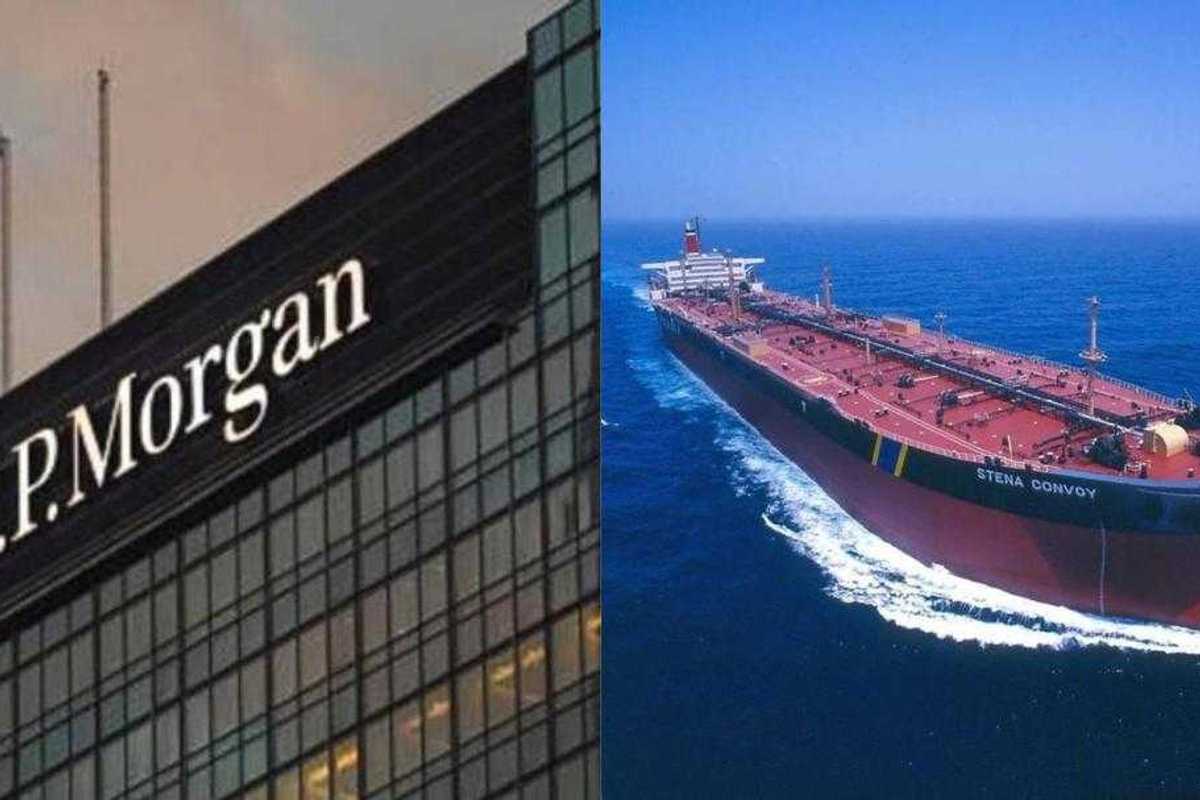
JPMorgan warns a global tanker shortage is driving a fresh energy shock, with supertanker rates hitting $1.162 million a day on key Middle East-to-Asia routes.
Nukta
Investment bank JPMorgan issued an urgent warning to energy markets on Sunday, October 11, cautioning that a severe shortage of transport tankers—rather than a lack of crude oil production—is triggering a fresh global energy shock and pushing delivered oil prices back to spring highs.
What caused the acute supertanker crunch identified by JPMorgan?
In an analytical report by commodities research directors Natasha Kaneva, Lyuba Savinova, and Artem Fakhretdinov, JPMorgan noted that while crude oil production has recovered across major exporting regions, capacity to move crude across international shipping lanes is under critical strain. Middle East crude exports through the strategic Strait of Hormuz jumped sharply from 7.5 million barrels per day to 12 million barrels per day in September.
However, of the world's 923 Very Large Crude Carriers (VLCCs), 766 were already actively deployed by late September, while an additional 124–125 Iranian-flagged supertankers—representing roughly 13 percent of the total global fleet—remain inaccessible to mainstream shipping due to strict United States sanctions.
The report noted that longer maritime transit routes around the Arabian Peninsula, port congestion, and ship-to-ship transfers taking up to 10 days have severely stretched fleet efficiency. As a result, moving non-Iranian Middle Eastern crude now requires 35 additional supertankers, 13 Suezmax vessels, and 10 Aframax tankers compared to the 2025 average, forcing logistics operators onto smaller, less efficient vessels in the Atlantic Basin.
How are soaring tanker charter rates impacting global inflation and energy markets?
The imbalance between vessel demand and available tonnage has caused charter rates for supertankers to surge to unprecedented levels, with daily charter rates reaching up to $1.162 million on key Middle East to Asia shipping corridors.
With benchmark crude oil prices holding firm above $100 per barrel, energy analysts warn that surging maritime freight costs will directly inflate refined fuel prices, erode European refining margins, and create renewed inflationary pressure across major import-dependent economies.
JPMorgan analysts concluded that while the energy shock earlier in 2026 was defined by crude supply cuts, October's market stress is anchored in maritime transport constraints. Central banks and shipping logistics networks are closely monitoring Persian Gulf transit developments to assess the long-term impact on global trade.





Comments
See what people are discussing