

Hague court tells India to abide by Indus Waters Treaty, prohibits work on hydropower project
A Hague court ruled the Indus Waters Treaty remains fully in force, ordering India to restrict construction on a Kashmir hydropower project

News Desk
The News Desk provides timely and factual coverage of national and international events, with an emphasis on accuracy and clarity.
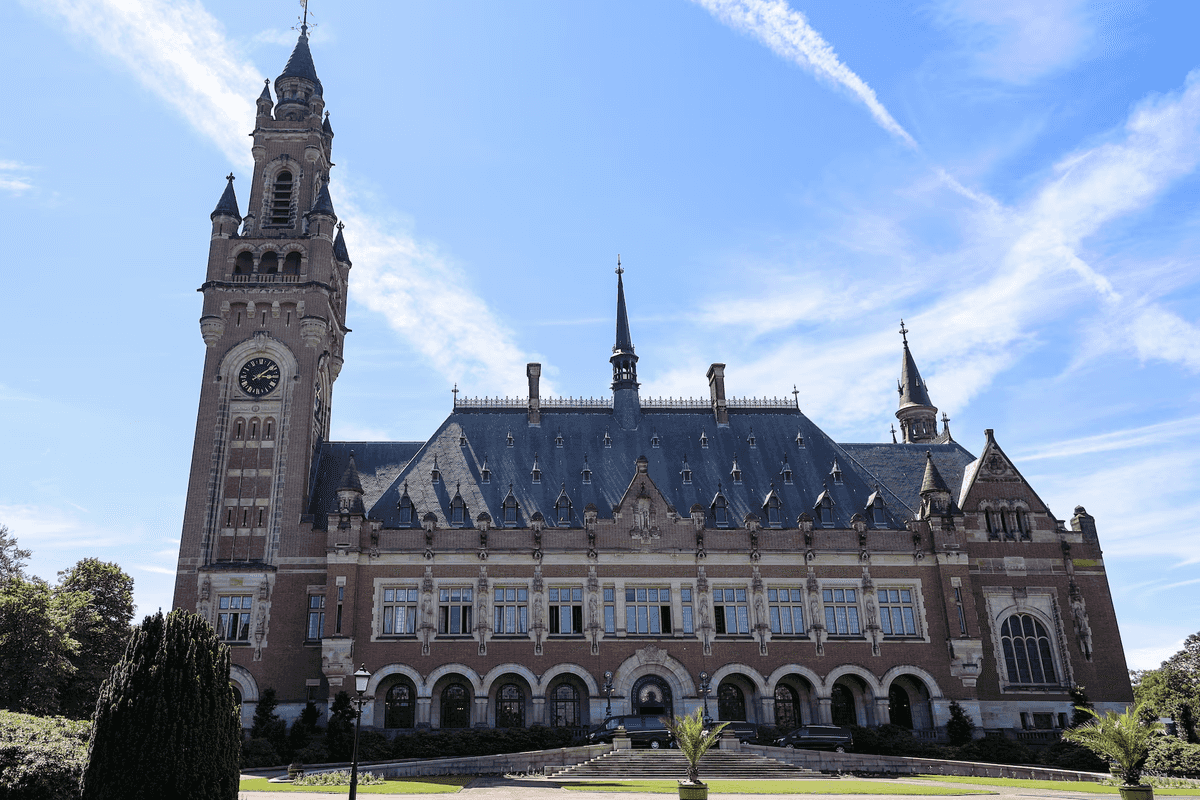
A general view of the International Court of Justice (ICJ) in The Hague, Netherlands.
AFP/File
A court of arbitration in The Hague has ruled that the Indus Waters Treaty remains fully in force, rejecting India's move to place the 1960 water-sharing agreement in abeyance.
The unanimous ruling also ordered interim restrictions on construction of India's Ratle hydropower project in Kashmir, deepening a dispute between the nuclear-armed neighbors over the shared river system.
What did the Hague court rule on the Indus Waters Treaty?
The Court of Arbitration found India's suspension of the treaty was not permissible under the agreement or international law, meaning India remains bound by its obligations.
It also granted Pakistan three interim measures restricting construction on the Ratle Hydro-Electric Plant on the Chenab River, pending a Neutral Expert's final decision expected in July 2027.
🔸 #PCA Press Release | The Indus Waters Western Rivers Arbitration (Islamic Republic of Pakistan v. Republic of India) 🔸
𝗧𝗵𝗲 𝗖𝗼𝘂𝗿𝘁 𝗼𝗳 𝗔𝗿𝗯𝗶𝘁𝗿𝗮𝘁𝗶𝗼𝗻 𝗜𝘀𝘀𝘂𝗲𝘀 𝗔𝘄𝗮𝗿𝗱 𝗼𝗻 𝘁𝗵𝗲 𝗦𝘁𝗮𝘁𝘂𝘀 𝗼𝗳 𝘁𝗵𝗲 𝗜𝗻𝗱𝘂𝘀 𝗪𝗮𝘁𝗲𝗿𝘀 𝗧𝗿𝗲𝗮𝘁𝘆 𝗮𝗻𝗱… pic.twitter.com/0QWASt85Cw
— Permanent Court of Arbitration (@PCA_CPA) August 31, 2026
Why did India place the Indus Waters Treaty in abeyance?
India announced in April 2025 that it would hold the treaty in abeyance following an attack in India-administered Jammu and Kashmir. Pakistan rejected the move, saying the agreement did not allow either side to suspend it unilaterally.
The dispute added to already strained relations and preceded a brief military confrontation between the two countries in May 2025.
What did the court order on the Ratle hydropower project?
India is prohibited from concreting the Ratle dam wall and power intake structure above specified levels until 90 days after a Neutral Expert issues a final decision on whether the project complies with the treaty.
The court also ordered India to notify it, the Neutral Expert and Pakistan of any changes to the project's construction schedule, saying transparency over work at the site was necessary to protect the dispute-resolution process. It rejected two other measures Pakistan had sought, including a request to affirm that India was building at its own risk, and a direction for India to return to full treaty compliance pending the court's decision on the treaty's status.
How did the court determine the treaty's legal status?
The arbitration proceedings date back to 2016, when Pakistan invoked the treaty's dispute-resolution provisions over the design of Indian hydropower projects on rivers allocated to Pakistan under the pact. India did not participate in the latest phase of the arbitration, though the court said it considered Indian positions expressed through government communications and public statements outside the proceedings. Separate proceedings involving the Ratle and Kishenganga projects are being conducted by a Neutral Expert appointed through the World Bank.
The court said the agreement contains no provision allowing either country to unilaterally suspend or terminate it, and that it can be modified or terminated only through an agreement between India and Pakistan. It rejected arguments that India's sovereignty, alleged terrorism, disputes over proposed projects, changes in circumstances or armed conflict provided a legal basis for suspending the treaty. "The Indus Waters Treaty remains fully in force," the court said, adding that India "remains bound by and must observe its obligations under the Treaty."
What is the Indus Waters Treaty?
Signed in 1960 after negotiations brokered by the World Bank, the treaty governs the sharing of the Indus river system between India and Pakistan. It has remained in force through several periods of conflict and diplomatic tension between the two countries.





Comments
See what people are discussing