

IEA says Hormuz crisis could reshape global energy trade
A prolonged Hormuz crisis could reduce the need for oil transit below 2 million barrels per day by 2035 as countries diversify supplies and electrify.

Business Desk
The Business Desk tracks economic trends, market movements, and business developments, offering analysis of both local and global financial news.
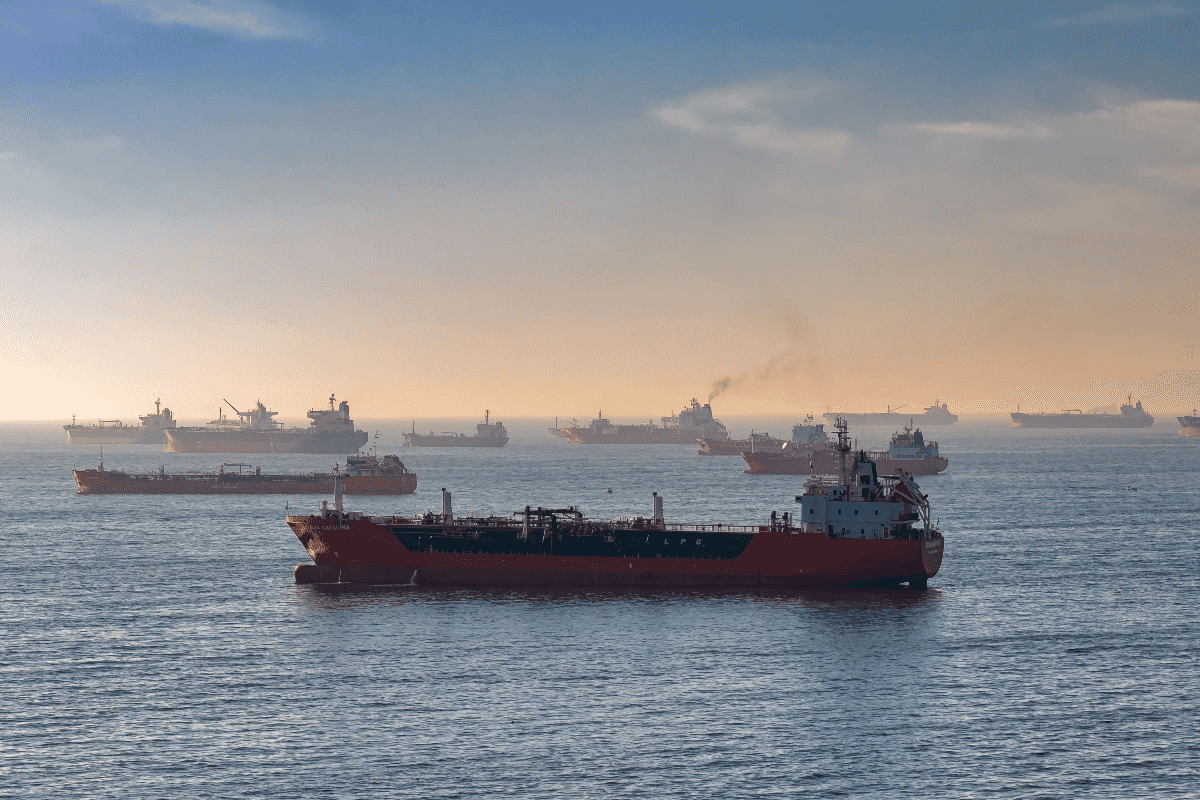
Oil and gas tankers anchored offshore as the IEA warns that disruptions to energy shipping routes could reshape global trade.
Pexels
The Hormuz crisis, driven by the Middle East conflict and shipping disruptions through the Strait, could leave lasting changes in global energy trade, pushing countries to diversify supplies, develop domestic resources and accelerate electrification, the International Energy Agency (IEA) said in its World Energy Outlook 2026 released Thursday.
How could the Hormuz crisis change global oil trade?
In a prolonged disruption scenario, the need for oil transit through the Strait could fall from about 20 million barrels per day before the conflict to 8.5 million by 2030 and below 2 million by 2035. That outcome depends on new bypass pipelines, alternative supply and measures to reduce demand in importing countries.
The IEA described the 2026 crisis as the largest energy supply shock in history, warning that its consequences could extend well beyond immediate disruptions to oil and gas markets.
IEA Executive Director Fatih Birol said the longer the crisis continued, the more profound its effects would become.
"I don't see any credible pathway for the energy world to return to the way it was before," Birol said.
He warned that countries seeking greater energy security should avoid replacing one dependency with another, adding that energy security and the global energy transition were increasingly aligned.
The report examines multiple possible energy pathways rather than offering a single forecast, reflecting uncertainty over geopolitical tensions, trade disruptions, climate risks and threats to critical infrastructure.
It identifies three major policy responses: diversifying energy suppliers and transport routes, increasing reliance on domestically available energy resources, and accelerating electrification.
Even if oil shipments through Hormuz decline sharply, the IEA expects the Middle East to remain the world's largest oil-exporting region.
Which energy sources could benefit from the crisis?
Renewable energy, particularly solar power, and nuclear energy are projected to expand strongly across the IEA's scenarios as countries seek to reduce their exposure to imported fuels.
Energy efficiency and biofuels could also gain momentum, although some countries may extend their reliance on domestic fossil fuel resources.
Coal could remain particularly important in parts of Asia, where several oil- and gas-importing economies have substantial domestic reserves and may prioritize energy security over reducing fossil fuel consumption.
The crisis is also reinforcing a broader shift toward electricity.
Global electricity demand has grown faster than economic output since 2019 and at twice the rate of overall energy demand, supported by industrial motors, household appliances, air conditioning, electric vehicles, heat pumps and data centers.
Electricity demand is expected to accelerate further through 2035, with its share of global final energy consumption approaching 30% across the IEA's exploratory scenarios, compared with approximately 23% in 2025.
Higher and more volatile fuel prices have strengthened the case for electrification, with some countries experiencing increased sales of electric technologies, growing trade in solar panels and batteries, and stronger demand for electric vehicles.
The report also points to rising demand for energy services as incomes and populations grow, temperatures increase and households and businesses require more mobility, cooling, heating and computing capacity.
What happens if oil and gas supplies recover?
The IEA also examines a scenario in which the Middle East conflict is resolved and shipping through the Strait of Hormuz returns to normal.
Under those conditions, global oil and natural gas supplies could rebound strongly, particularly as delayed liquefied natural gas capacity enters the market.
The recovery could create a buyer's market for oil and gas, putting downward pressure on prices even as countries rebuild depleted inventories.
However, the IEA warned that structural changes in energy demand, particularly faster electrification, could limit future consumption growth for both fuels.
The extent of these changes would depend on how long disruptions continue and whether governments turn their immediate energy security responses into lasting policies.
What are the risks for energy access and climate goals?
Beyond energy markets, the crisis threatens to slow progress in expanding access to electricity and clean cooking, particularly in emerging and developing economies.
Although access to both improved during 2025, higher fuel prices and supply shortages in 2026 could undermine further gains, the report warned.
The outlook also identifies a substantial gap between existing government policies and international climate objectives.
Under the IEA's Stated Policies Scenario, global warming reaches approximately 2.5 degrees Celsius by 2100, compared with 2.9 degrees under the Current Policies Scenario.
Both outcomes exceed the Paris Agreement's objective of keeping warming well below 2 degrees Celsius while pursuing efforts to limit it to 1.5 degrees.
Birol cautioned that governments should not allow immediate energy pressures to overshadow decisions affecting long-term energy security, sustainability and economic prosperity.
He said countries would pursue different energy strategies based on their resources and national priorities, but international cooperation would remain essential to building a more secure, affordable and sustainable energy system.



Comments
See what people are discussing