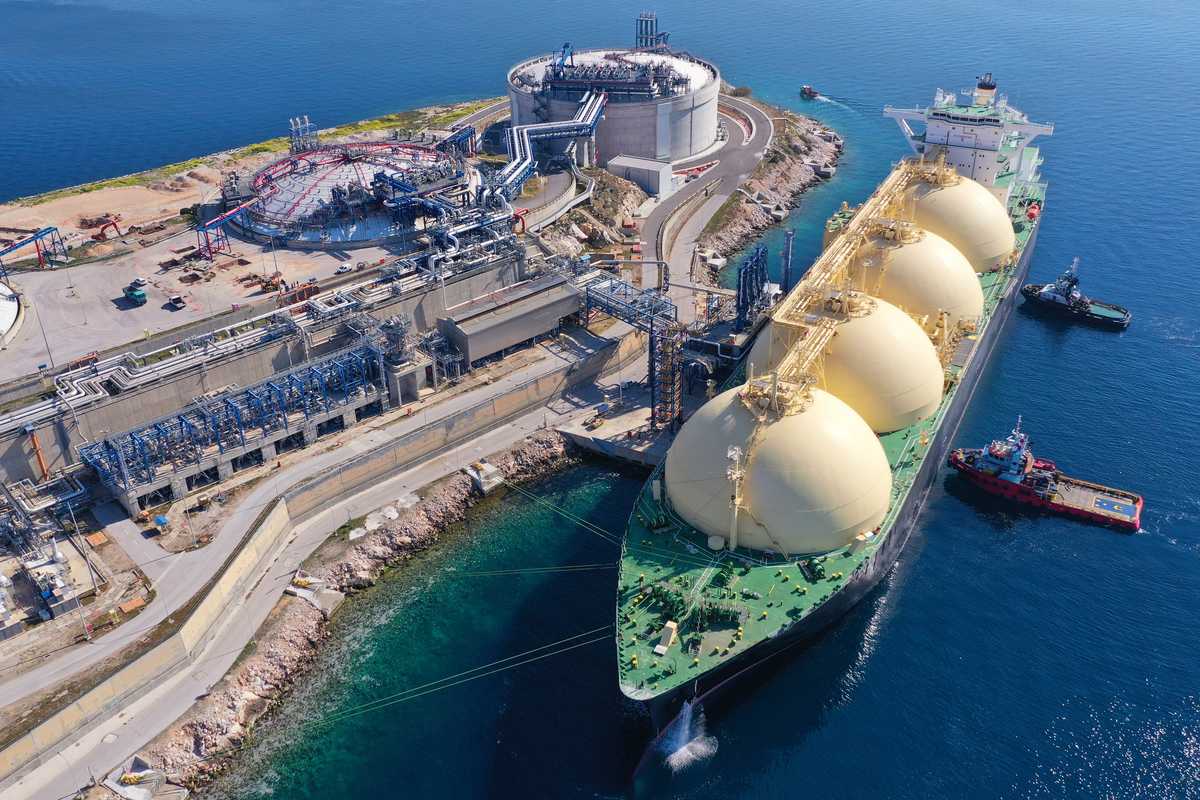
Pakistan sharply reduced imports of liquefied natural gas this fiscal year, taking delivery of far fewer cargoes than contracted under long-term supply agreements with Qatar and Italy’s Eni, as high prices, weak power demand and policy-driven cuts to energy subsidies curbed consumption, government data and analysts said.
Government records show Pakistan imported 24 fewer LNG cargoes than stipulated under its long-term contracts in 2025, and about 16 fewer shipments compared with 2024. During the seven months ended Jan. 31, Pakistan received about 62 LNG vessels, down from 71 in the same period a year earlier, according to data from the Oil and Gas Regulatory Authority, or OGRA.
Pakistan typically imports between 108 and 120 LNG cargoes a year under two long-term agreements with QatarEnergy, officials said. Those contracts, signed for 10 and 15-year terms expiring in 2031 and 2032, require imports of about 12 cargoes a month, priced at 13.37% and 10.2% of Brent crude, respectively.
In addition, Pakistan has a separate contract with Italy’s Eni to import one cargo per month at a slope of about 12.14% of Brent. But no LNG cargoes arrived from Eni in 2025, despite Pakistan LNG Ltd., a state-run firm, being authorized to lift those volumes, OGRA data show.
Overall LNG imports totaled 108 cargoes in 2025, all from Qatar, compared with 124 cargoes in 2024.
Why is Pakistan importing fewer cargoes?
Analysts attribute the pullback to a slump in gas demand from power producers and industries, driven by elevated LNG prices and a sharp increase in taxes on gas used by captive power plants — electricity generators that rely on regasified LNG.
“The LNG market has been subdued because demand from power generation has weakened and gas prices for captive units have risen sharply,” said Muhammad Awais Ashraf, director of research at a Karachi-based brokerage.
In February last year, the government raised taxes on gas supplied to captive power units running on regasified LNG to PKR 4,291 ($2.82) per million British thermal units from PKR 791. The levy was increased by another 10% in July and is scheduled to rise by 15% in February 2026 and 20% in August, officials said.
The tax hikes are part of broader reforms under Pakistan’s $7 billion International Monetary Fund program, which requires the government to eliminate energy subsidies. Previously, captive plants were effectively receiving gas at around PKR 2,000 per mmbtu, compared with PKR 3,500 to 4,400 paid by industrial and commercial users.
Seasonal weakness in electricity demand, combined with higher prices, has forced authorities to scale back LNG procurement under long-term contracts, Ashraf said. He estimated Pakistan could save more than $1 billion in foreign exchange by diverting about 34 LNG cargoes in 2026 to avoid surplus supplies.
“These cancellations are being done under flexibility clauses in the contracts,” Ashraf said, adding that global suppliers increasingly prefer spot sales amid strong international prices.
Under such clauses, Pakistan can defer or divert cargoes, though the financial outcome depends on market conditions. Any profit from reselling LNG above the contracted price goes to the supplier, while Pakistan absorbs losses if spot prices are lower.
Ashraf forecast Pakistan would import about 96 LNG cargoes in fiscal year 2026, down from an estimated 117 in fiscal 2025.
What's the future outlook?
Despite the near-term surplus, analysts say gas demand could recover once economic activity strengthens, particularly in textile and other export-oriented industries. Still, the sharp decline in LNG arrivals underscores the growing mismatch between Pakistan’s long-term import commitments and its current energy needs.
Officials say LNG remains a key part of Pakistan’s energy mix, especially for meeting winter demand. But they acknowledge that managing imports will increasingly require flexible contracts and closer alignment between supply obligations and realistic demand forecasts as renewable energy and alternative fuels gain ground.
Bilal Ejaz, research analyst at Ismail Iqbal Securities said that Pakistan has reduced LNG imports as domestic demand for imported gas, particularly from the power sector, has declined, creating a surplus of expensive LNG under long term contracts. As a result, the government is deferring cargoes and shifting power generation toward cheaper fuels to ease financial pressure on the energy sector.
Pakistan's electricity generation from nuclear-run units in the six months ended Dec 31 rose 10.8% to 12,122 GWh and from coal run plants by 4.3% to 12,377 GWh while from regasified plants fell 9.6% to 10,526 GWh compared with the same period in the previous year.






Comments
See what people are discussing