

Inflation in Pakistan seen staying within target range in FY26
Analysts forecast average inflation of 6.9% as price pressures normalize

Haris Zamir
Business Editor
Experience of almost 33 years where started the journey of financial journalism from Business Recorder in 1992. From 2006 onwards attached with Television Media worked at Sun Tv, Dawn Tv, Geo Tv and Dunya Tv. During the period also worked as a stringer for Bloomberg for seven years and Dow Jones for five years. Also wrote articles for several highly acclaimed periodicals like the Newsline, Pakistan Gulf Economist and Money Matters (The News publications)
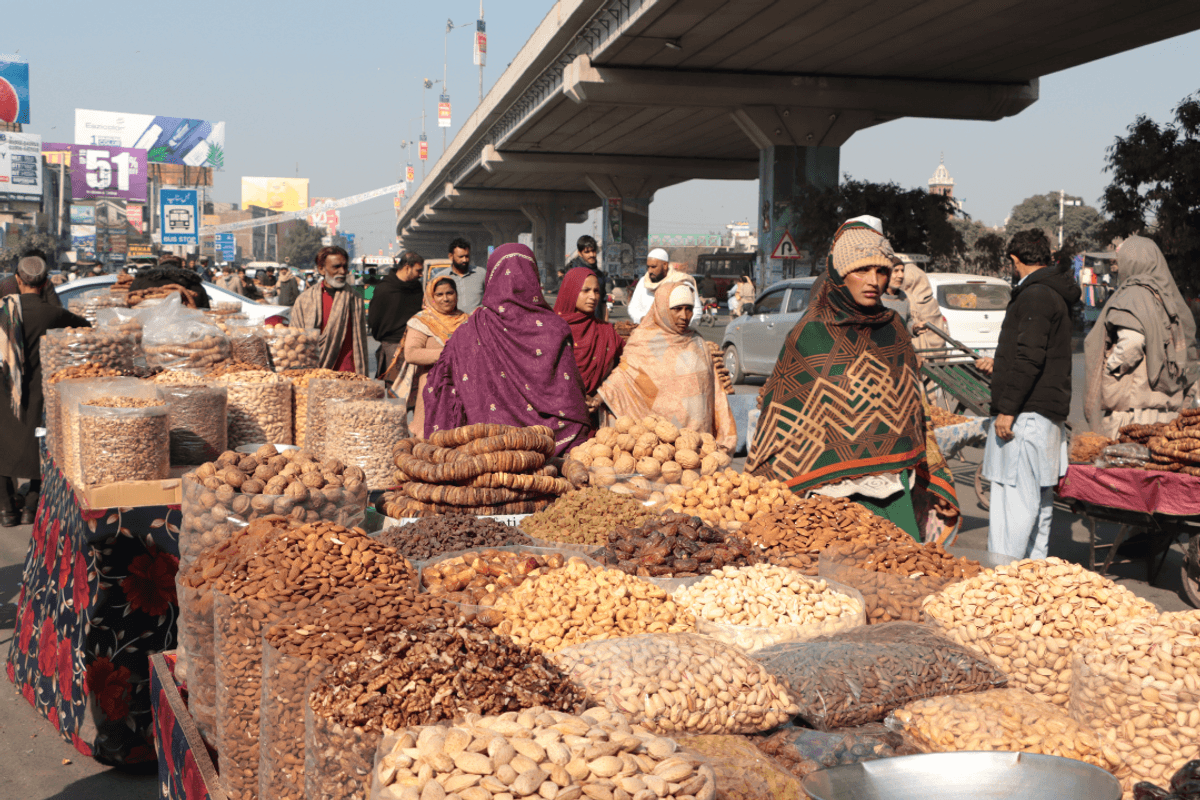
Women walk past stalls of dried fruit along the G.T. Road in Pakistan's Gujranwala
Shutterstock
Inflation in Pakistan is expected to remain largely under control in the coming year, with headline consumer prices projected to rise at a pace consistent with economic normalization rather than overheating, analysts said.
For fiscal year 2026, headline inflation is forecast to average 6.9%, comfortably within the State Bank of Pakistan’s medium-term target range of 5% to 7%. Economists said the anticipated increase reflects the fading of unusually low base effects from the prior year rather than a resurgence of underlying price pressures.
Monthly inflation is estimated to average about 0.84% during FY26, with end-period inflation potentially crossing slightly above 10%. Analysts attributed this to seasonal factors, including Ramadan-related price adjustments, noting that such an outcome would not indicate a loss of monetary control but rather underscore how sharply inflation cooled in FY25.
Food prices stabilize after flood concerns
One of the most notable developments has been the stabilization of food prices following earlier fears of flood-driven inflation. After severe flooding raised concerns of supply disruptions, food inflation briefly surged, rising 5.5% month-on-month in September 2025 and 2.7% in October.
Those pressures proved short-lived. In November, food prices declined 0.2% month-on-month, signaling a return to stability.
For the remainder of FY26, food inflation is expected to average just 0.4% per month, even after accounting for seasonal volatility.
Analysts said subdued food inflation is particularly important in Pakistan, where food items carry significant weight in the consumer price index and directly affect household purchasing power.
Core inflation remains contained
Core inflation, excluding food and energy, has also remained steady. Non-food, non-energy core inflation is projected to average about 7.44% in FY26, with a similar trend expected in FY27. This suggests that fundamental inflationary pressures remain contained despite a gradual pickup in economic activity.
While demand-side pressures could rise modestly as growth strengthens, economists said they are unlikely to push inflation meaningfully above current projections.
Outlook for FY27
Looking ahead to fiscal year 2027, inflation is expected to drift higher to around 8.0%, reflecting continued economic normalization rather than a deterioration in price stability. Monthly inflation during FY27 is projected to average roughly 0.7%.
The outlook, however, is not without risks. Analysts cautioned that sharper-than-expected depreciation of the rupee, inflationary fiscal measures, renewed global commodity price volatility, more frequent gas tariff adjustments, or disruptions to food supply chains could push inflation higher.
Conversely, the absence of major energy price shocks and the possibility of persistently low international oil prices remain supportive factors.
From sharp disinflation to normalization
Pakistan experienced a dramatic inflation slowdown in FY25, when headline consumer price inflation averaged just 4.49%, down sharply from 23.4% the previous year. The disinflation was driven by tight monetary policy, reduced subsidies, fiscal discipline under the International Monetary Fund program, and lower imported inflation as global commodity prices softened.
While the sharp decline provided critical relief to households and policymakers, it also created a low statistical base that is expected to fade in the months ahead. Analysts said the projected rise in inflation over FY26 and FY27 should be viewed in that context — as a return to more typical levels rather than a renewed inflationary spiral.




Comments
See what people are discussing