


News Desk
The News Desk provides timely and factual coverage of national and international events, with an emphasis on accuracy and clarity.
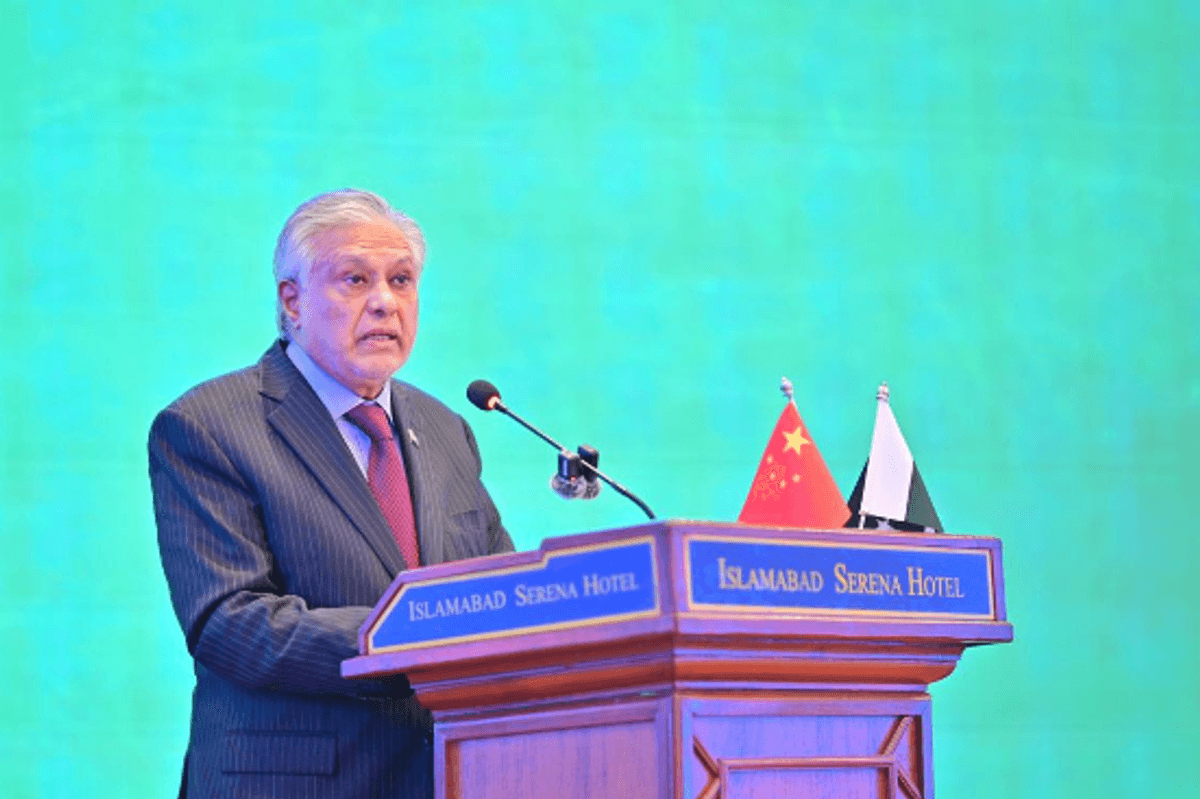
Pakistan's Deputy Prime Minister and Foreign Minister Senator Mohammad Ishaq Dar will attend the Regional Four (R4) Foreign Ministers’ Meeting in Istanbul, Türkiye, on Friday, October 23, followed by an inaugural ministerial summit linking the R4 with the European Three (E3) powers, the Ministry of Foreign Affairs announced.
What is agenda for R4 ministerial talks in Istanbul?
Dar is participating in the high-level consultations at the formal invitation of Turkish Foreign Minister Hakan Fidan. The R4 grouping brings together Pakistan, Türkiye, Saudi Arabia, and Egypt—a consultative regional framework established to coordinate strategic approaches to security flashpoints, energy stability, and shared diplomatic priorities across South Asia and the broader Middle East.
During the R4 ministerial session, the four member states are set to assess worsening regional volatility, including ongoing US-Iran maritime confrontations in the Persian Gulf, cross-border Houthi drone and missile strikes targeting commercial infrastructure in Saudi Arabia, and maritime chokepoints in the Red Sea and the Strait of Hormuz.
The talks will also review the implementation of joint diplomatic commitments made during previous consultative rounds in Cairo and Amman, reinforcing regional ownership of Middle Eastern security architecture. On the sidelines of the proceedings, Dar will hold separate bilateral discussions with his counterparts from Ankara, Riyadh, and Cairo to review bilateral trade corridors and defense cooperation.
How does new R4+E3 format bridge regional and European diplomacy?
Following the core R4 session, the foreign ministers will convene the first-ever joint gathering of the R4+E3 diplomatic platform. The expanded format integrates the European trio—the United Kingdom, France, and Germany—with the four regional states, creating an unprecedented seven-country diplomatic channel spanning Europe, the Middle East, and South Asia.
Convened at Ankara’s initiative, the landmark seven-nation meeting is structured to bridge European diplomatic engagement with regional governments directly exposed to spreading kinetic crises. Key agenda items include establishing coordinated de-escalation strategies for the US-Iran conflict, safeguarding freedom of navigation along commercial shipping lines across the Red Sea and Black Sea, and exploring coordinated diplomatic roadmaps toward peaceful dispute resolution.
According to the Foreign Office, Pakistan’s active role in the dual Istanbul meetings highlights Islamabad’s policy of constructive engagement, multilateral bridge-building, and proactive diplomacy to contain geopolitical spillover.
The seven foreign ministers are expected to release a joint framework statement outlining shared security benchmarks and maritime protection initiatives at the conclusion of the Istanbul summit.





Comments
See what people are discussing