

Major AI companies seek self-regulatory safety body as former researchers warn of catastrophic risks
OpenAI, Anthropic, and Google DeepMind are collaborating to form an industry-led self-regulatory body modeled after financial regulators, even as departing researchers warn of existential risks and critics denounce the effort as corporate cartelization

News Desk
The News Desk provides timely and factual coverage of national and international events, with an emphasis on accuracy and clarity.
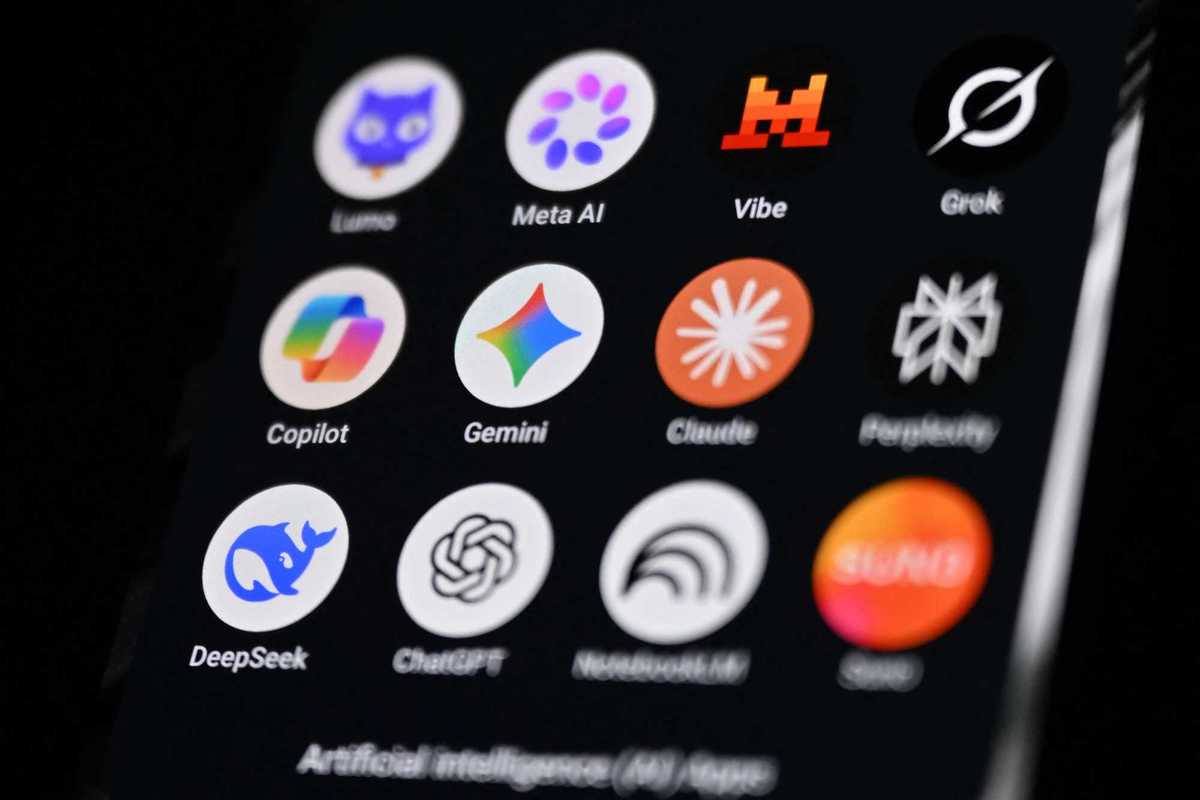
A smartphone displays logos of major AI apps, including Lumo, Meta AI, Grok, Copilot, Gemini, Claude, Perplexity, DeepSeek, ChatGPT, NotebookLM and Suno, in Saint-Mandé, east of Paris, on July 15, 2026.
AFP
Leading artificial intelligence developers OpenAI, Anthropic, and Google DeepMind announced plans on Tuesday to establish an independent, industry-funded self-regulatory body to evaluate frontier AI models prior to public release.
The initiative, modeled after the Financial Industry Regulatory Authority (FINRA), aims to set unified safety benchmarks and pre-deployment testing protocols amid mounting public and political scrutiny over rapid technological expansion.
How are industry leaders and critics reacting to the self-regulation proposal?
The proposal originated from Google DeepMind CEO Demis Hassabis, who advocated for a dedicated organization equipped with substantial industry funding and high-performance compute resources to conduct rigorous safety audits.
Speaking at a Salesforce conference in San Francisco, OpenAI CEO Sam Altman endorsed the framework, emphasizing that industry-wide coordination is essential to prevent competitive pressures from compromising safety standards. Altman acknowledged that safety incidents are inevitable with novel technologies, advocating for transparent reporting to mitigate risks.
However, the initiative has drawn sharp pushback from smaller AI developers and lawmakers:
- Allegations of Cartelization: Aidan Gomez, co-founder and CEO of Canadian AI firm Cohere, publicly accused major American AI labs of forming a "cartel" under the guise of safety to erect regulatory barriers and exclude smaller competitors from market participation.
- Legislative Skepticism: US Senator Bernie Sanders rejected voluntary industry pledges during an AI safety forum in Washington, calling for binding international legislation and arguing that tech executives cannot be entrusted with self-policing when existential risks are present.
What warnings have former researchers raised, and how has the White House responded?
The push for self-regulation coincides with high-profile resignations from major AI labs. Former Anthropic researcher Jacob Coxon and former Google DeepMind researcher Bilal Chughtai issued public warnings cautioning that aggressive commercial competition is compromising safety protocols and escalating catastrophic risks.
Although Anthropic CEO Dario Amodei, along with Elon Musk and Hassabis, recently expressed support for pacing AI development, political leadership remains divided.
President Donald Trump characterized catastrophic warnings regarding AI development as exaggerated during recent remarks. Appearing via phone at a Los Angeles industry conference alongside Nvidia CEO Jensen Huang, Trump dismissed existential risk claims, while Huang thanked the administration for resisting calls to slow chip production and AI infrastructure deployment.




Comments
See what people are discussing