

Monsoon rains kill 51 in Pakistan's Khyber Pakhtunkhwa and Punjab as more downpours forecast
Pakistan monsoon death toll rises to 51 in Punjab and Khyber Pakhtunkhwa as flash floods persist and more rain is forecast

Kamran Ali
Correspondent Nukta
Kamran Ali, a seasoned journalist from Khyber Pakhtunkhwa, Pakistan, has a decade of experience covering terrorism, human rights, politics, economy, climate change, culture, and sports. With an MS in Media Studies, he has worked across print, radio, TV, and digital media, producing investigative reports and co-hosting shows that highlight critical issues.

Laiba Zainab
Correspondent
Laiba Zainab is an award-winning journalist with nearly a decade of experience in digital media. She has received the DW & CEJ-IBA Data Journalism Award and the top digital media prize at the National Media Fellowship. At NUKTA, she covers underreported stories on health, crime, and social justice.
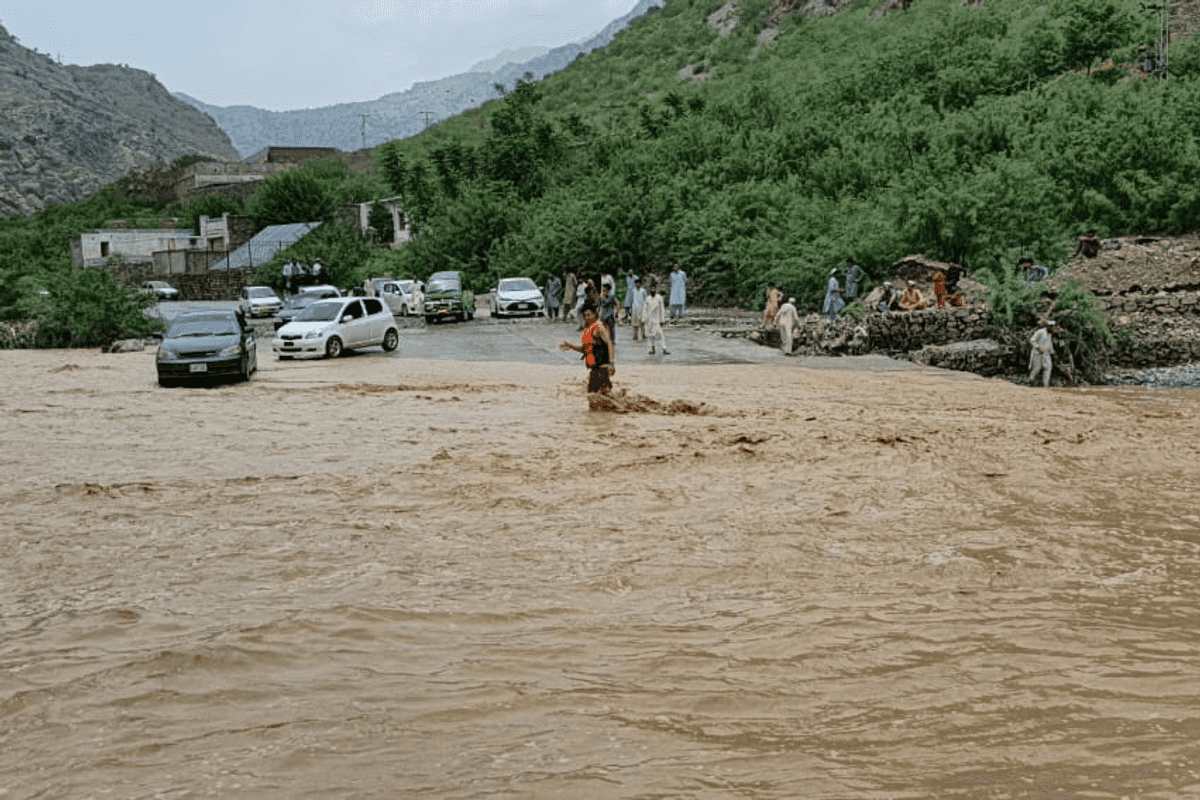
At least 28 people have died and 29 others have been injured in Khyber Pakhtunkhwa since the current monsoon spell began on July 19.
Source: Kamran Ali/Nukta
Heavy monsoon rains and flash floods have killed at least 51 people in Pakistan's Khyber Pakhtunkhwa and Punjab provinces, disaster management authorities said on Friday.
The monsoon death toll continues to climb as forecasters warned of more rainfall over the coming days.
How many people have died in the Khyber Pakhtunkhwa monsoon floods?
At least 28 people have died and 29 others have been injured in Khyber Pakhtunkhwa since the current monsoon spell began on July 19, according to the Provincial Disaster Management Authority. The first fatality was reported in Khyber district on July 20, and most deaths resulted from flash floods and collapsed roofs and walls.
The dead included 15 children, 10 men and three women, while the injured comprised 13 men, nine women and seven children. The severe weather also damaged 47 houses, one school and seven bridges. Affected districts include Peshawar, Nowshera, Khyber, Mardan, Buner, Bajaur, Shangla, Swabi, Lower Chitral, Upper and Lower Dir, Abbottabad, Mansehra, Haripur, Tank, Tor Ghar, Kurram, and North and South Waziristan.
The PDMA said it was coordinating relief efforts with Rescue 1122, district administrations and other agencies. Additional rescue and tourism teams have been deployed across the Malakand and Hazara divisions to assist stranded tourists and respond to emergencies.
What does the weather forecast show for Khyber Pakhtunkhwa?
Pattan recorded the highest rainfall over the past 24 hours with 28 millimeters, according to the Pakistan Meteorological Department.
Peshawar received 18 mm, Malam Jabba received 11 mm, and Upper Dir, Kalam, Saidu Sharif and Dera Ismail Khan each received 10 mm. The department has forecast further rain, thunderstorms and strong winds across much of the province over the next 24 hours, warning of an increased risk of flash floods.
How badly has Punjab been affected by the monsoon rains?
Punjab's monsoon death toll has risen to 23 this season, with more than 150 people injured, after record rainfall over the past four days inundated large parts of the province.
The fatalities resulted from rain-related incidents since the start of the monsoon season, according to the Punjab Provincial Disaster Management Authority. The agency said no deaths had been reported from people being swept away or trapped in floodwaters despite high water flows in several areas.
Lahore received 383 millimeters of rain, the highest amount recorded during the four-day period. Other heavily affected districts included Gujranwala with 328 mm, Sialkot with 321 mm, Narowal with 270 mm, Murree with 211 mm, Mandi Bahauddin with 177 mm, Gujrat with 144 mm and Jhelum with 115 mm. Rainfall was also recorded in Hafizabad, Mangla, Chakwal, Sheikhupura, Okara, Jhang, Toba Tek Singh, Attock, Kasur, Rawalpindi, Layyah and Sahiwal, while showers were reported in Faisalabad, Sargodha, Dera Ghazi Khan, Khanewal, Bahawalnagar and Bhakkar.
What steps has the Punjab government taken in response?
Punjab Chief Minister Maryam Nawaz directed authorities to continue monitoring rivers, dams and barrages as more rainfall is expected. Safe City surveillance cameras are also being used to monitor vulnerable urban areas and support emergency response operations.
The provincial government said drainage operations in the worst-affected districts were completed in record time after Water and Sanitation Agency teams were deployed across 41 districts, supported by more than 1,000 machines and emergency personnel.
Authorities have also been instructed to inspect unsafe buildings, strengthen safety measures around rivers, canals and seasonal streams, provide medical treatment to the injured, and assess losses to compensate affected families.




Comments
See what people are discussing