

Nvidia shares plunge as board weighs Jensen Huang's future
Reports of two affairs and alleged China-linked security concerns intensify scrutiny of the chipmaker's leadership

Business Desk
The Business Desk tracks economic trends, market movements, and business developments, offering analysis of both local and global financial news.
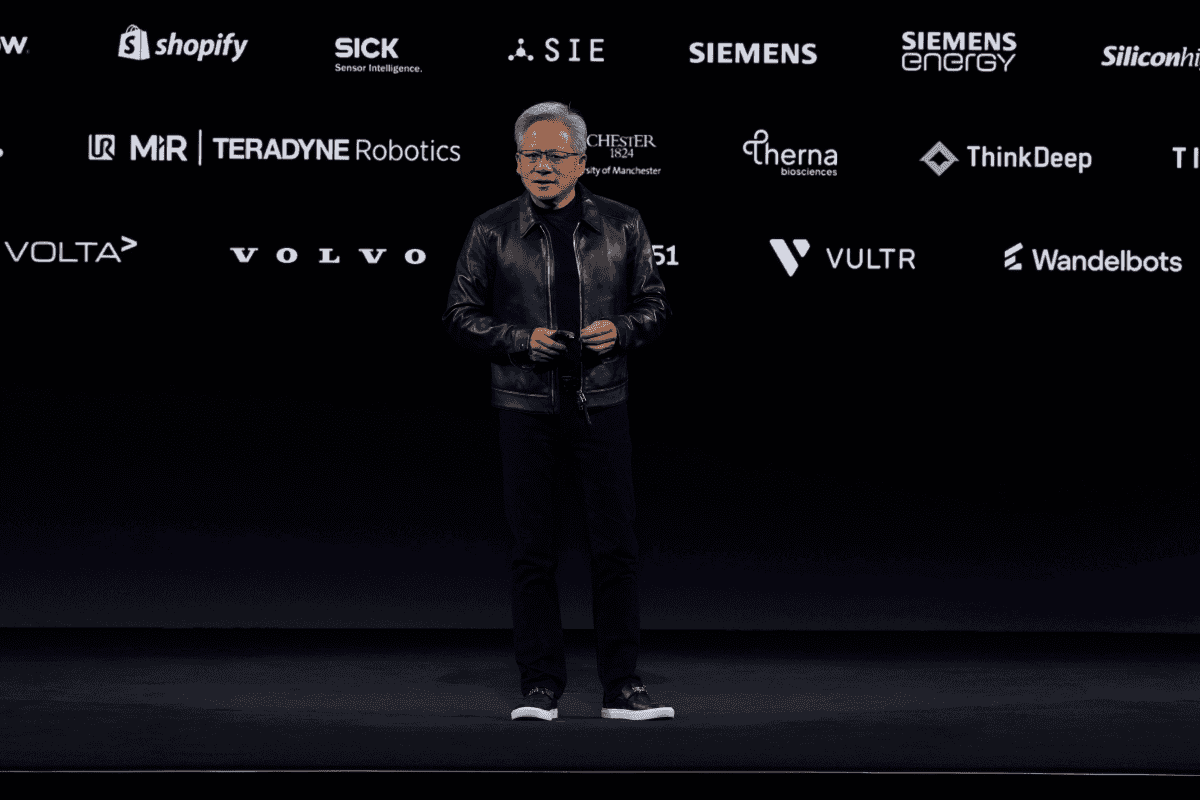
Nvidia CEO Jensen Huang speaks at the company's GTC Berlin event in Germany.
Nvidia/Instagram
- Nvidia launches probe into alleged China-linked espionage.
- Huang admits infidelity amid reports of two affairs.
- USD 7.5 billion in chip shipments linked to allegations.
- Former US prosecutor Joon H. Kim leads investigation.
- Colette Kress and Ian Buck emerge as possible successors.
Nvidia's board was meeting late Wednesday to consider whether to remove co-founder and CEO Jensen Huang amid growing scrutiny over his personal conduct and allegations involving a suspected Chinese intelligence operation, Reuters reported, citing a source familiar with the matter.
The US chipmaker's shares fell more than 8% in after-hours trading following reports that directors were considering Huang's removal.
If those losses persisted, Nvidia's market value would have fallen by approximately USD 600 billion since the company announced an investigation into the allegations on November 8.
Why is Nvidia's CEO under scrutiny?
Questions about Huang's leadership have intensified following reports of two relationships. The New York Times reported an affair with Nvidia executive Kimberly Powell, while separate coverage linked him to Alice Huang, a businesswoman suspected by US intelligence officials of acting for China. Those suspicions have not been proven, and Reuters could not independently verify the Powell report.
Huang acknowledged being unfaithful to his wife in a message to employees on November 8 but did not identify the person involved.
The controversy surrounding Alice Huang has raised questions about Nvidia's business dealings with China and whether its advanced chips reached Chinese companies despite US export restrictions.
The Information reported that the relationship helped facilitate at least USD 7.5 billion worth of Nvidia chip shipments to Chinese companies. Reuters has not independently verified that allegation.
China has rejected allegations that Alice Huang was acting as an intelligence operative.
The reports have also prompted scrutiny from US lawmakers over the enforcement of restrictions on advanced semiconductor exports to China.
Democratic Senators Elizabeth Warren and Chris Coons asked the Trump administration to preserve documents relating to Nvidia's chip exports to China. They also sought a congressional briefing on the national security risks associated with the suspected intelligence operation.
What action has Nvidia's board taken?
On November 8, Nvidia announced an independent investigation into reports that Huang may have been targeted by a foreign intelligence operation.
The board said it had no reason to believe national security information or company secrets had been compromised. It also expressed confidence in Huang and his leadership team.
On November 10, Nvidia's independent directors announced that they had retained former acting US Attorney Joon H. Kim and the law firm Wachtell, Lipton, Rosen & Katz to conduct the investigation.
The subsequent reports that directors were considering Huang's removal marked a significant shift from the board's earlier public support.
Under Nvidia's bylaws, a majority of directors can remove the CEO. The company has 11 directors, with all but Huang considered independent.
No formal decision to remove Huang had been publicly confirmed.
The FBI is separately examining whether Huang was targeted by a foreign intelligence operation, according to reports.
Despite his influence over Nvidia, Huang controls only around 3.6% of its shares and lacks the voting power to block his removal by the board.
How have investors reacted?
Nvidia shares fell more than 8% in extended trading on Wednesday after the Wall Street Journal reported that the board was preparing to consider removing Huang.
The decline added to losses driven by uncertainty over the company's leadership and corporate governance.
The turbulence also affected other technology companies. CoreWeave shares fell 6% in after-hours trading, while rival chipmakers AMD and Broadcom gained 4% and 3%, respectively.
Nasdaq futures declined around 1% during Asian trading on Thursday.
The market reaction reflects concerns over the potential departure of the executive who has led Nvidia for more than three decades and overseen its transformation into a dominant supplier of artificial intelligence processors.
Who could replace Jensen Huang?
Nvidia has no publicly identified successor to Huang, who co-founded the company in 1993 and holds approximately 3.6% of its shares.
Analysts and investors have identified Chief Financial Officer Colette Kress and senior engineer Ian Buck as possible internal candidates.
Kress, who joined Nvidia in 2013, is viewed as a potential interim leader because of her experience overseeing the company's finances and communicating with investors.
Buck, who joined in 2004 and helped develop Nvidia's CUDA software platform, is considered a possible longer-term candidate because of his technical expertise and role in the company's AI business.
Both possibilities remain speculative, with no appointment announced.
The leadership uncertainty comes ahead of Nvidia's quarterly financial results, scheduled for November 17, when investors will also assess the outlook for AI infrastructure spending.





Comments
See what people are discussing