

Pakistan-Afghanistan border closure stalls trade for a year
The Pakistan-Afghanistan border closure has halted trade for a year, hurting transporters and pharmaceutical traders as talks fail to reopen crossings

Kamran Ali
Correspondent Nukta
Kamran Ali, a seasoned journalist from Khyber Pakhtunkhwa, Pakistan, has a decade of experience covering terrorism, human rights, politics, economy, climate change, culture, and sports. With an MS in Media Studies, he has worked across print, radio, TV, and digital media, producing investigative reports and co-hosting shows that highlight critical issues.
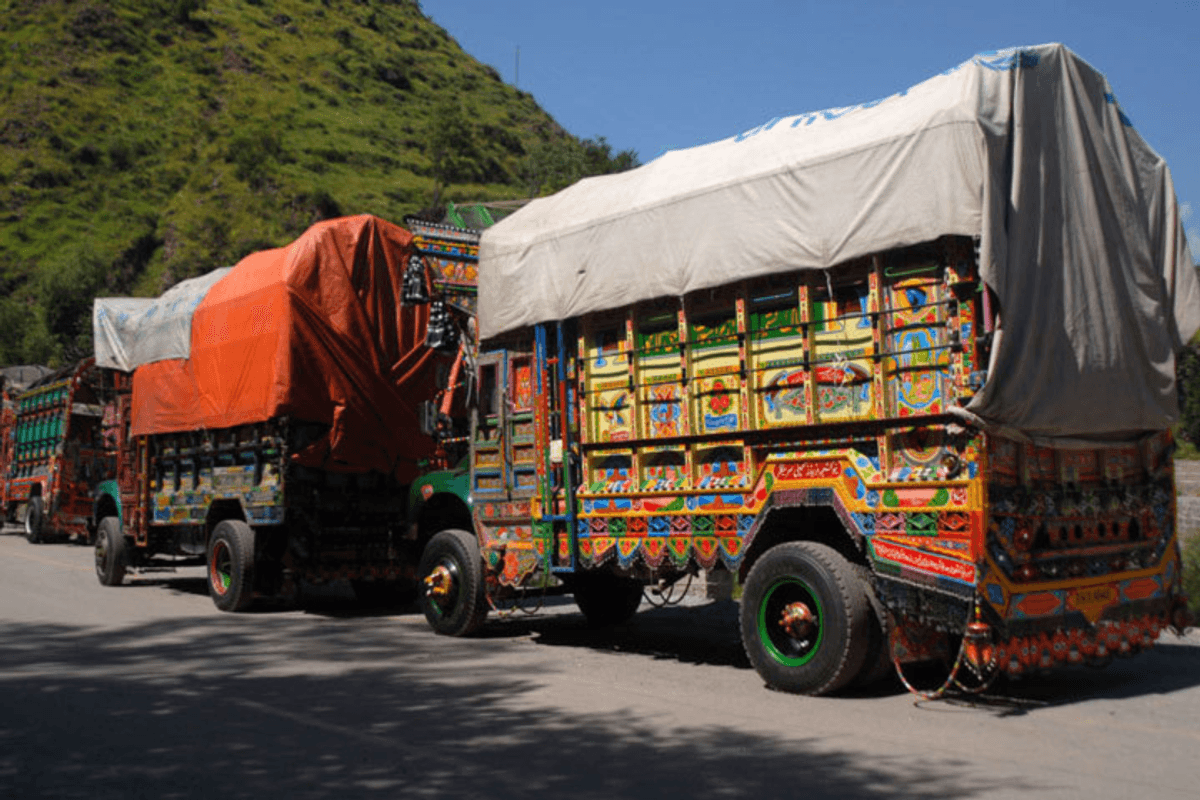
Persistent tensions have dimmed hopes of an early reopening, threatening the corridor’s future as a trade route.
A year after Pakistan closed its crossings with Afghanistan on October 12, cross-border trade remains at a standstill, disrupting businesses, livelihoods and trade links with Central Asia.
Repeated negotiations between Islamabad and the Afghan Taliban government have failed to secure a breakthrough.
Is the Pakistan-Afghanistan border open for trade?
No. Trade remains halted at the crossings. The Pakistan-Afghanistan border closure followed a series of explosions in Kabul on October 9 last year, which prompted Taliban forces to launch attacks along the border. Islamabad responded with cross-border shelling, and the crossings were closed on October 12.
The shelling caused casualties and infrastructure damage on both sides. Since then, Pakistan and the Afghan Taliban government have held several rounds of negotiations in Qatar, Turkey and China. The talks have yet to yield an agreement to restore trade.
How has the Pakistan-Afghanistan border closure hurt livelihoods in Pakistan?
The prolonged shutdown has hit livelihoods across Pakistan’s Punjab, Sindh, Balochistan and Khyber Pakhtunkhwa provinces. The effects have spread across sectors, from agriculture in Punjab and transport in Sindh to industrial activity in Khyber Pakhtunkhwa. Financial pressure on businesses and workers is mounting.
Muhammad Sabir, a goods transporter, told Nukta that trucks remained idle and cross-border transport business had fallen by around 90%. Drivers and transporters were struggling to make ends meet, he said. Daily-wage workers were also facing severe financial hardship.
What does the Afghan route mean for Pakistan’s trade with Central Asia?
Afghanistan was a key and geographically convenient corridor for Pakistan’s trade with Central Asia, said Shahid Hussain, head of the Pakistan-Afghanistan Trade Committee affiliated with the Border Trade Chamber. He said bilateral trade between Pakistan and Central Asian countries was worth around $1.5 billion before the border closures. The shutdown had affected about 50,000 families, he said.
Naeem ur Rehman, vice president of the Khyber Pakhtunkhwa Chamber of Commerce and Industry, said Pakistan was exploring alternative routes to Central Asia through China and Iran. Both were significantly longer and more expensive than the Afghan route, he said.
“Using the Afghan route, a container would take around eight days to reach its destination at a cost of approximately 800,000 Pakistani rupees. Through China, the journey takes about 30 days, with costs tripling, making it unviable for businesses,” he said.
How has the border closure affected medicine trade?
The closure has also affected pharmaceutical trade. Arshad Mohmand, chief coordinator of the Pakistan Drugists and Chemists Association, said around 80% of Khyber Pakhtunkhwa’s pharmaceutical trade was linked to the Afghan market. The year-long shutdown had forced many medicine traders to close their businesses, while others faced the risk of bankruptcy, he said.
The disruption had also affected access to medicines in Afghanistan, where people had lost access to affordable, high-quality products previously supplied through Pakistan. “Before the closures, trade worth tens of millions of rupees took place between Pakistan and Afghanistan every day,” Mohmand said.
Will the Pakistan-Afghanistan border reopen soon?
Hussain said resuming trade would be difficult given the security situation in Khyber Pakhtunkhwa and the federal government’s policies. Traders and industry experts are urging authorities to reopen the crossings, warning that continued restrictions are deepening economic losses on both sides of the border.
With tensions between Pakistan and Afghanistan persisting, many remain pessimistic about an early reopening. They fear that the once-vital trade corridor may no longer provide a reliable route for commerce.




Comments
See what people are discussing