

Pakistan says 'attacker identified' after suicide blast in capital kills at least 31
Defense minister says evidence points to India and Afghanistan, vows state will 'respond with full force'
Aamir Abbasi
Editor, Islamabad
Aamir; a journalist with 15 years of experience, working in Newspaper, TV and Digital Media. Worked in Field, covered Big Legal Constitutional and Political Events in Pakistan since 2009 with Pakistan’s Top Media Organizations. Graduate of Quaid I Azam University Islamabad.

Ali Hamza
Correspondent
Ali; a journalist with 3 years of experience, working in Newspaper. Worked in Field, covered Big Legal Constitutional and Political Events in Pakistan since 2022. Graduate of DePaul University, Chicago.
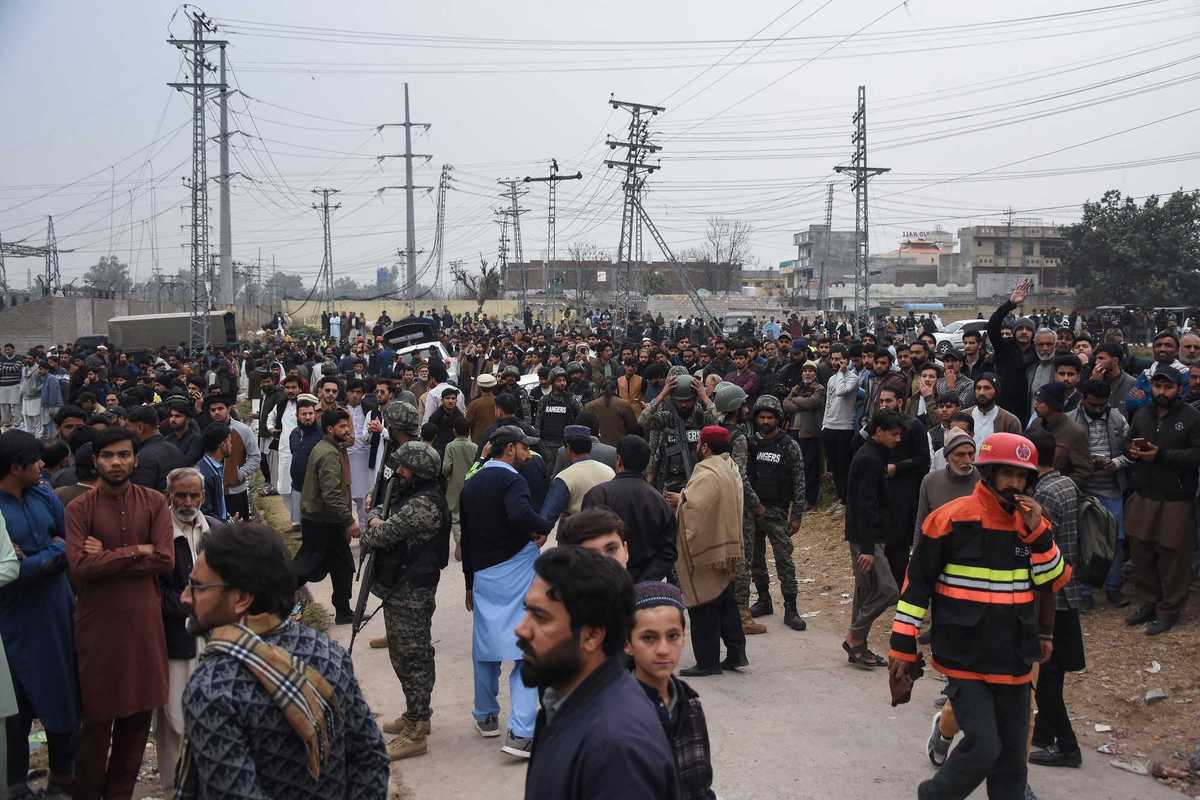
People gather near the site of a deadly explosion at a mosque in Islamabad, Pakistan, February 6, 2026.
Reuters
At least 31 people were killed and more than 100 others injured on Friday when a suicide blast struck an Imambargah in Pakistan’s capital, Islamabad.
State Minister for Interior Talal Chaudhry said the attacker has been identified, with investigations revealing travel links to Afghanistan.
The explosion occurred at Imambargah Qasr-e-Khadijat-ul-Kubra while worshippers were inside, according to preliminary probe from authorities. Images from the scene showed bloodied bodies on the carpeted mosque floor, surrounded by debris, shattered glass, and panicked worshippers.
Two police officials, speaking on condition of anonymity, said the attacker was stopped at the mosque gate before detonating the bomb.
Investigation ordered
Federal Interior Minister Mohsin Naqvi strongly condemned the attack and directed the Chairman of the Capital Development Authority (CDA) to ensure the complete restoration of the Imambargah as soon as possible.
Naqvi said that elements involved in terrorism in Pakistan receive foreign backing and that adversaries are attempting to disrupt the country’s peace, unity, and development. He instructed the Islamabad police chief to conduct a thorough investigation and assured that those responsible would be arrested promptly.
Attack ‘sponsored by neighbors’
Chaudhry told reporters that the attack was sponsored by Pakistan’s “neighbors”. He said the incident was reported to the Islamabad administration at 1:42 pm.
He added that the suicide bomber was not an Afghan national, but investigators had traced his previous travel to Afghanistan. Among the dead was a cousin of Islamabad’s Inspector General of Police.
The minister said the National Action Plan against terrorism is being fully enforced and that there is no leniency in its implementation. He added that the Interior Minister had visited the Imambargah to review the situation firsthand.
‘State to respond with full force’
Pakistan’s Defense Minister condemned the attack, describing those who targeted worshippers as enemies of both religion and the nation.
He confirmed that investigations had established the involvement of a terrorist who had travelled to and from Afghanistan and pointed to emerging evidence of links between India and the Taliban. According to the minister, security guards challenged the attacker, who then opened fire before detonating the explosive among the last row of worshippers.
“God willing, the state will respond to this brutality with full force,” he said. The minister added that India, following a humiliating defeat, is now waging conflict through proxy groups and no longer has the capacity to engage in a direct war.
The injured were taken to hospitals including the Pakistan Institute of Medical Sciences (PIMS) and Polyclinic, while others were being shifted to additional medical facilities. Authorities have sealed the blast site as investigators work to determine the cause of the explosion.
PM pledges justice
Prime Minister Shehbaz Sharif condemned the attack, pledging that those responsible would be found and brought to justice. Islamabad has blamed separatist armed groups in southern Balochistan, the Pakistani Taliban, and other militants in northern Khyber Pakhtunkhwa for using Afghan territory as a safe haven to launch attacks.
The Taliban government in Kabul has repeatedly denied the allegations, and tensions along the border have escalated, with forces from both sides regularly clashing.
The last major attack in Islamabad occurred in November, when a suicide blast outside a court killed 12 people and injured dozens - the first such incident in the capital in nearly three years.
Recent attacks in Balochistan prompted counter-operations in which authorities said security forces killed more than 200 militants.


Comments
See what people are discussing