


Azhar Khan
Producer, Karachi Desk
Azhar Khan is a journalist with over 14 years of experience across print, electronic, and predominantly digital media. He has recently held key editorial roles at leading media organizations.
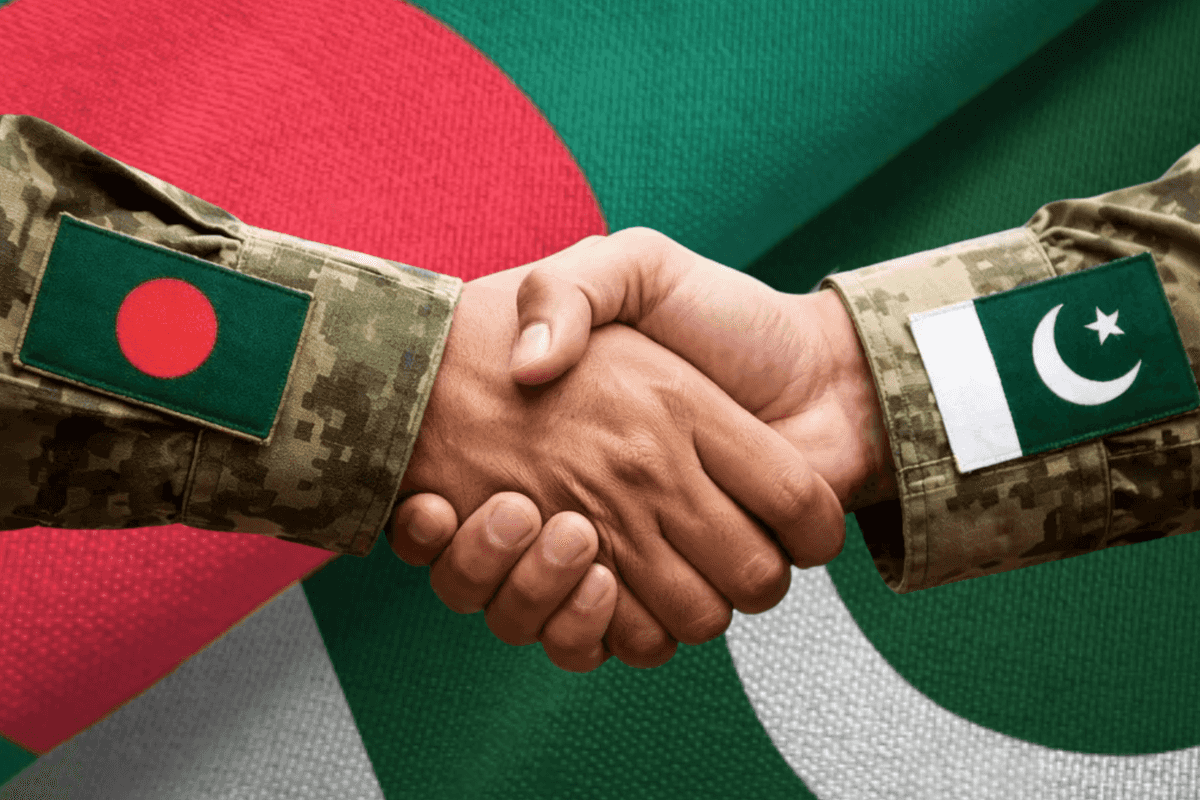
Regular Pakistan-Bangladesh military talks since early 2025 signal a cautious thaw with regional implications.
Nukta
In a striking turn in South Asian diplomacy, Pakistan and Bangladesh are cautiously rebuilding ties, with defense cooperation emerging as a cornerstone of the renewed engagement.
The gesture signals a thaw between two countries long separated by history, ideology and mistrust. Both are now navigating a political landscape that could open the door to strategic partnership.
Speaking to Nukta, Pakistan’s former defense secretary, Lt. Gen. (R) Naeem Khalid Lodhi, described the developments as “an important step for both countries,” noting that Pakistan’s growing contacts with like-minded nations are reshaping regional dynamics.
Last week, Bangladesh’s Air Chief Marshal Hasan Mahmood Khan visited Pakistan’s General Headquarters in Rawalpindi to meet Field Marshal Syed Asim Munir, the Chief of Army Staff and Chief of Defense Forces. According to the military’s press wing, ISPR, the talks focused on regional security, professional military collaboration, and opportunities for joint training and capacity-building initiatives.
JF-17s on the horizon
Central to the dialogue is Pakistan’s proposal to sell its JF-17 Thunder fighter jets to Dhaka. The potential deal underscores Islamabad’s ambition to expand its defense footprint in the region.
“Pakistan has become a significant exporter of sophisticated military hardware,” Lodhi said, “a sector previously influenced by external powers, including India. Through military diplomacy, Pakistan’s position is strengthening, and its war-tested technology demonstrates reliability and sustainability.”
The multi-role combat aircraft, co-developed with China, gained prominence during last year’s brief but intense clash with India. Pakistan has also offered rapid delivery of Super Mushshak trainer aircraft, along with comprehensive training and long-term support.
Bangladesh’s air chief praised the professionalism of Pakistan’s armed forces and their role in regional stability. Field Marshal Munir, in turn, reaffirmed Islamabad’s commitment to fostering enduring defense ties. Both sides agreed to maintain close cooperation, signaling cautious optimism in a region where alliances often shift with political winds.
Political shifts pave the way
The thaw follows a dramatic political change in Dhaka. The ouster of Sheikh Hasina in August 2024, after a popular uprising, ended her government’s staunchly pro-India stance and opened space for renewed engagement with Pakistan.
Since then, trade relations have resumed, visa restrictions eased, and government-to-government deals - including a rice supply agreement - have been signed.
High-level diplomacy has mirrored these developments. In August 2025, Pakistan’s Deputy Prime Minister and Foreign Minister Ishaq Dar visited Dhaka, the first such visit in 13 years, signing six agreements spanning trade, media, academia, and culture.
“Economically, Pakistan can supply Bangladesh with military hardware, reducing its reliance on other countries,” Lodhi said, highlighting the multi-dimensional nature of the rapprochement.
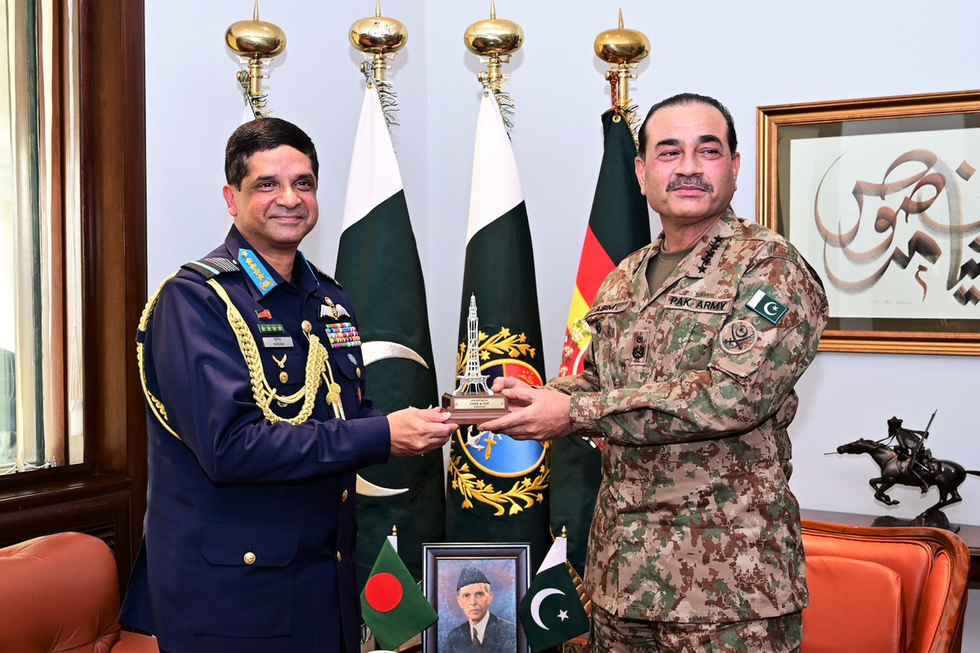 Bangladesh Air Chief Hasan Mahmood Khan met Pakistan Army Chief Syed Asim Munir at Rawalpindi\u2019s GHQ. ISPR
The “Knowledge Corridor” initiative, offering scholarships and civil service training to Bangladeshi students and officials, marks a tangible commitment to fostering ties beyond defense. Discussions on resuming direct flights and enhancing regional trade further signal Islamabad’s push to normalize relations.
A century of complex ties
The history between Pakistan and Bangladesh is fraught with tension. Following Bangladesh’s independence in 1971, bilateral relations were often strained, dominated by unresolved issues such as war reparations, stranded citizens and asset disputes.
Relations hit particularly low points in 2013 and 2014, and despite brief attempts at reconciliation in 2020, substantive engagement remained stalled.
Against this backdrop, the current efforts acquire added significance. Formal foreign secretary-level talks resumed in April last year for the first time in 15 years, signaling a willingness to move past entrenched grievances.
Lodhi described the rapprochement as “a reconciliation between two brothers whose past misunderstandings have now been cleared, benefiting the entire region,” while noting that India’s strategic position is increasingly constrained between Pakistan, China, and Bangladesh.
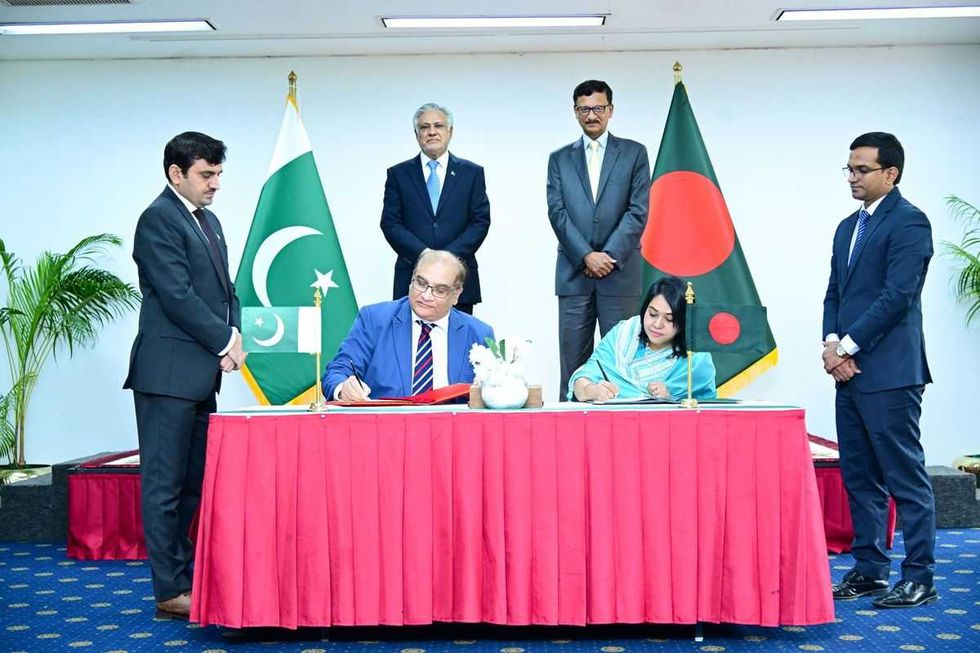 Pakistan\u2019s Deputy PM Ishaq Dar made the first Dhaka visit in 13 years, sealing six deals on trade, media, education, and culture. FO
Military engagement as a bridge
High-level military meetings have become a cornerstone of the thaw. Since January 2025, Pakistani and Bangladeshi officers have met regularly to explore shared security challenges and professional collaboration. Analysts suggest that this cautious yet deliberate rapprochement could reshape South Asian geopolitics.
“Past misunderstandings between Pakistan and Bangladesh will take time to resolve,” Lodhi cautioned. “However, by acknowledging historical truths and fostering transparency, both countries can overcome obstacles and move forward toward closer cooperation.”
Beyond ceremonial gestures, Pakistan and Bangladesh appear intent on forging a pragmatic, forward-looking partnership - one capable of addressing regional security challenges, boosting trade and promoting people-to-people connectivity. It is a new chapter in a long, often turbulent, shared history.



Comments
See what people are discussing