

Pakistan working towards first phase of Bitcoin mining, says minister
Bilal bin Saqib says country will also launch its own stablecoin

Business Desk
The Business Desk tracks economic trends, market movements, and business developments, offering analysis of both local and global financial news.
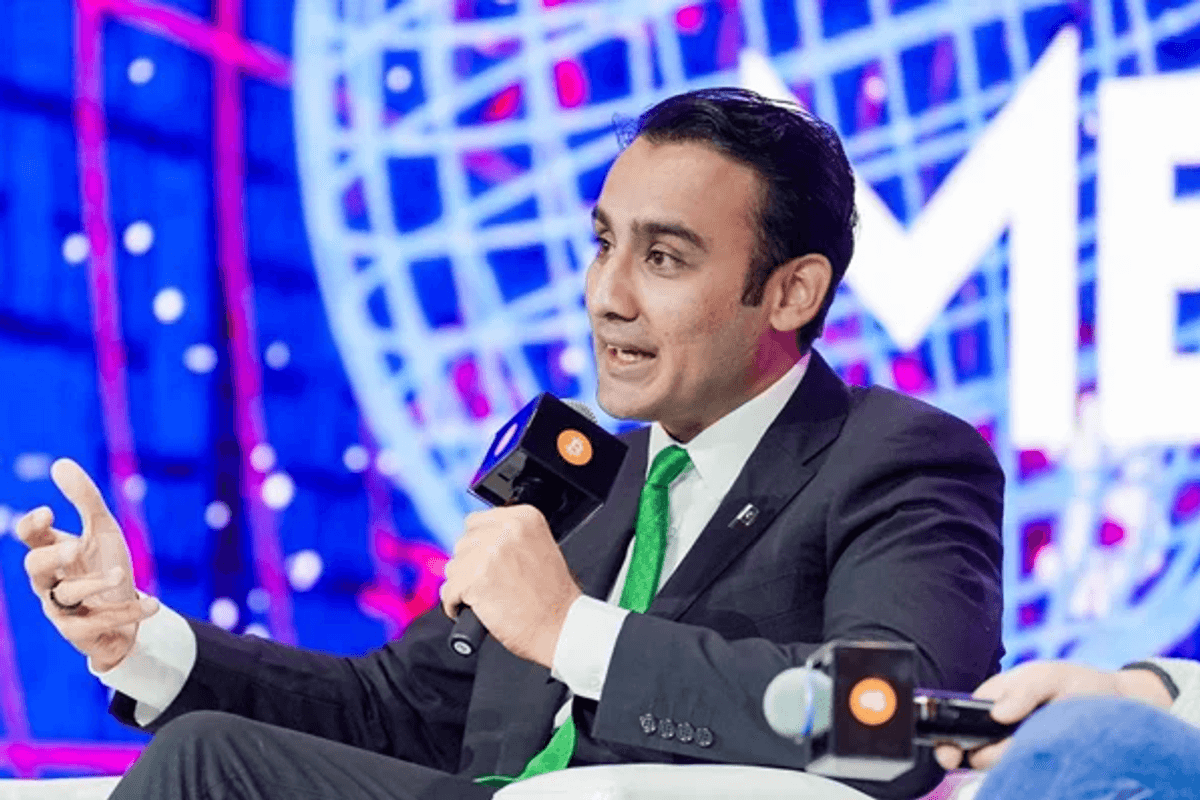
Bilal bin Saqib says the government views cryptocurrency as a tool for financial inclusion in Pakistan, where 100 million people remain unbanked
File
Pakistan is poised to launch its own stablecoin and is advancing toward its first phase of state-backed Bitcoin mining, according to a senior official speaking at Binance Blockchain Week in Dubai.
Bilal bin Saqib, Minister of State and Chairman of the Pakistan Virtual Assets Regulatory Authority, confirmed that the government is actively working on digital currency solutions to modernize the nation's financial infrastructure.
"Pakistan will definitely launch its own stablecoin," Saqib stated, noting that the country is currently experimenting with both a stablecoin and a Central Bank Digital Currency (CBDC). He described the initiative as a strategic move to "collateralize the government debt" and facilitate instant settlements for exporters and entrepreneurs.
The push for a sovereign stablecoin is driven by specific economic use cases, particularly regarding the country's $36 billion annual remittance market. Saqib argued that utilizing stablecoins could save users roughly 3% in fees when sending money back to villages and cities in Pakistan, calling emerging economies "one of the greatest use cases" for the technology.
Furthermore, the government views this technology as a tool for financial inclusion in a country where 100 million people remain unbanked. "We want to take this leapfrog... and also target the unbanked people using our stablecoin," Saqib said.
Beyond currency, the minister revealed that the country is moving forward with industrial-scale cryptocurrency operations. "We are on route for our first phase of Bitcoin mining," Saqib said, adding that a wallet is currently being set up and the government will soon announce news regarding its reserves.
Saqib framed the mining initiative not just as an asset accumulation strategy, but as a critical infrastructure requirement for the artificial intelligence sector. He described Bitcoin mining as the "first step to create the momentum" toward establishing "sovereign compute".
This infrastructure is intended to support Pakistan's massive freelance market—the third or fourth largest in the world—by providing the AI data centers necessary for engineers to build agentic workflows. "They are at the risk of going out of business if we do not put in the right enabling environment," he warned.
These developments follow the establishment of Pakistan’s first independent digital assets regulatory authority, which Saqib leads. He noted that after a decade of legal ambiguity regarding crypto, the new mandate provides a "one-window operation" for licensing and education, turning "confusion into clarity".
Despite the previous lack of a regulatory framework, Saqib noted that Pakistan had already become the third-biggest market for crypto adoption. He attributed this demand to a population of 250 million with an average age of 23.
"They are already living in stablecoins even before there is any regulation," Saqib said of the country’s tech-savvy youth. "They want to live in the future. They don't want to live in today's financial world".




Comments
See what people are discussing