

Pakistan bonds draw USD 129.8 million from Gulf investors
PIB yields near 12.5% offer a wide nominal premium over Gulf benchmark rates, though currency and repatriation risks remain key constraints

Business Desk
The Business Desk tracks economic trends, market movements, and business developments, offering analysis of both local and global financial news.
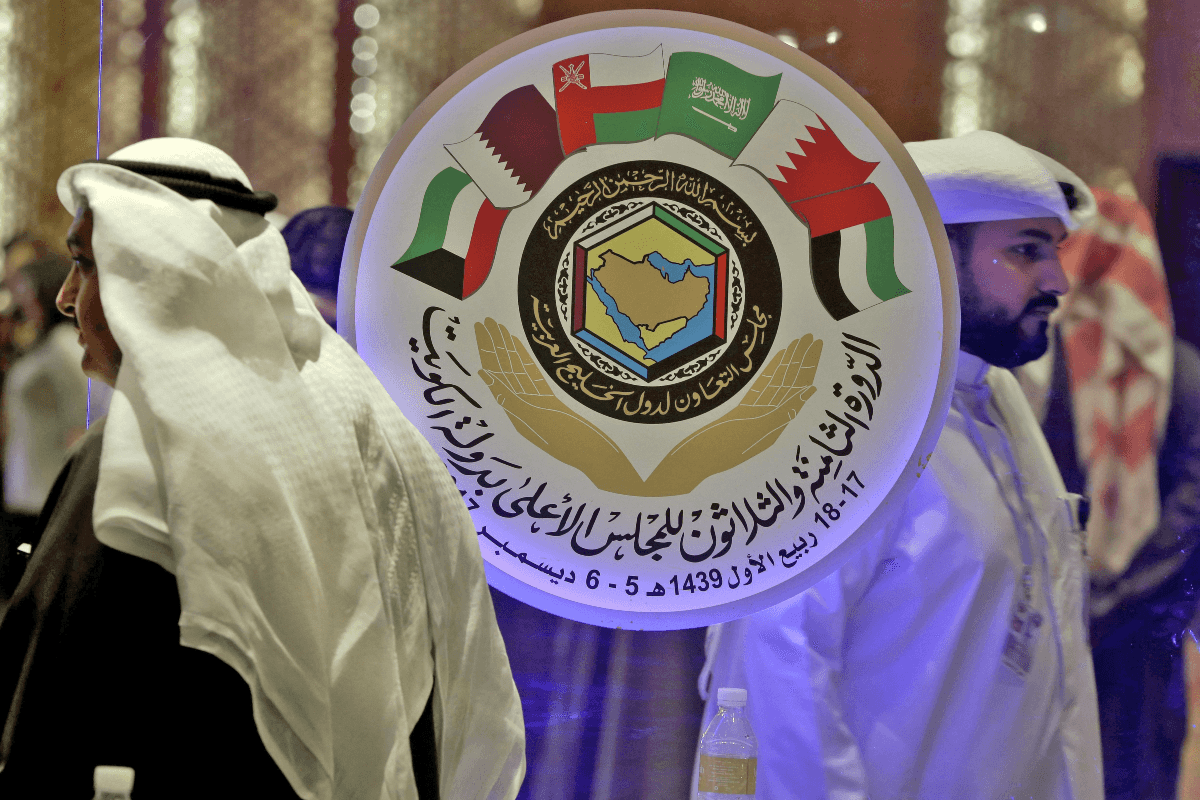
The logo of the Gulf Cooperation Council (GCC) is seen during a GCC meeting, in Kuwait City.
AFP
Pakistan’s relatively high interest rates are attracting Gulf investors to long-term government debt, with investors from the region placing USD 129.8 million in Pakistan Investment Bonds during the first 25 days of September, according to State Bank of Pakistan data.
The United Arab Emirates accounted for the bulk of the inflows as Pakistan’s government securities offered a substantial nominal yield premium over benchmark interest rates across Gulf economies.
A treasury-market expert said much of the recent investment appeared to involve the reinvestment of maturing holdings, with only a small amount of fresh money. Still, the inflows indicated that Pakistani government securities could attract greater Gulf participation.
“The sign is good that domestic bonds are attractive and the Gulf countries could see this opportunity as a good option,” the expert said.
He said Pakistan should make domestic bonds more attractive to Gulf investors and build foreign exchange reserves faster to strengthen confidence that investors would be able to repatriate their funds.
Why do Pakistan bonds offer a large yield premium?
Pakistan’s 11.5% policy rate is 7 to 8 percentage points above benchmark central-bank rates across the Gulf economies examined. Fixed-rate Pakistan Investment Bond yields are even higher at about 12.4%-12.5%, offering a substantial nominal premium, although foreign investors remain exposed to currency, sovereign and repatriation risks.
The difference in monetary conditions is significant. Kuwait’s discount rate stands at 3.5%, while the UAE’s base rate is 3.9%. Qatar’s repo rate is 4.35%, while Saudi Arabia, Oman and Bahrain have benchmark rates of 4.5%.The gap is wider when compared with actual Pakistani government bond yields.
In the latest fixed-rate PIB auction, cut-off yields ranged from 12.399% on two-year bonds to 12.50% on 10-year bonds.
A 12.5% PIB yield is 9 percentage points above Kuwait’s discount rate and 8.6 percentage points above the UAE’s base rate.
The comparison illustrates Pakistan’s nominal interest-rate premium, but Gulf central-bank benchmark rates and Pakistani sovereign bond yields are different financial measures and should not be treated as equivalent investment returns.
Most GCC currencies are pegged to the U.S. dollar, meaning monetary conditions across much of the region broadly follow U.S. interest-rate movements. Kuwait is an exception, with the dinar managed against a basket of currencies.
For Gulf investors, the higher Pakistani yield also comes with exchange-rate risk. Returns on rupee-denominated securities can be reduced if the Pakistani currency weakens against the dollar or an investor’s domestic currency.
Pakistan’s sovereign risk, foreign exchange liquidity and the ability to repatriate investment proceeds can also affect the attractiveness of its government debt.
Foreign participation remains mixed
During the first quarter of fiscal 2027 through September 25, gross foreign investment in PIBs totaled USD 203.7 million, against outflows of USD 115 million.
Gross investment in Treasury bills stood at USD 161 million over the same period, while outflows reached USD 171 million.
The figures indicate stronger gross participation in longer-term PIBs, although foreign flows into Pakistani government securities remain mixed overall.
The USD 129.8 million invested by Gulf countries in PIBs during the first 25 days of September therefore represents a notable inflow rather than evidence of a broad shift of Gulf capital toward Pakistan.
Regional financial conditions have meanwhile remained volatile amid continuing geopolitical tensions and disruptions around the Strait of Hormuz.
Reuters reported Tuesday that most Gulf stock markets were under pressure from continuing geopolitical tensions, although Gulf oil exports excluding Iran had recovered to more than 81% of pre-war levels in September.
The regional backdrop may influence investment decisions, but the available data do not establish that geopolitical tensions caused the recent inflows into Pakistani bonds.
Can Pakistan sustain Gulf investment in its bonds?
Analysts say Pakistan would need to strengthen foreign exchange liquidity and confidence in repatriation to turn temporary or reinvested inflows into a more durable source of financing.
The treasury expert said the government should also promote longer-term PIBs because they would reduce the frequency of repayments and provide a more stable source of financing.
Greater participation by foreign investors and overseas Pakistanis could help broaden the investor base for government securities.
Pakistan’s strong workers’ remittance flows could also provide a potential channel for mobilizing overseas Pakistani savings into domestic government securities, although rebuilding confidence in the domestic financial system remains important.
For Gulf investors, the attraction is ultimately a trade-off between yield and risk. Pakistan offers benchmark interest rates substantially above those available across the Gulf, while longer-term government bond yields are around 12.5%.
That premium comes with additional currency, sovereign and external-financing risks. A Gulf investor earning 12.5% on rupee-denominated securities could see part or all of that return eroded if the Pakistani currency depreciates significantly.
Sustaining foreign participation will therefore depend not only on the yields offered by Pakistani government securities, but also on investor confidence in the rupee, foreign exchange reserves and the ability to repatriate capital.




Comments
See what people are discussing