

Pakistan central bank slows dollar purchases as imports rise
SBP buys $2.5 billion in first four months of FY26, down 23% year on year

Business Desk
The Business Desk tracks economic trends, market movements, and business developments, offering analysis of both local and global financial news.
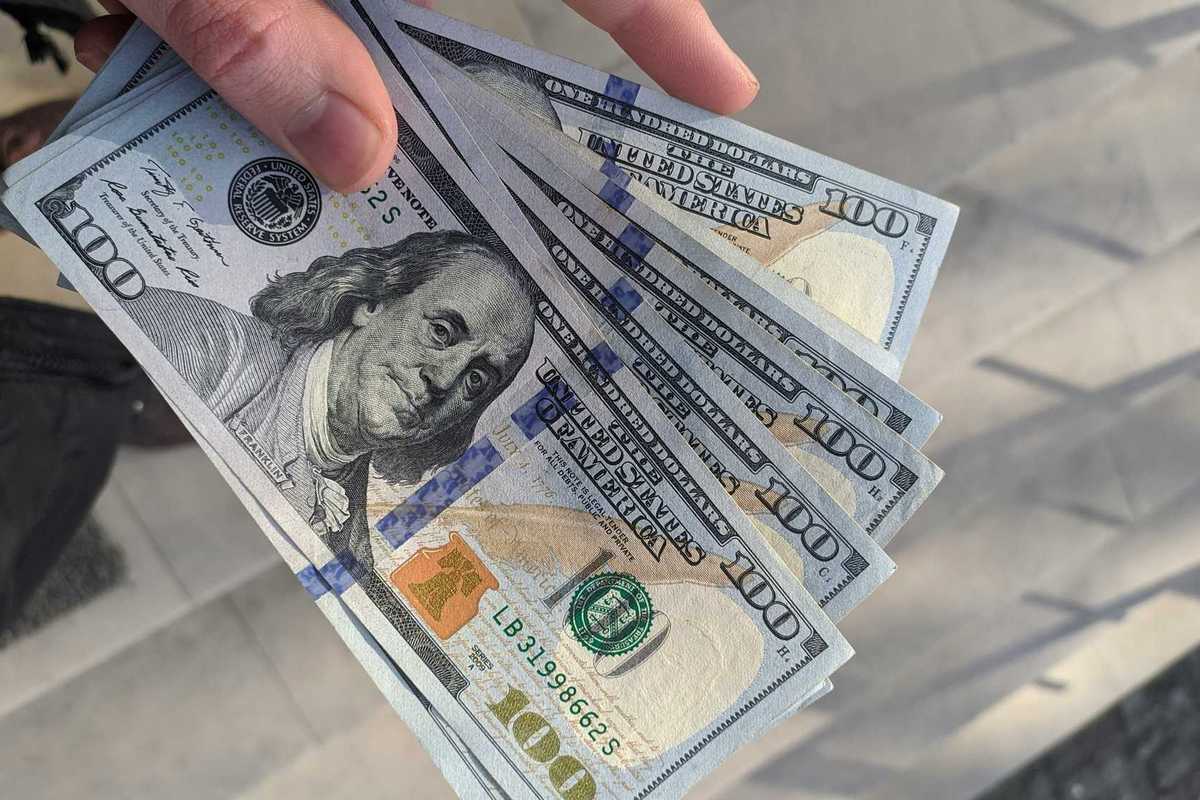
Pakistan’s central bank slowed its dollar purchases during the first four months of the current fiscal year as rising imports drove higher demand for foreign currency, data from the State Bank of Pakistan (SBP) showed.
According to figures compiled by Nukta, the SBP bought $2.5 billion in dollars from July to October last year, down 23% from $3.2 billion during the same period a year earlier.
Analysts said the slowdown reflects tighter dollar availability in the market due to surging import demand. “The central bank’s slower dollar buying indicates that rising imports are absorbing much of the greenback supply, putting pressure on liquidity in the market,” an analyst said. “Imports averaged $5.6 billion per month in the first half of FY26, up from $5.1 billion a year ago, while exports remained subdued, and remittances showed a stronger-than-expected performance.”
Dollar buying, which accelerated from June 2024, now totals $10.756 billion for the current fiscal year, compared with $7.681 billion in FY25.
In October alone, the central bank purchased $1 billion from the interbank market, matching September’s intervention, bringing total interventions over the past 12 months to $6.9 billion.
Officials have revised remittance estimates for FY26 to a range of $42 billion to $43 billion, up from $40 billion, following last year’s $38.4 billion inflow.
The State Bank monetary statement said that the external current account registered a deficit of $244 million in December, leading to accumulative deficit of $1.2 billion during H1-FY26. This was mainly led by a widening in the trade deficit due to a substantial growth in imports and a decline in exports.
The weak export out turns were driven by a sharp drop in food exports, particularly of rice, while HVA textile exports remained resilient. Meanwhile, sustained growth in workers’ remittances and ICT services exports helped in containing the current account deficit.
This has helped the SBP to build foreign exchange reserves mainly through purchases. Going forward, continued uptick in workers’ remittances and supportive global commodity prices are assessed to contain the current account deficit in the range of 0 to 1% of GDP in FY26.
Based on this outlook and the realization of plannedofficial inflows, SBP’s FX reserves are expected to surpass $18.0 billion by June 2026 and rise further in FY27, approaching the benchmark of three months of import cover.
This outlook is susceptible to some major risks, especially those emanating from global trade fragmentation and geopolitical uncertainty.




Comments
See what people are discussing