

Grieving family waits as Afghan civilian’s body remains caught in border dispute
Pakistani security sources say tribal jirga holds two-hour ceasefire to hand over body, but Afghan elders refuse, citing lack of authority

Kamran Ali
Correspondent Nukta
Kamran Ali, a seasoned journalist from Khyber Pakhtunkhwa, Pakistan, has a decade of experience covering terrorism, human rights, politics, economy, climate change, culture, and sports. With an MS in Media Studies, he has worked across print, radio, TV, and digital media, producing investigative reports and co-hosting shows that highlight critical issues.
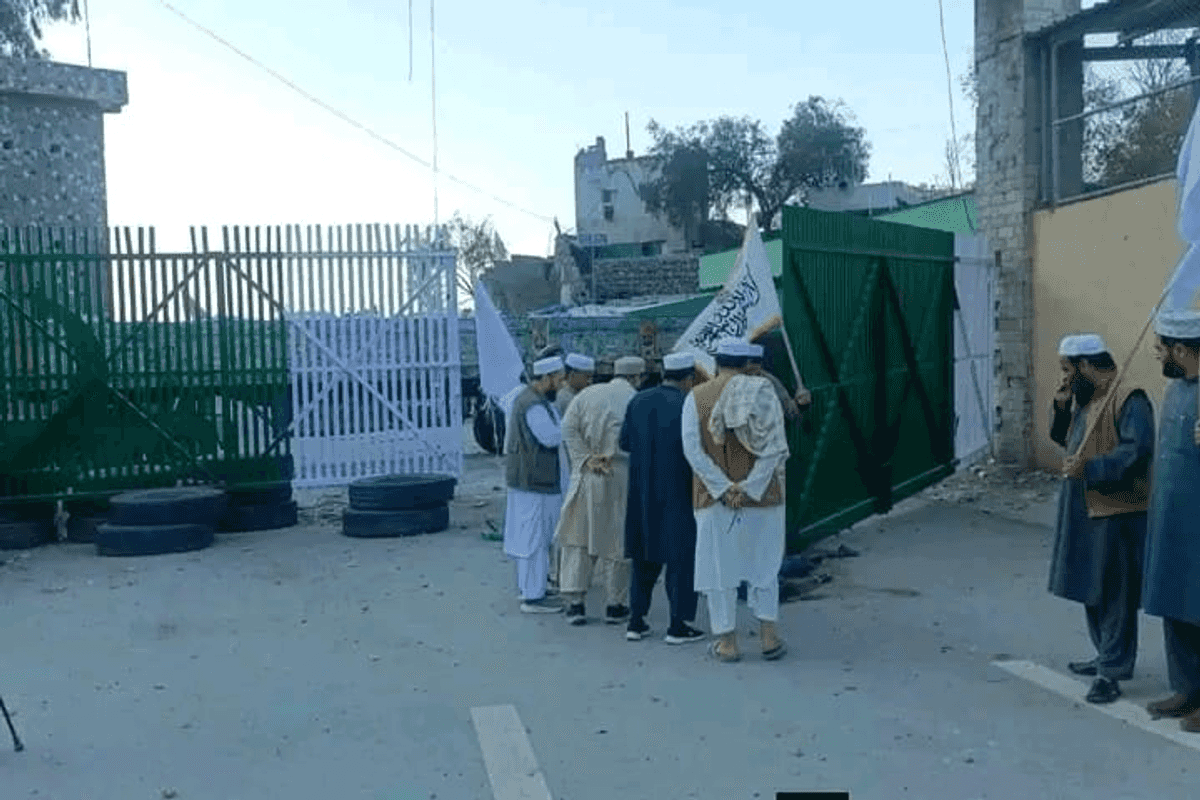
Pakistan has repeatedly alleged that militants operate from Afghan territory, a claim denied by Kabul.
Nukta
The body of an Afghan civilian killed during recent clashes along the Pakistan-Afghanistan border has remained at the frontier for more than a week, despite repeated appeals to authorities on both sides for its return.
The delay highlights continuing friction in the border region following a fresh round of cross-border violence.
Who was killed?
The deceased has been identified as Khalid, an Afghan civilian from Jalalabad in Nangarhar province.
Salah Khan, the man’s uncle, told local media that Khalid went missing shortly before Ramadan. “We left Pakistan as refugees in September last year, but Khalid was mentally ill and lost his way back, after which he went missing,” he said.
Khan appealed to authorities on both sides to expedite the return of the body. “Both sides should observe a temporary ceasefire for a few hours so we can retrieve the body,” he requested, calling for a gesture of goodwill and humanity.
Reasons for delay
Shah Khalid Shinwari, a member of a Pakistani jirga, told Nukta that Afghan officials had failed to maintain the required neutrality during the handover process. “They asked us for more time to receive the body, but after returning, they posted videos against Pakistani forces without reason, despite Pakistan’s full cooperation, which further worsened the situation,” he said.
Shinwari added that Afghan authorities were not taking the matter seriously. “If they were, the body would have been received the same day after identification,” he said.
He noted that Pakistan had also requested assistance from the International Committee of the Red Cross (ICRC), and that Pakistani security forces remain ready to cooperate, but that the Afghan delay means diplomatic channels may be the most effective path forward.
Pakistan seeks diplomacy, Afghanistan quiet
Pakistani security sources said a jirga of tribal elders convened on March 12, and a two-hour ceasefire was observed to facilitate the identification and handover of the body. However, Afghan jirga members reportedly refused to receive it, citing a lack of authority.
“Now the handover is possible only through diplomatic channels and the embassy after identification, but the Afghan side has not reached out yet,” the sources added.
Repeated attempts to obtain a comment from the Afghan authorities went unanswered.
Timeline of the clashes
The latest clashes began on Feb. 26, when both sides exchanged heavy gunfire following a Pakistani airstrike in Afghanistan targeting a suspected cross-border militant network. Pakistan has repeatedly alleged that militants operate from Afghan territory, a claim denied by Kabul.
The tensions follow earlier incidents, including a series of explosions in Kabul on Oct. 9 last year, which led Taliban forces to attack areas along the Pakistan border. Islamabad responded with cross-border shelling, resulting in casualties, infrastructure damage, and the suspension of trade after border closures on Oct. 12.
Since then, Pakistan and the Taliban-led Afghan government have held multiple rounds of negotiations in Qatar and Turkey, but a resolution to the border tensions remains elusive.



Comments
See what people are discussing