

Pakistan sees shift in Kabul’s stance on militancy, but vows response to future attacks
At jirga, the army chief urged tribal elders to help identify militants in their communities and called on militant youth to surrender to the state

Kamran Ali
Correspondent Nukta
Kamran Ali, a seasoned journalist from Khyber Pakhtunkhwa, Pakistan, has a decade of experience covering terrorism, human rights, politics, economy, climate change, culture, and sports. With an MS in Media Studies, he has worked across print, radio, TV, and digital media, producing investigative reports and co-hosting shows that highlight critical issues.
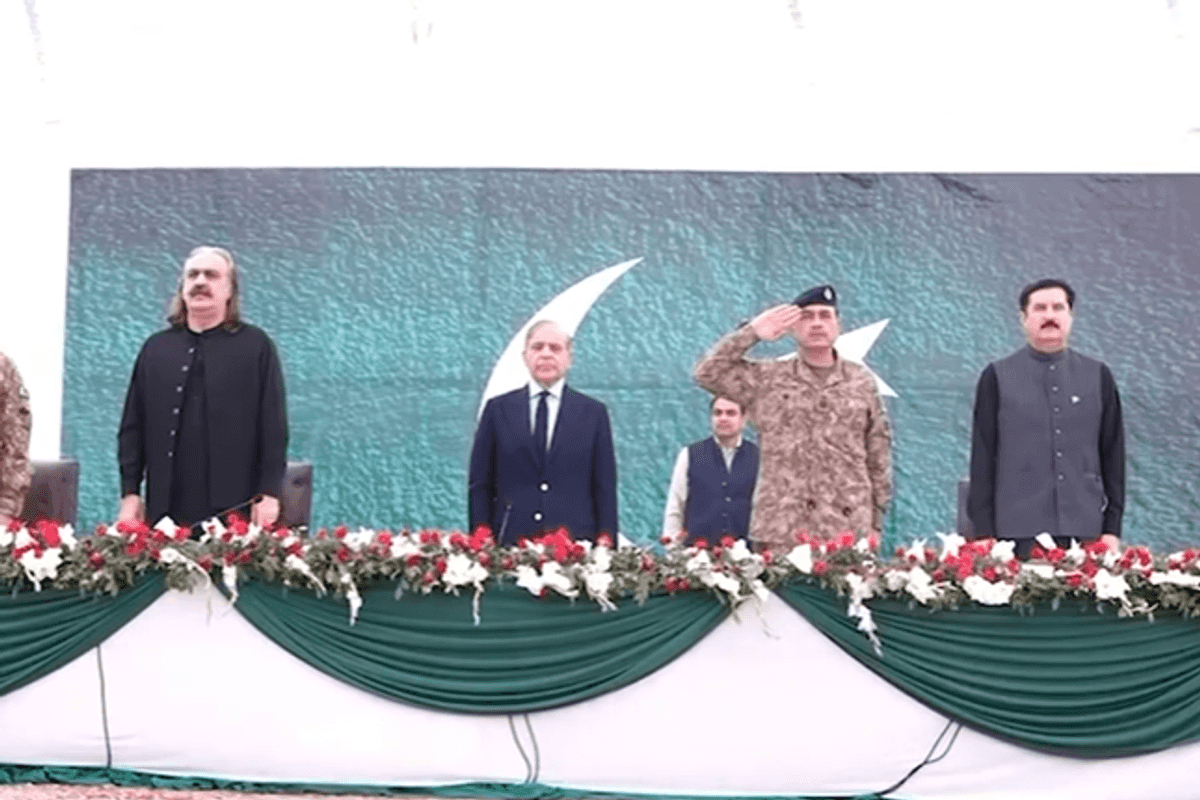
Pakistan's civil and military leadership attend jirga held in Peshawar.
Screengrab
Pakistan’s Chief of Army Staff (COAS), Field Marshal Syed Asim Munir, has said that while Afghan soil has previously been used for terrorist activities against Pakistan -- an issue Islamabad has consistently raised with Kabul -- there are now signs of a positive shift.
“We are now receiving a positive response from the Afghan side,” he noted, expressing cautious optimism that such hostile use of Afghan territory will come to an end. However, he warned, “If such activities continue, there will be no leniency or negotiations with terrorists -- only decisive action.”
The army chief’s remarks came during a high-level jirga held in Peshawar to review the security situation in Khyber Pakhtunkhwa (KP) and to take tribal leaders and elders into confidence regarding ongoing measures and developments.
Top civil-military leadership attends Peshawar jirga
The jirga was attended by Prime Minister Mian Shehbaz Sharif and Field Marshal Asim Munir, along with KP Governor Faisal Karim Kundi, Chief Minister Ali Amin Gandapur, federal and provincial ministers, tribal elders, traders, and members of both the National and Provincial Assemblies.
Mehr Elahi, President of the KP Tanzeem-e-Tajiran (Traders Association), who participated in the jirga, said the army chief reiterated that Afghanistan had been repeatedly urged to prevent the use of its soil against Pakistan.
Elahi added that this message is now reportedly being met with a more cooperative tone from Kabul. “The army chief also made it clear that no military operation will be conducted against our own people,” Elahi said. “But strict action will be taken against those working on behalf of foreign interests.”
Akhundzada Chattan, a Pakistan People’s Party leader from Bajaur and a jirga attendee, confirmed that the army chief emphasized a zero-tolerance policy towards terrorism. “The COAS stated that there will be no negotiations with any terrorist organization -- only action,” Chattan said. He also quoted the COAS as saying, “Pakistan has always cooperated with Afghanistan and will continue to do so, but the use of Afghan soil against Pakistan is non-negotiable.”
No Talks with TTP, says military leadership
Sources within the security forces present at the jirga corroborated statements by Elahi and Chattan, confirming that the COAS made it explicitly clear there are no negotiations underway -- nor will there be any in the future -- with any armed groups, including the Tehreek-e-Taliban Pakistan (TTP).
In response to concerns over alleged drone attacks in tribal areas, the army chief explained that terrorist groups are not only using drones but are also launching attacks on security forces from within settled areas, sometimes resulting in collateral damage, the sources added.
Field Marshal Munir appealed to tribal elders for their support in identifying militants hiding within their communities and called on youth involved in militancy to lay down their arms and submit to the authority of the state.
PM Shehbaz condemns Indian attack
Addressing the gathering, Prime Minister Shehbaz Sharif condemned India’s May 6–7 attacks that resulted in the martyrdom of innocent Pakistanis. He asserted that the Pakistan armed forces responded in a way that India “will never forget until the end of time.”
“The Modi government is still nursing the wounds of its defeat—caught in anger and hysteria. Sometimes they threaten to shoot, other times to cut off water supplies,” the PM said. He emphasized that every drop of water is the rightful property of the Pakistani people and warned that any future hostile moves by India would be met with a proportionate response.
“We will consult all four provinces and hold talks to increase water reserves so that India’s malicious designs are buried once and for all,” he added.
Shehbaz also paid tribute to the people of KP, calling their sacrifices unforgettable and recognizing their vital role as the frontline force in Pakistan’s war against terrorism.
KP CM demands fair share and representation
Speaking at the jirga, KP Chief Minister Ali Amin Gandapur called for the province to be included in all negotiations with Afghanistan, arguing that excluding KP from such talks would render them incomplete. He urged the federal government to refrain from imposing taxes on the former FATA and PATA regions, stressing that residents there are already burdened after enduring the war on terror and now require significant investment.
Gandapur also demanded the immediate release of KP’s share in the National Finance Commission (NFC) Award for the merged districts. “We are not asking for anyone else’s rights—just our own,” he said.
Tribal elders oppose new operations
During the jirga, tribal elders urged the government and military leadership not to launch any new military operations in the region. They also opposed the imposition of taxes on the former FATA and PATA regions and called for compensation for those who suffered losses during previous military operations.
Concluding the jirga, Prime Minister Shehbaz Sharif reaffirmed that the one percent allocation for KP under the NFC Award -- granted in recognition of its role in the fight against terrorism -- will remain in place until terrorism is fully eradicated. “A committee has been constituted to review the NFC Award, and its first meeting will take place in August,” he informed the gathering.




Comments
See what people are discussing