

Pakistan's central bank may raise interest rate to 12%: Bloomberg
Persistent inflation and rising price expectations strengthen the case for a 50-basis-point increase, although a rate hold remains possible

Business Desk
The Business Desk tracks economic trends, market movements, and business developments, offering analysis of both local and global financial news.
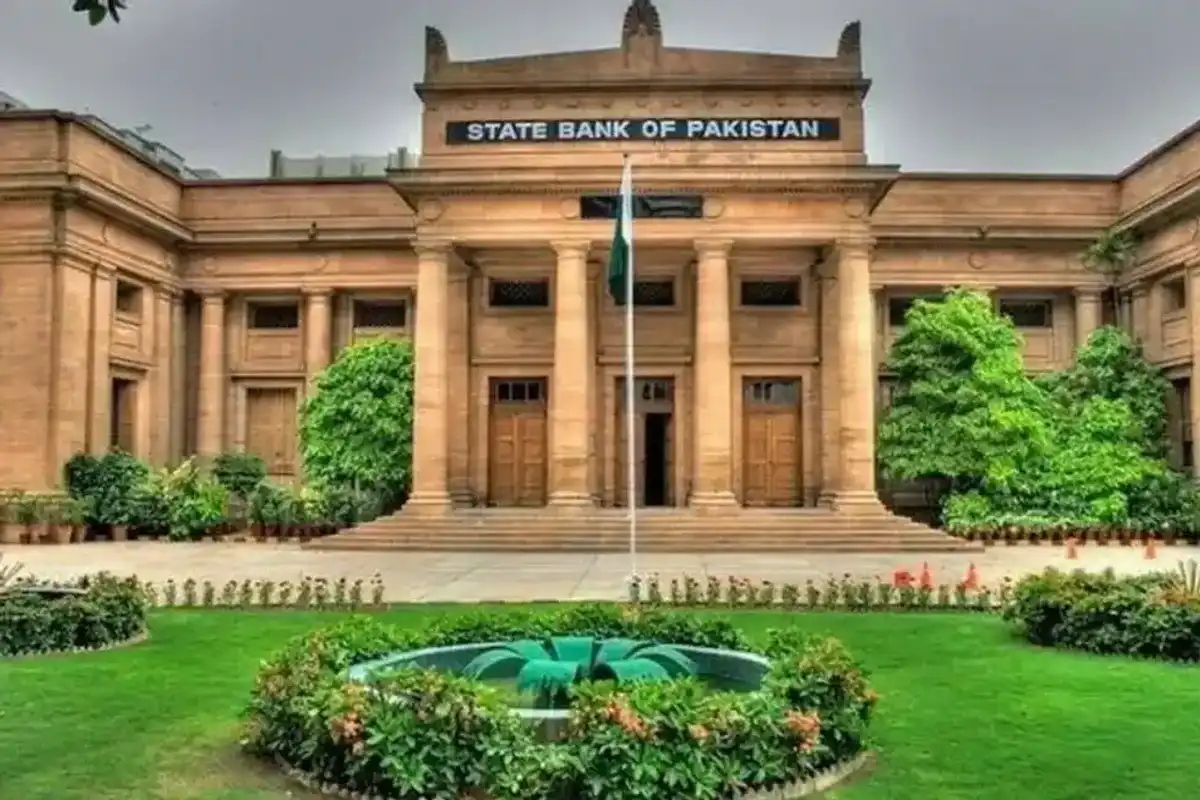
Pakistan's central bank is likely to raise its benchmark interest rate by 50 basis points to 12% at its monetary policy meeting on October 26 as persistent inflation and rising price expectations strengthen the case for tighter monetary policy, Bloomberg reported.
The State Bank of Pakistan (SBP) has kept its policy rate unchanged at 11.5% since raising it by 100 basis points in April.
At its previous meeting on September 14, the Monetary Policy Committee (MPC) maintained the rate, citing uncertainty surrounding the intensifying conflict in the Middle East, higher global commodity prices and prolonged supply chain disruptions.
Why might Pakistan's central bank raise interest rates?
Persistent inflation above the SBP's 5% to 7% target range, rising consumer and business inflation expectations, and improving economic activity are strengthening the case for higher interest rates. A 50-basis-point increase would take the benchmark rate to 12%, potentially helping contain inflation but raising borrowing costs for businesses and consumers.
Inflation reached double digits in five of the six months from April through September, with higher energy costs contributing to price pressures.
Headline inflation accelerated to 11.1% from a year earlier in August, compared with 9.2% in July, while core inflation stood at 8.7%, according to the reporting cited by Bloomberg.
Inflation subsequently eased to 10.26% in September but remained above the central bank's target range.
Consumer and business inflation expectations have also increased, raising concerns that higher prices could become more persistent through wage negotiations and business pricing decisions.
Bloomberg reported that the real interest rate remained below its historical average of approximately 2.5%, suggesting that monetary policy was less restrictive than usual.
Economic recovery strengthens case for a rate increase
Improving economic activity is another factor supporting tighter monetary policy.
According to Bloomberg, economic activity grew 2.8% from a year earlier in the third quarter of 2026 after contracting 0.6% in the second quarter.
The improvement suggests that the economy may be better positioned to absorb higher borrowing costs.
However, a broadly stable rupee and rising foreign exchange reserves provide some room for the central bank to leave rates unchanged.
The MPC's previous decision reflected those competing considerations, with policymakers acknowledging stronger domestic economic activity while warning that external uncertainty had increased.
At its September meeting, the central bank expected inflation to ease gradually toward the upper end of its 5% to 7% target range by June 2027.
It cautioned, however, that risks to the inflation outlook had increased significantly.
Energy prices and El Nino add to inflation risks
The central bank identified volatile global commodity prices, adjustments in electricity and gas tariffs, supply disruptions and fluctuations in food prices as major risks to inflation.
Worsening El Nino conditions could also affect agricultural production and food availability, adding pressure to prices.
Higher global energy costs have already contributed to domestic inflation, while prolonged disruptions associated with the Middle East conflict could keep prices elevated.
A rate increase would make borrowing more expensive for businesses and consumers, potentially slowing spending and investment.
However, tighter monetary policy could also help contain inflationary pressures and prevent expectations of continued price increases from becoming entrenched.
The MPC's October 26 decision will determine whether the central bank considers those inflation risks sufficient to justify raising rates after several months of maintaining the existing policy stance.





Comments
See what people are discussing