

Pakistan seeks investment-led growth after economic stabilization, Aurangzeb tells World Bank

Business Desk
The Business Desk tracks economic trends, market movements, and business developments, offering analysis of both local and global financial news.
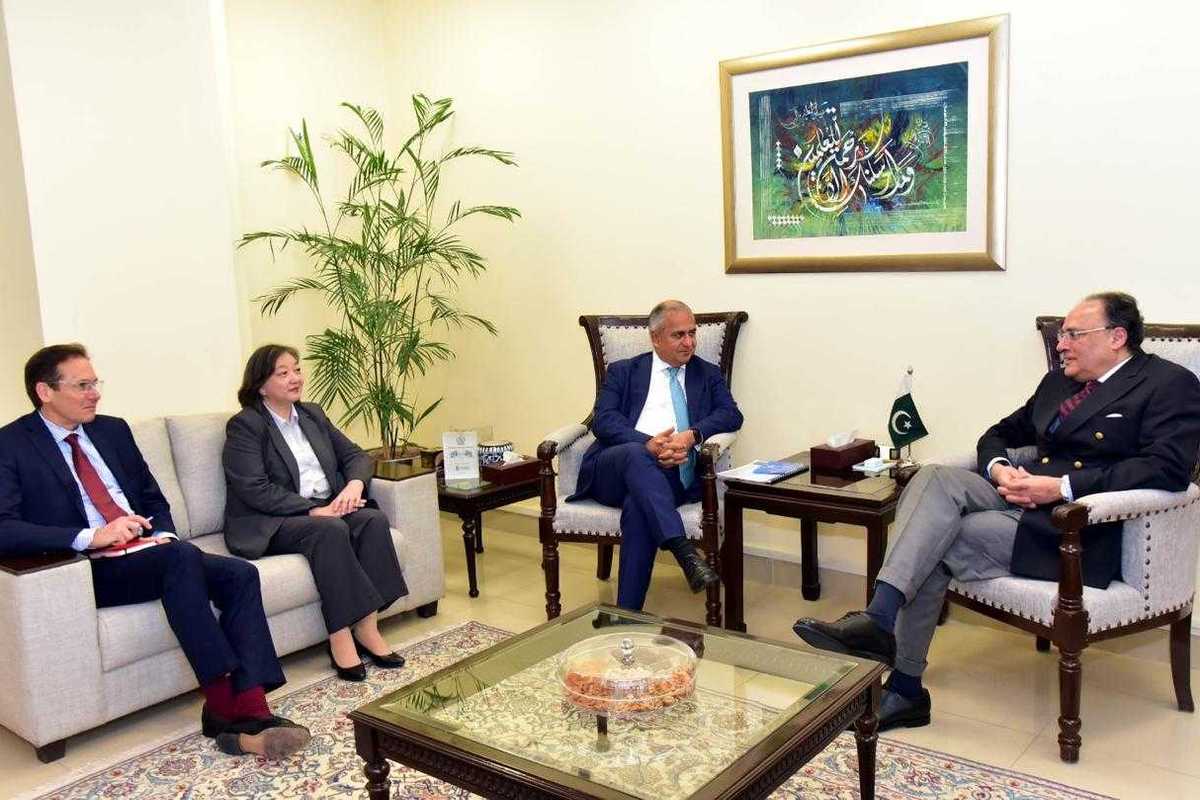
Pakistan aims to turn its recent macroeconomic stability into sustainable, investment-led and export-driven growth by maintaining fiscal discipline, ensuring policy continuity and strengthening investor confidence, Finance Minister Muhammad Aurangzeb said Friday.
Aurangzeb made the remarks during a meeting with senior World Bank and International Finance Corporation (IFC) officials to discuss Pakistan's economic reform agenda, private-sector investment and priorities for financing infrastructure development, according to a Finance Division statement.
The meeting came as Pakistan seeks to build on recent stabilization efforts, strengthen its sovereign credit profile and sustain economic recovery amid external-sector vulnerabilities.
How does Pakistan plan to turn economic stability into growth?
The government aims to attract private investment and boost exports by maintaining fiscal discipline, ensuring consistent economic policies and improving the business environment. Discussions with World Bank and IFC officials focused on strengthening investor confidence, mobilizing infrastructure financing and supporting structural reforms intended to create jobs and sustain economic growth.
Aurangzeb highlighted Pakistan's renewed access to international capital markets, including a recent USD 3 billion Eurobond issuance comprising bonds with maturities of 5.5 years and 10 years.
He also emphasized the importance of further sovereign credit rating upgrades to strengthen investor confidence and improve access to financing.
The finance minister stressed the need for a credible framework to maintain fiscal discipline, manage external-sector risks and create conditions for responsible, sustainable private-sector investment.
World Bank praises stabilization efforts
Sandeep Mahajan, the World Bank's regional practice director for prosperity covering the Middle East, North Africa, Afghanistan and Pakistan, congratulated Pakistan on restoring macroeconomic stability and praised the government's management of a recent crisis stemming from regional conflict, according to the statement.
Mahajan said the financial buffers built through stabilization efforts, combined with a timely policy response, had helped Pakistan manage external pressures.
World Bank officials emphasized the importance of maintaining those gains through continued reforms and effective implementation.
Policy continuity was also highlighted as essential for attracting investment and improving productivity.
Aurangzeb said a predictable policy environment and consistent implementation were necessary to sustain economic progress and encourage long-term private-sector investment.
Infrastructure financing and privatization discussed
The two sides discussed Pakistan's growth and jobs agenda, including measures to improve the regulatory environment, encourage private investment and mobilize financing for infrastructure projects.
Privatization was another focus of the meeting.
Participants discussed the importance of clear regulatory frameworks and credible arrangements following the transfer of state-owned assets to private ownership.
The meeting also included World Bank Country Director Bolormaa Amgaabazar and IFC Division Director Simon Andrews.
Both sides reaffirmed their commitment to continued cooperation on structural reforms, policy continuity and investment, with the aim of translating economic stabilization into job creation, stronger private-sector activity and improved economic opportunities for Pakistanis.





Comments
See what people are discussing