

Three ways Pakistan silenced critics with Test series win over Sri Lanka
Head coach Mike Hesson and captain Babar Azam had faced criticism following the first Test, with suggestions that Pakistan had deliberately prepared a flat surface to ensure the series ended in a draw

Zaid Hassan
Producer
Zaid Hassan, a seasoned sports journalist, led Cricket Pakistan as editor for four years, shaping its coverage with insightful analysis. Now a producer at Nukta, he expands into broader storytelling while remaining a key voice in Pakistan’s sports media.
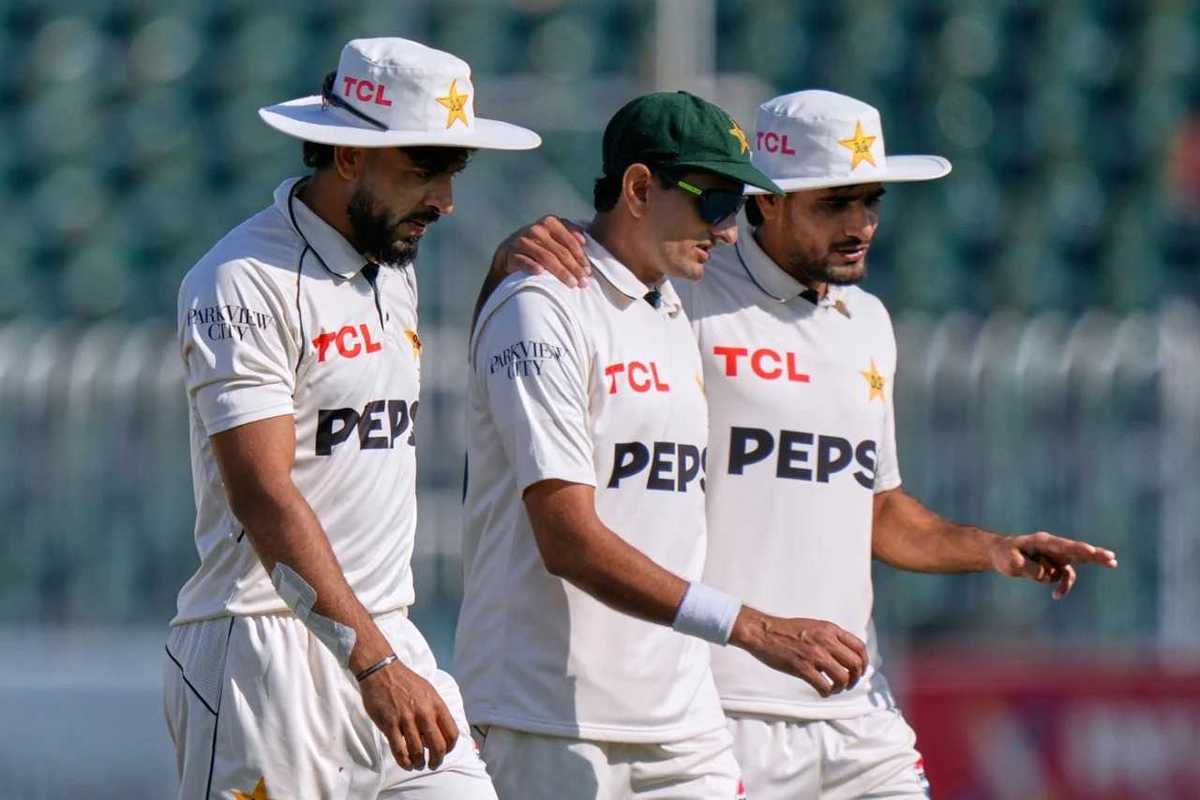
Even after pacer Saqib Khan sustained an injury, Pakistan had three fit pacers available to dismiss Sri Lanka for 325 in their second innings.
PCB
Pakistan delivered a commanding response to their critics with an eight-wicket victory over Sri Lanka in the second Test, sealing the series after the opening encounter ended in a draw in Rawalpindi.
Head coach Mike Hesson and captain Babar Azam had faced criticism following the first Test, with suggestions that Pakistan had deliberately prepared a flat surface to ensure the series ended level. However, their approach in the second match proved considerably different, with three key decisions playing a decisive role in the outcome.
How did Pakistan change their approach to pitch preparation?
Following criticism of the opening Test surface, Pakistan opted for a pace-friendly pitch with a healthy covering of grass, providing their fast bowlers with conditions to exploit.
After winning the toss, the hosts elected to bowl and made an immediate impact, dismissing Sri Lanka for just 98 in their first innings. Pakistan subsequently posted 316, establishing a commanding lead and putting themselves in a strong position to dictate the contest.
The match ended on the morning of fourth day, offering a clear response to suggestions that the hosts were content with playing out a draw.
Why did backing Razaullah pay off?
Pakistan's decision to retain Razaullah despite his struggles in the first Test was another move that worked in their favour.
The pacer had conceded 140 runs and claimed just one wicket in 26 overs during the opening Test. However, Pakistan continued to back him, and he repaid that faith by taking five wickets in the second Test.
He also made a valuable contribution with the bat, scoring 42 runs in Pakistan's first innings to help extend their lead to 227.
How did Pakistan get their team combination right?
Pakistan also demonstrated a better understanding of the conditions through their selection decisions.
In the first Test, they fielded three specialist pacers alongside spinner Arafat Minhas, while Sri Lanka went with four fast bowlers. For the second match, Pakistan replaced Minhas with Aamir Jamal to add another pace option.
Sri Lanka, meanwhile, took the opposite route, bringing in spinner Prabath Jayasuriya for fast bowler Dilshan Madushanka.
The contrast proved significant. Even after pacer Saqib Khan sustained an injury, Pakistan had three fit pacers available to dismiss Sri Lanka for 325 in their second innings.
The hosts then comfortably chased down the 90-run target with eight wickets in hand, sealing the series and delivering a convincing answer to their critics.





Comments
See what people are discussing