

Pakistan urges ‘compassion-based’ care systems at UN side event
Islamabad highlights welfare programs and philanthropy as models for inclusive long-term care at a UN event
Aamir Abbasi
Editor, Islamabad
Aamir; a journalist with 15 years of experience, working in Newspaper, TV and Digital Media. Worked in Field, covered Big Legal Constitutional and Political Events in Pakistan since 2009 with Pakistan’s Top Media Organizations. Graduate of Quaid I Azam University Islamabad.
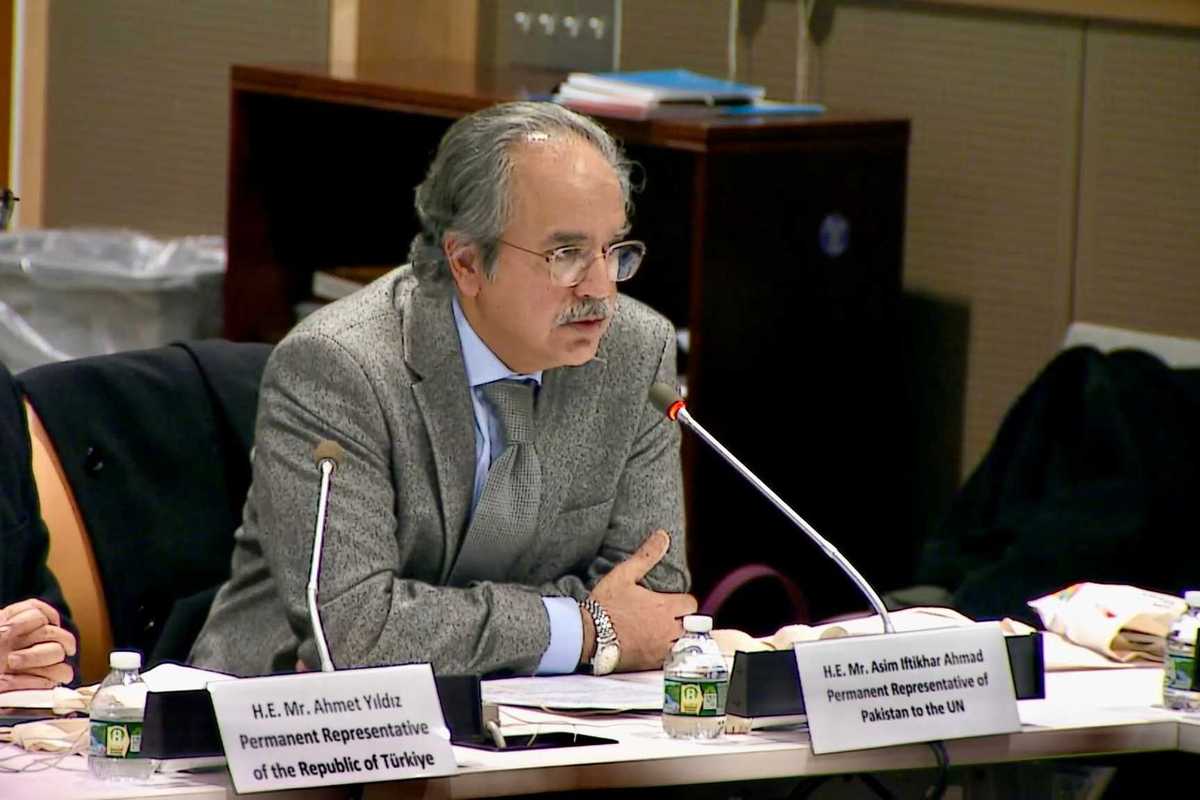
Ambassador Asim Iftikhar Ahmad said Darülaceze’s century-long experience showed that long-term care systems are most effective when state responsibility is complemented by community participation through philanthropy and volunteerism.
Pakistan's Ministry of Foreign Affairs
Pakistan on Tuesday called for building inclusive and sustainable long-term care systems rooted in social solidarity, philanthropy and volunteerism during a United Nations side event on social development.
The remarks were delivered at a side event held on the margins of the 64th session of the U.N. Commission for Social Development, according to Pakistan’s mission to the United Nations.
The event was titled “Building an Inclusive Long-Term Care System Sustained by Social Solidarity: Turkey’s 130-Year-Old Home of Compassion ‘Darülaceze’ as an Example of Good Practice.”
Pakistan’s Permanent Representative to the U.N., Ambassador Asim Iftikhar Ahmad, spoke at the event and commended Turkey for hosting the discussion and presenting Darülaceze as a model of institutionalized compassion.
The side event was jointly organized by Turkey, Pakistan, Qatar and Azerbaijan.
Ambassador Asim said Darülaceze’s century-long experience showed that long-term care systems are most effective when state responsibility is complemented by community participation through philanthropy and volunteerism.
He said these values are deeply rooted in Pakistan’s social and moral traditions and are reflected in both public policy and societal practice.
Highlighting Pakistan’s social protection framework, the ambassador described the Benazir Income Support Program, or BISP, as a cornerstone of the country’s welfare system.
Funded through the federal budget, BISP provides targeted cash transfers to millions of low-income households, particularly women-headed families, he said.
The program contributes to poverty reduction, income security and social inclusion, he added.
Ambassador Asim said BISP reflects a clear policy commitment that protecting vulnerable segments of society is both a state responsibility and a matter of dignity and rights.
He also underscored the role of Pakistan Bait-ul-Mal in supporting elderly people, women, persons with disabilities, orphans and individuals without family care.
He said the institution’s services include residential care homes, medical assistance, rehabilitation and vocational training.
According to the ambassador, these services are sustained through a blended financing model that combines government funding, zakat, charitable endowments and voluntary contributions.
Referring to Pakistan’s tradition of organized philanthropy, Ambassador Asim cited the Edhi Foundation as a globally recognized symbol of humanitarian service.
He said the foundation operates shelters, ambulance services, old-age homes and emergency response networks largely through public donations and volunteers.
The foundation exemplifies society-driven care, he added.
Ambassador Asim also pointed to the growing role of charitable trusts, faith-based organizations and private-sector corporate social responsibility initiatives in expanding long-term care and community-based social services across Pakistan.
Calling for stronger international engagement, he urged the United Nations and international financial institutions to support the documentation, financing and scaling up of solidarity-based care models.
He described such models as essential components of inclusive social development.
The ambassador also stressed the importance of strengthening South-South cooperation to enable the exchange of experiences, financing mechanisms and governance practices related to long-term care systems.
Concluding his remarks, Ambassador Asim said societies endure not merely because of what they possess, but because of how they care for and share with one another.
He called for sustained collective efforts grounded in compassion and shared responsibility.





Comments
See what people are discussing