

SBP seen holding rates as Middle East conflict clouds economic outlook
AKD Research said the central bank could resume monetary easing in the second half of 2026

Business Desk
The Business Desk tracks economic trends, market movements, and business developments, offering analysis of both local and global financial news.
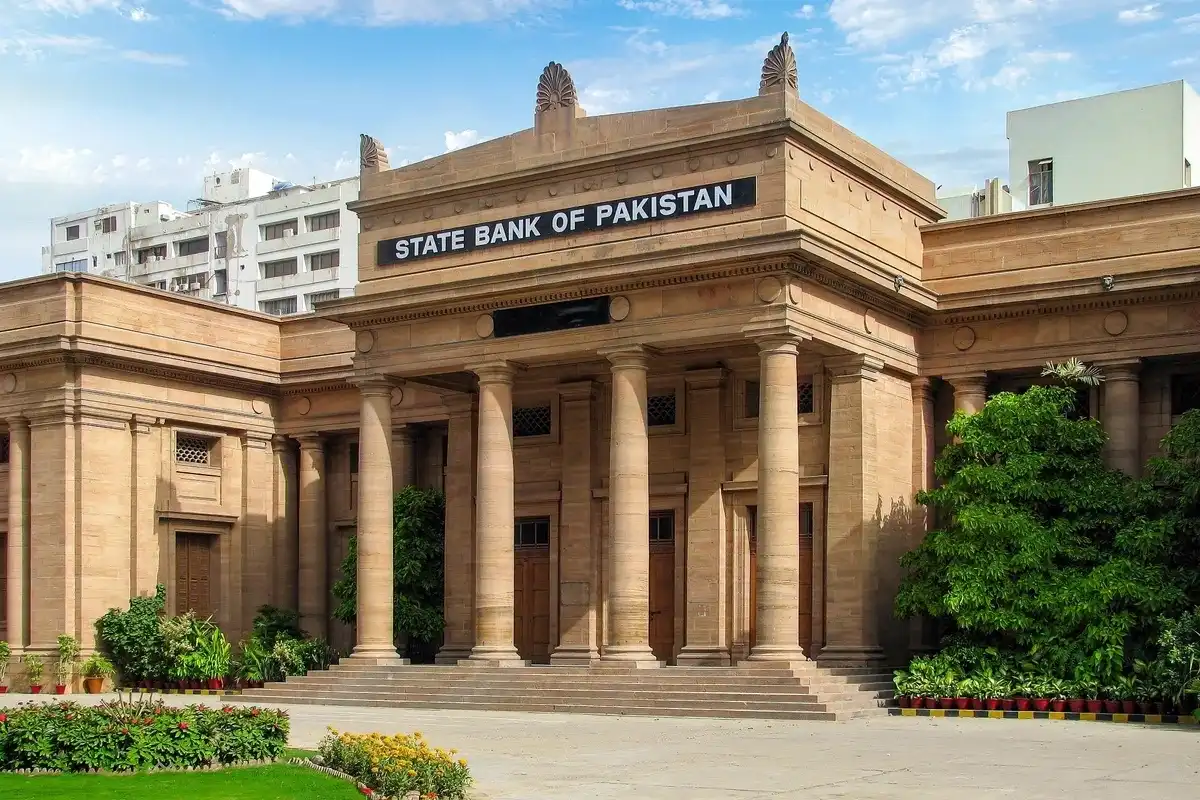
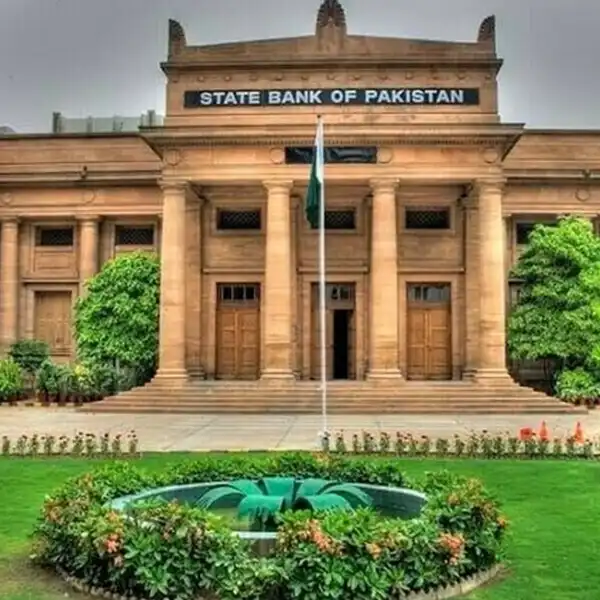
Pakistan's central bank is expected to keep its key policy rate unchanged at its upcoming meeting as rising geopolitical tensions in the Middle East and surging oil prices create uncertainty for the economic outlook.
The State Bank of Pakistan (SBP) most recently held its benchmark rate steady at 10.5% at its January 26 Monetary Policy Committee (MPC) meeting — a decision that surprised markets, which had widely anticipated a cut of between 50 and 75 basis points.
AKD Securities said it expects SBP to again maintain the status quo at the next MPC meeting despite relatively high real interest rates.
"We expect SBP to maintain the status quo in its upcoming MPC meeting due to the recent military conflict in the Middle East and the surge in oil prices," the brokerage said in a report.
The firm noted that real interest rates remain elevated and are expected to average about 4.3% over the next 12 months. AKD Research assumes the central bank could begin easing later in the year, forecasting two rate cuts of 50 basis points each in July and September 2026, totaling 100 basis points in the second half of the year.
The cautious stance comes as the conflict involving Iran, Israel, and the United States enters its seventh day, creating significant disruption across the region. The conflict has led to the closure of the Strait of Hormuz, a critical global energy shipping route that handles roughly one-fifth of the world's oil supply.
The closure has halted Pakistan's regasified liquefied natural gas (RLNG) supplies routed through the strait, which could partially offset the impact of higher oil prices on the country's import bill.
"RLNG supplies have been halted due to the closure of the Strait of Hormuz, creating a cushion of around $250 million in the import bill," the report said, adding that reduced fuel consumption due to higher prices and potential remote-working initiatives could also limit demand for petroleum products.
Global oil prices have surged following the outbreak of hostilities. Benchmark Arab Light crude jumped $11.7 per barrel, or 16.3%, to $83.1 per barrel during the week, significantly higher than AKD Research's fiscal year 2026 estimate of $67.5 per barrel. The brokerage warned that the spike in crude prices and higher premiums could translate into a 36% increase in petrol prices and a 51% increase in high-speed diesel prices if sustained. On Friday, the government raised petrol and diesel prices by PKR55 per liter.
Pakistan remains highly exposed to energy price fluctuations because petroleum imports account for roughly 30% of the country's total imports, making the external account vulnerable to oil shocks.
However, AKD Research said the central bank still has some room for caution given relatively stable external indicators.
"Controlled external account position along with comfortable foreign exchange reserves provide comfort to the central bank in the wake of recent uncertainty," the report said.
The firm also expects some relief on the domestic energy front, forecasting that electricity tariffs could ease as low-cost coal replaces expensive RLNG in the energy mix.
If regional tensions ease and external inflows improve, AKD Research said the central bank could resume monetary easing in the second half of 2026.



Comments
See what people are discussing