


News Desk
The News Desk provides timely and factual coverage of national and international events, with an emphasis on accuracy and clarity.
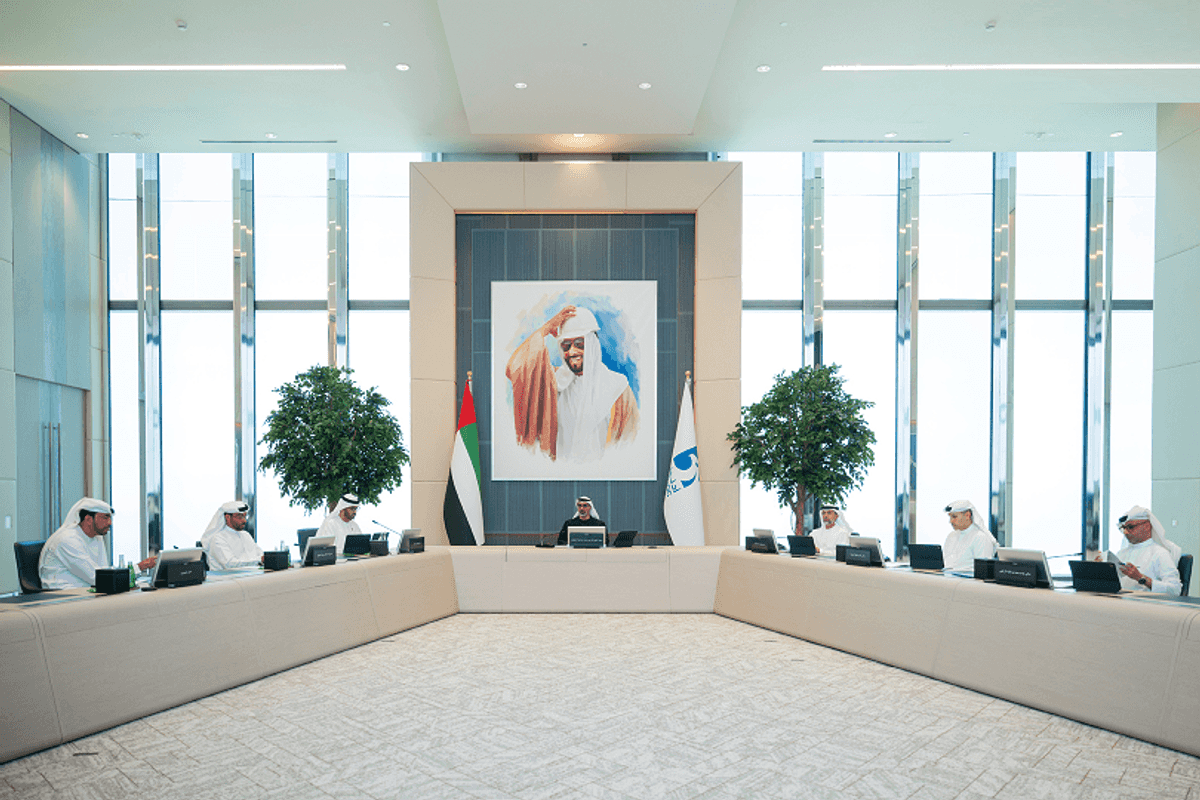
Abu Dhabi Crown Prince Sheikh Khaled bin Mohamed bin Zayed Al Nahyan chairs an ADNOC Executive Committee meeting at the company’s Abu Dhabi headquarters.
Abu Dhabi Media Office
The United Arab Emirates will accelerate construction of a new West-East oil pipeline designed to double export capacity through Fujairah by 2027, the Abu Dhabi Media Office announced.
The project, overseen by ADNOC, will allow the UAE to move significantly more crude via routes that bypass the Strait of Hormuz. Abu Dhabi Crown Prince Sheikh Khaled bin Mohamed bin Zayed chaired the executive committee meeting at which the fast-track directive was issued.
What is the UAE's West-East pipeline and why is it being fast-tracked?
The West-East Pipeline runs 360 kilometers from Habshan in Abu Dhabi to the port of Fujairah on the Gulf of Oman, allowing crude exports to bypass the Strait of Hormuz entirely.
Khaled bin Mohamed bin Zayed chaired a meeting of the Executive Committee of ADNOC’s Board of Directors, reviewing updates on the new West-East Pipeline project, scheduled to operate in 2027 and double ADNOC’s export capacity via Fujairah, to meet global energy demand. pic.twitter.com/uMBYpvt01q
— مكتب أبوظبي الإعلامي (@ADMediaOffice) May 15, 2026
The project is being accelerated in response to heightened geopolitical tensions and regional uncertainty around the waterway. Once complete, it is expected to roughly double ADNOC's current export capacity through Fujairah to around four million barrels per day.
How does the new pipeline compare to existing UAE infrastructure?
The West-East Pipeline runs parallel to the existing Abu Dhabi Crude Oil Pipeline, also known as the Habshan-Fujairah pipeline, which has operated since 2012 and currently handles between 1.8 and 1.9 million barrels per day.
The new pipeline adds a second major export corridor along the same strategic route. Together, the two pipelines are expected to give the UAE a combined Fujairah export capacity of around four million barrels per day by 2027.
The UAE is one of a small number of Gulf producers with pipeline infrastructure enabling crude exports outside the Strait of Hormuz. Saudi Arabia operates the 1,200-kilometre East-West Petroline, which can carry up to seven million barrels per day to the Red Sea. Oman benefits from direct Arabian Sea access via its coastline, without needing dedicated bypass infrastructure.
Can the Strait of Hormuz be bypassed, and how?
The Strait of Hormuz is the world's most critical oil chokepoint, but several bypass options exist for Gulf producers. The UAE's Habshan-Fujairah pipeline has provided an alternative export route since 2012, and the new West-East Pipeline will significantly expand that capacity. Saudi Arabia's Petroline offers a separate bypass route to Red Sea terminals.
However, full bypass capacity across the Gulf remains limited relative to total regional output. Before the current disruptions, around one-fifth of global oil and liquefied natural gas supplies transited the strait daily.
The UAE's acceleration of its pipeline project reflects a broader regional push to reduce dependence on the waterway as a single export corridor.
How does this project fit into the UAE's wider energy strategy?
The West-East Pipeline forms part of a broader expansion program, with ADNOC planning to award $55 billion in projects between 2026 and 2028.
The UAE is targeting total oil production capacity of five million barrels per day by 2027, up from current levels. Following its recent decision to leave OPEC, the country is moving to expand infrastructure, increase market share and compete more independently in global energy markets.
The fast-tracked pipeline also reflects the UAE's goal of positioning itself as a reliable long-term energy supplier amid evolving global demand patterns.
Fujairah's strategic location on the Gulf of Oman, just outside the Strait of Hormuz, makes it central to that ambition. Increased export capacity through the port gives buyers an additional degree of supply security that routes through the strait cannot currently guarantee.





Comments
See what people are discussing