

Rising oil prices threaten Pakistan’s economy as markets reel
Analysts warn higher crude could widen deficit, pressure rupee and deepen PSX losses

Haris Zamir
Business Editor
Experience of almost 33 years where started the journey of financial journalism from Business Recorder in 1992. From 2006 onwards attached with Television Media worked at Sun Tv, Dawn Tv, Geo Tv and Dunya Tv. During the period also worked as a stringer for Bloomberg for seven years and Dow Jones for five years. Also wrote articles for several highly acclaimed periodicals like the Newsline, Pakistan Gulf Economist and Money Matters (The News publications)
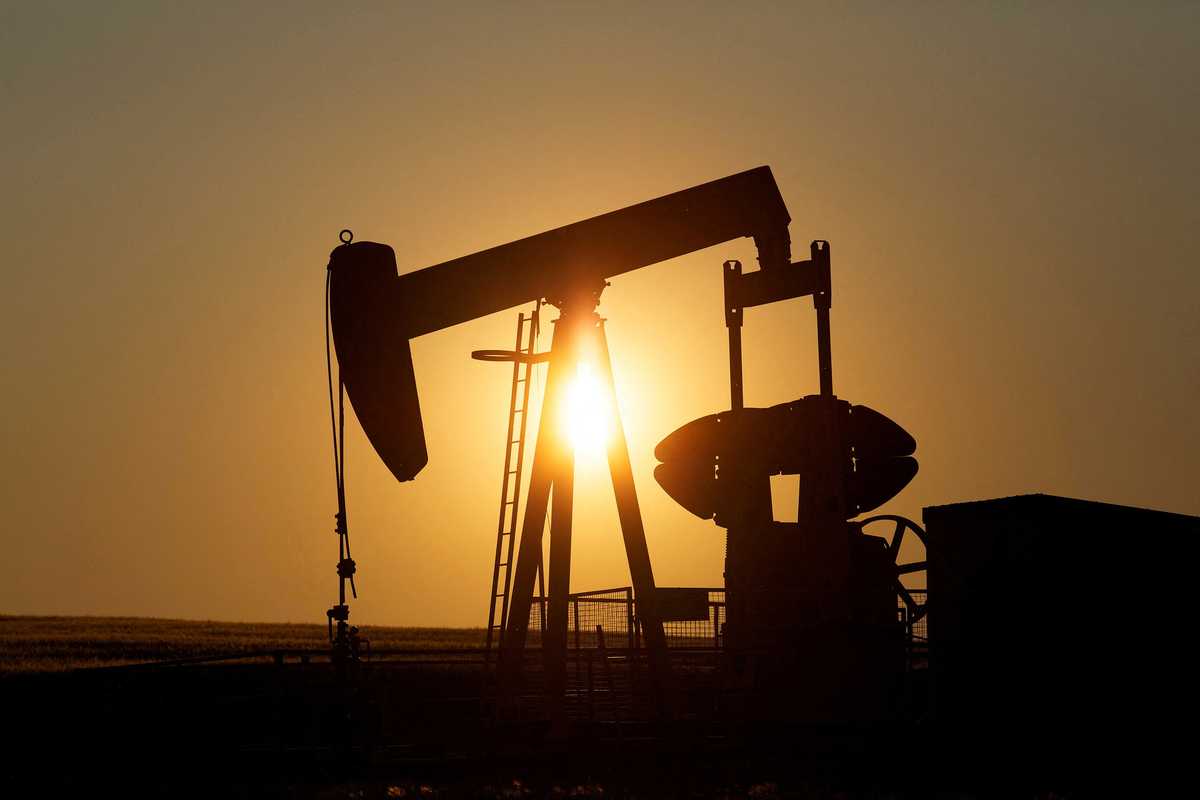
Pakistan could face economic hardship in the coming weeks if crude oil prices continue to rise and remain elevated, particularly amid tensions affecting the Strait of Hormuz, which handles around 20% of global oil trade.
Analysts say the local capital market is also likely to face heavy selling pressure.
A.A.H. Soomro, an independent analyst, said the currency is likely to remain relatively stable for now. “It is too early to see the negative impact in currency as it is tightly managed by the State Bank of Pakistan,” he said.
However, he warned that equity markets would remain volatile.
“Engagement of regional countries [in the U.S. and Iran’s operations against each other] has turned into a panic situation,” he said, adding that gold and oil are expected to rise sharply in the first few days of conflict. “Caution is advised for new investors; avoid selling in panic.”
Stocks slide, foreign outflows rise
The Pakistan Stock Exchange’s benchmark KSE-100 index already plunged to a low of 162,954 points during the month. It later closed at 168,062, down 8.7% or 16,112 points.
Net foreign outflows totaled $278.9 million in February.
Analysts attributed the decline to several factors: implementation of T+1 settlement that reduced leverage; rising political instability and worsening security conditions; anticipated delays in the Reko Diq mining project; geopolitical tensions including the U.S.-Iran-Israel conflict and friction with Afghanistan; heavy foreign selling; and concerns over the rollover of $2 billion in loans from the UAE.
An independent analyst said: “If this conflict escalates, energy import costs could surge and for Pakistan, that means serious pressure on reserves, inflation, and supply security.”
“Tough days ahead if this turns prolonged as it would increase the inflation rate. Moreover, forget about any interest rate cut. The reserves will also deplete following a rise in crude oil prices as the country has to pay more to foot import bill,” he said.
Waqas Ghani, head of research at JS Global, said oil is likely to rise sharply at the start of the week as escalating Middle East tensions could disrupt supply.“The equity market will also face pressure with volatility expected to stay elevated if the situation isn't diffused,” he said.
Jibran Sarfaraz, an economist, said the PSX ended last week sharply lower by about 5,100 points, with local investor sentiment fragile across major sectors including banks, oil marketing companies, fertilizer, and oil and gas.“If the geopolitical situation does not improve, the downward pressure on the market will continue,” he said.
He added that the Pakistani rupee is likely to weaken slightly against the U.S. dollar.“The U.S. and Israel’s strikes on Iran have pushed oil prices sharply higher. If any diplomatic de-escalation or ceasefire news emerges early on Monday, the PSX could recover some losses intraday,” he said.
Oil shock and external risks
Economists estimate that every $10 per barrel increase in global oil prices could add roughly $1.5 billion to $1.7 billion to Pakistan’s annual oil import bill.
Pakistan imports an estimated 150 million to 170 million barrels of oil annually. Based on average imports of about 160 million barrels per year, a $10 increase would translate into approximately $1.6 billion in additional payments for crude and petroleum products over 12 months.
Analysts warn that such an increase would widen the current account deficit unless offset by stronger exports or remittance inflows.
“The oil import bill moves almost one-to-one with international prices,” said a Karachi-based energy economist, speaking on condition of anonymity. “If prices remain elevated for a sustained period, the current account will come under immediate stress.”
A wider current account deficit could increase demand for dollars, pressure the Pakistani rupee and contribute to higher inflation.
Pakistan relies heavily on imported fuel for electricity generation and transportation, meaning higher oil prices typically feed into domestic fuel costs and power tariffs.
The impact on remittances remains uncertain.
Many Pakistani expatriates work in oil-exporting Gulf countries, where higher oil prices could boost revenues and potentially support employment and remittance flows.However, analysts caution that if regional tensions escalate or economic activity slows, remittance inflows could weaken, compounding external pressures.
Pakistan has faced recurring balance-of-payments challenges in recent years, with energy imports forming a major component of external financing needs.
'No ordinary volatility'
Much will depend on how long oil prices remain elevated and whether export growth or remittance inflows can cushion the impact.
Shan Saeed, global chief economist at IQI Global in Malaysia, said:“As the Iran-U.S.-Israel conflict casts a widening geopolitical shadow, global markets enter a defensive recalibration phase.
Safe havens strengthen. Gold ascends. Oil tests the $80 threshold. The U.S. dollar firms, asserting liquidity dominance, while the euro, pound, yen, and yuan navigate crosscurrents of policy divergence and energy vulnerability.
Across Europe and the U.K., central banks confront renewed energy-driven inflation risk. Beijing balances commodity volatility against growth stabilization. The yen reasserts its safe-haven credentials.
The Federal Reserve calibrates inflation containment alongside financial stability.From Brussels to Beijing, policymakers are on alert.
Growth equities face compression risk.
Tangible assets — gold, oil, strategic real estate — regain primacy.
This is no ordinary volatility cycle.”





Comments
See what people are discussing