

Stability over growth; SBP’s tough yet right interest rate call
The 100-basis-point hike, lifting the benchmark policy rate to 11.5%, wasn't driven by domestic mismanagement, rather from a conflict still burning in the region

Moiz Ur-Rehman
A multidisciplinary economist, legal thinker, and broadcast journalist with over five years of experience at the intersection of finance, policy, and media. I have academic grounding; in law, economics, and hospitality management, to accessible, high-impact storytelling for business audiences across Pakistan and beyond.
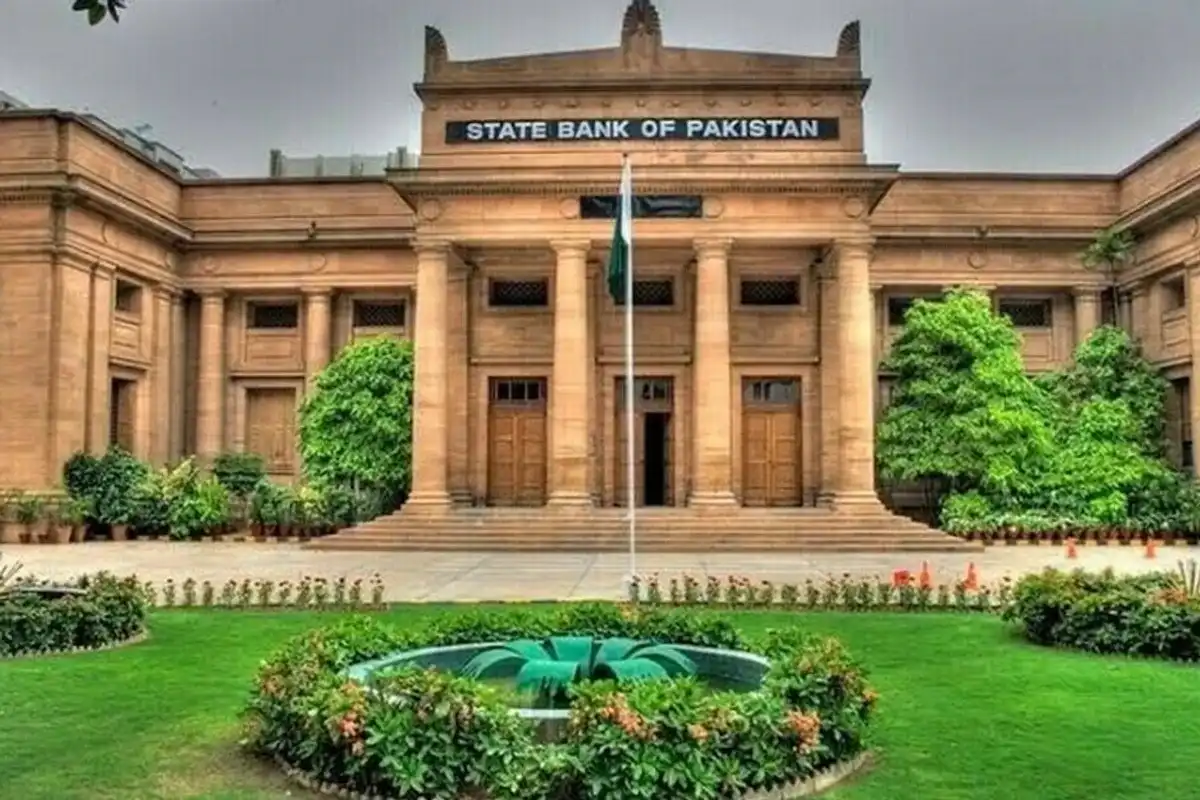
On the 27th of April, while major central banks, such as the US Federal Reserve, the European Central Bank (ECB), and the Bank of England, all sat on their hands, the State Bank of Pakistan (SBP) did something it hadn't done in nearly two years: it raised interest rates for the first time since June 2024.
The 100-basis-point hike, lifting the benchmark policy rate to 11.5%, wasn't driven by the traditional domestic mismanagement that has been a precursor to previous hikes. Rather, this came on the back of the perils of the U.S.-Iran conflict, reflected in oil prices and freight charges from a conflict still burning in the region.
Some might call it a "doctor’s order," while some label this as pushing the accelerator of a car on Karachi’s under-construction University Road.
However, the evidence shows that this was indeed a much-needed decision, which might have hedged us against a larger hike later in mid-June this year.
Obviously, the divergence is striking.
From Washington to Frankfurt to regional capitals like New Delhi, Colombo, and Dhaka, central banks have been on a pause — at least for now.
Pakistan's story is different and understanding why tells us something important about the risks facing emerging economies in an era of persistent geopolitical shocks.
The contrast is sharpest when you look at the numbers side-by-side.
The U.S. Federal Reserve has held its rate in the 3.5–3.75% range in what its officials call a "wait-and-see mode," as Middle East-driven energy costs muddy the inflation picture, while a resilient labor market keeps cuts off the table.
The ECB, having declared its work largely done, sits at 2%, practically at its neutral rate. The Bank of England is on a gradual easing path.
This is also because these economies want to stoke domestic demand, which has been low for the last few years. In Pakistan’s case, demand needs to be kept in check and safeguarded from "irrational exuberance."
India's situation offers an instructive comparison.
The Reserve Bank of India (RBI) cut rates aggressively through 2025, bringing them to 5.25%, where it has since held.
With headline inflation at just 1.33% in December 2025 and GDP growth running above 7%, the RBI is in a position of comfort that most of its neighbors would want to emulate.
Sri Lanka tells a different story of fragility. Having emerged from its 2022 debt default under IMF supervision, the Central Bank of Sri Lanka is holding rates at 7.75% even as inflation sits at just 1.6%, well below its 5% target.
Policymakers are being cautious, not wanting to repeat the errors that led to the crisis. Bangladesh, similarly, remains in a tight monetary stance guided by its IMF program.
Why is Pakistan different?
Pakistan's rate hike on April 27 was, in the SBP's own words, a response to a "supply shock" that originated not at home, but in global energy markets and a transportation-led inflation rise.
Rising oil prices, driven by the ongoing Middle East conflict, have fed directly into Pakistan's fuel prices, transport costs, and ultimately, core inflation.
Headline inflation surged to 10.9% in April, breaching double digits for the first time since mid-2024. It exceeded even the central bank’s own medium-term target of 5–7%, as well as the Finance Division’s revised projection of 8–9% for April 2026.
What makes this particularly painful is the context.
The SBP had spent nearly two years cutting rates aggressively — cumulatively 1,150 basis points from a peak of 22% in June 2024 as domestic inflation cooled and the economy stabilized under its IMF program.
That easing cycle had begun to show results. GDP grew 3.8% in the first half of FY26, and total FX reserves climbed toward $18 billion.
The State Bank of Pakistan is targeting $18 billion in its own reserves, which remains a comfortable target.
Another positive indicator is Pakistan’s re-entry to international capital markets with a Eurobond issuance after a four-year absence at decent rates.
The hike obviously doesn't erase those gains, but it signals that the recovery remains vulnerable to external shocks in a way that other regional economies are not.
Having said that, Pakistan today is in a far stronger position than it was during the crises of 1998 or 2008.
The current account balance is under control, the exchange rate has stabilized, and the banking system is intact and liquid.
Most importantly, there is an IMF-backed framework in place; a discipline that was missing when past crises went out of whack.
Currently, no major central bank is signaling hikes, except for the Philippines, because the inflation picture looks clearer than it did a year ago.
The G20 headline inflation is projected to ease by 0.5% on a YoY basis. The ECB projects eurozone inflation at just 1.9% for the year, below its 2% target.
The Fed's projected inflation is expected to stay around 3%, which is why rates have been maintained. In the case of the Middle East, even though rising energy prices have complicated the near-term view, projections remain stable in the medium and long term.
Thankfully, the chances of a full-scale war are lessening with each passing day.
For Pakistan, the outlook is trickier, but hope remains intact.
The SBP has warned that inflation is likely to stay above the upper bound of its 5–7% target for "most of FY27," with double-digit readings possible in the coming months before any easing.
The path back to target will depend heavily on whether global energy prices stabilize, which, due to Pakistan’s diplomatic efforts, might work in our favor once the geopolitical situation eases.
The rupee needs to hold steady, and the proactive approach by the SBP may help in this regard.
However, prudent fiscal discipline needs to be ensured, particularly by devising a balance between subsidizing fuel, supporting vulnerable groups, and meeting the IMF's demanding program benchmarks.
To sum up, this global crisis has exposed a fundamental vulnerability in how monetary cycles are transmitted to energy-dependent emerging markets.
While the US can absorb higher oil prices through domestic production and the dollar's reserve status, and while other regional economies’ scales insulate them from the worst pass-through effects, Pakistan has few buffers — import dependence, smaller FX reserves, and ongoing IMF obligations leave the SBP with less room for patience.
Yes, Pakistan is not where it wants to be, but it is far better prepared, more stable, and less vulnerable than in the crises that once pushed it to the brink.
We are an economy that endured one of the most aggressive rate-cutting cycles in the world. But we are now at a junction where the easing cycle has stopped. It is a reminder that for emerging economies, monetary sovereignty is never quite as absolute as it looks on paper.
The world's interest rates are your interest rates, whether you choose them or not.
However, the decision to hike rates for the sake of maintaining macroeconomic stability is the right approach, even if the tradeoff is a compromise on GDP growth.
Growth shouldn’t be the primary target, but rather the result of a good policy framework, as suggested by Goodhart's Law: "When a measure becomes a target, it ceases to be a good measure."


Comments
See what people are discussing