

Pakistan’s EV revolution has a new face — women
Watch how a CEO's vision is transforming Pakistan's electric bikes manufacturing ecosystem by training women and putting them on the assembly lines along with men

Hammad Qureshi
Senior Producer / Correspondent
A business journalist with 18 years of experience, holding an MS in Finance from KU and a Google-certified Data Analyst. Expert in producing insightful business news content, combining financial knowledge with data-driven analysis.
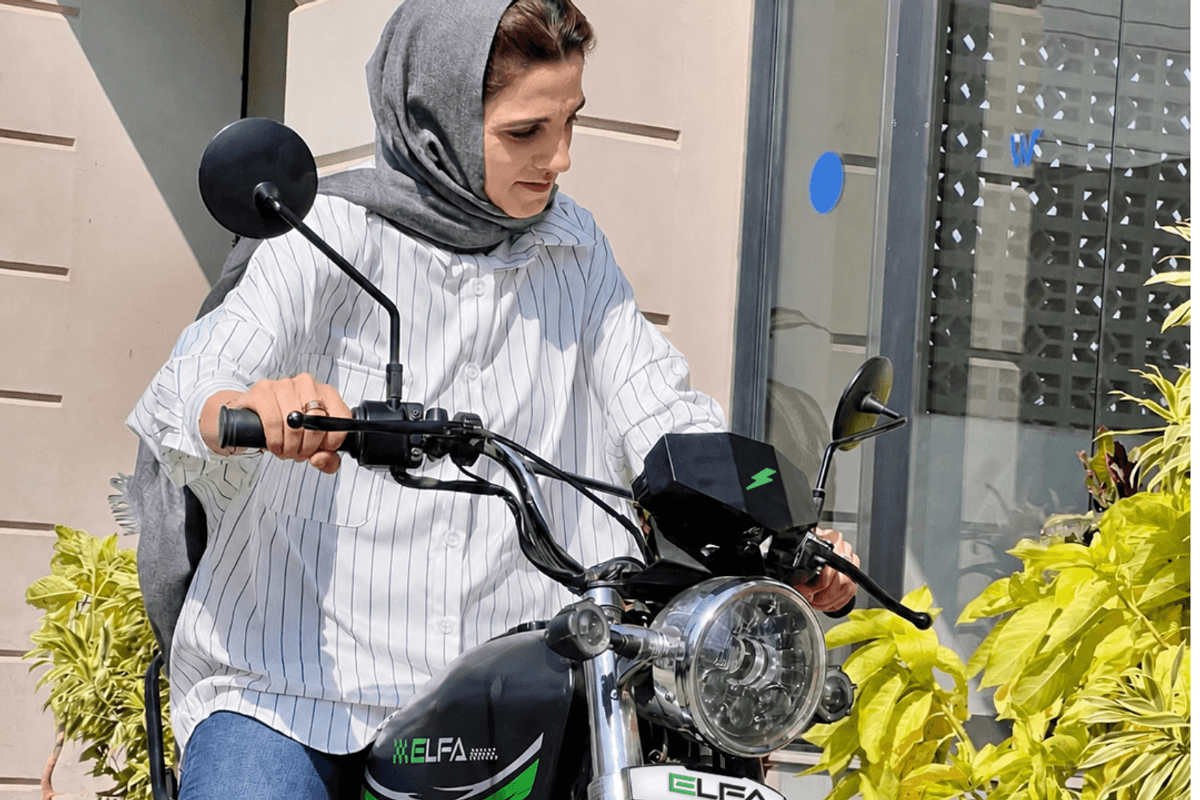
Huma Yahya Khattak, the CEO of EV Technologies, rides an EV-125 electric bike manufactured by her company
Huma Yahya Khattak
Electric vehicles or EVs are leading a quiet revolution in Pakistan. It has helped the country cut reliance on expensive fossil fuels, which has reduced the country's import bill.
The EV revolution also has a social impact. It empowered women by providing them with a safe, reliable and affordable means of transport. As a result, women riding EV scooters became an ubiquitous sight on Pakistan's roads.
Now the EV revolution is emerging as a story of industrial change with a growing female participation in manufacturing and leadership roles.
Women are increasingly present across Pakistan's EV sector, from factory floors to executive positions, marking a shift in a traditionally male-dominated industry.
In an interview with Nukta, Huma Yahya Khattak, the CEO of EV Technologies, said women are now working alongside men in EV production units, assembling motors, tightening components and handling technical tasks.
Her factory currently employs 7% women but is targeting 50%.
"Why do we assume women are only meant for sewing, embroidery, or teaching?" she said, highlighting efforts to bring women into advanced manufacturing.
She also said electric bikes are changing how women move in cities.
EV bikes are simple to operate, compared to petrol motorcycles, with basic controls for acceleration and braking, making them easier for first-time riders.
The shift is helping increase confidence and independence among women commuters in urban Pakistan.
Punjab remains the leading market for EV adoption in Pakistan, supported by urban demand and provincial policy incentives.
Industry projections estimate 150,000 EV bike sales by the end of the current fiscal year, reflecting rapid market expansion compared with 2022, when annual sales were fewer than 10,000.
Khattak said EV Technologies has achieved up to 80% localization in bike manufacturing, reducing reliance on imported finished products and supporting local production.
The company is also planning to commission an EV battery plant soon.
However, she said manufacturers face challenges due to up to a 40% import tax on essential components that are not yet produced locally. Industry stakeholders are calling for tax reforms to support affordability and growth.
She added that EV bikes feature water-resistant batteries and motors, making them more resilient to a certain level of flooding during heavy rains and inundated roads.





Comments
See what people are discussing