


Razi Wani
Producer - News Desk
Razi Ud Din Ahmed Wani is a multimedia journalist and digital storyteller with a strong background in fact-checking, South Asian politics, documentary filmmaking, scriptwriting, and digital content production. With an MA in Mass Communication from the University of Karachi, he has experience directing and scripting web series and socio-political satires. And has worked across various media and digital platforms, focusing on emerging trends and storytelling formats.
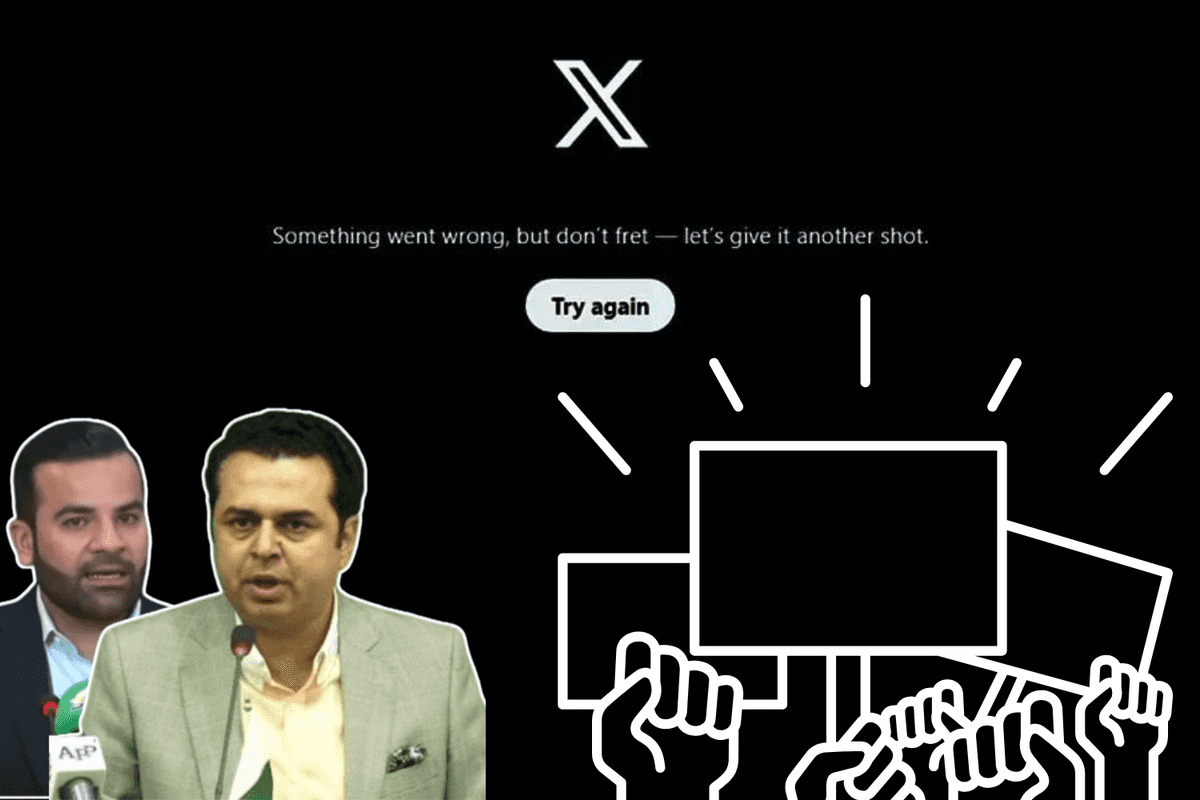
The debate over banning X resurfaced after Khan’s activity sparked court petitions and criminal probes.
Nukta
Pakistan is considering a “Brazil-style” crackdown on X, suggesting the platform could face sweeping restrictions unless it responds to official demands - a signal of how far Islamabad is prepared to go as it struggles to rein in uncooperative global tech giants.
Authorities later acknowledged the row has also become entangled with an investigation into online posts linked to former prime minister Imran Khan.
In Brazil, courts suspended X in August 2024 for failing to comply with orders targeting disinformation, imposed fines and threatened executives with sanctions - pressure made possible because X had a local office, staff and legal presence in the country.
Pakistan’s Minister of State for Law and Justice Barrister Aqeel Malik told Dawn News this week that Islamabad could adopt similar measures if platforms remain “uncooperative,” singling out X - used by an estimated 4.5 million Pakistanis - as offering “the least cooperation” among major companies.
He said authorities were still examining posts published from Khan’s account while he remains in prison, calling the inquiry “ongoing.”
The service had previously been blocked in February 2024, days after the general election, and was restored months later without formal announcement.
Is a Brazil-style ban viable in Pakistan?
Malik argued that platforms such as X apply “double standards,” saying content related to issues like Palestine is removed elsewhere but Pakistan’s concerns, which he characterized as linked to “terrorism,” receive little response. He added that the government had asked X to open an office in Pakistan but “there has been no response.”
Digital rights expert Farieha Aziz told Nukta that the Brazil analogy is a “false equivalence,” noting that X’s office, employees and legal footprint in Brazil meant the company was subject to domestic judicial enforcement. Even then, she said, X shut operations and withdrew before later returning.
In Pakistan, she said, the government has no comparable leverage. X has no physical or legal presence in the country, faces no local regulatory obligation, and did not alter its policies even after Pakistan blocked the platform for over a year.
She said successive governments have sought a level of control seen in India or Brazil, where platforms maintain local staff who face legal and regulatory pressure. “Here, there is no office or staff or prior stake,” she said.
Censorship, not citizen protection
Aziz said the government’s push appears aimed at controlling dissent rather than improving user safety.
“Is there a problem with content on the platform? Yes. Is that why the government wants a ban? No,” she said, calling the approach a familiar “carrot-and-stick” tactic aimed at compelling censorship compliance.
She also noted that officials continued to use X during the previous ban, undermining the justification for blocking it.
Digital rights expert Usama Khilji warned that bans ultimately harm citizens, not governments or tech companies.
“In this tussle between big tech corporations and governments, it’s the citizens that suffer,” he told Nukta, pointing to journalists, businesses and ordinary users who rely on X for work and communication.
He recalled that Pakistan restored X access during a military standoff with India, saying authorities recognized the platform’s value for “national security.”
Regulation without leverage
Pakistan’s social media rules require companies to set up local offices, appoint grievance officers and comply with takedown notices. Aziz said Islamabad has repeatedly failed to persuade companies to establish a presence in the country, citing the unpredictable regulatory environment, abrupt service suspensions and coercive tactics as deterrents.
“The arbitrary manner in which they deal with platforms now is not exactly an invitation,” she said.
Khilji said the renewed push reflects political insecurity rather than regulatory reform.
“Such talk of censorship is rooted in the government’s paranoia of citizens holding it accountable and exposing its corruption,” he said. “Censoring the platform will just be part of that pattern.”
A cycle of bans
The debate was reignited this year after Khan’s activity on X became the subject of court petitions and criminal inquiries. In September, a petition in the Islamabad High Court challenged allegedly inflammatory posts issued while Khan remained incarcerated. In October, Federal Investigation Agency officials questioned him in Adiala Jail over “anti-state” tweets and remarks on foreign policy.
Khan has been imprisoned since August 2023 in a £190 million corruption case and faces additional trials under the Anti-Terrorism Act related to the May 9, 2023 protests.
X’s trajectory in Pakistan has mirrored shifting political pressures:
– Blocked in February 2024 after the election;
– Restored during heightened tensions with India;
– Threatened again as scrutiny intensifies over Khan’s account.
Khilji warned that another ban would deepen economic and civic costs.
“There is an economic cost that the government doesn’t think about,” he said. “Citizens will again lose access, while nothing changes for those in power.”


Comments
See what people are discussing