

Pakistan’s new auto policy faces Rs150 billion annual revenue question
Kamran Khan highlights the tax revenue impact of proposed incentives for new energy vehicles in Pakistan

News Desk
The News Desk provides timely and factual coverage of national and international events, with an emphasis on accuracy and clarity.
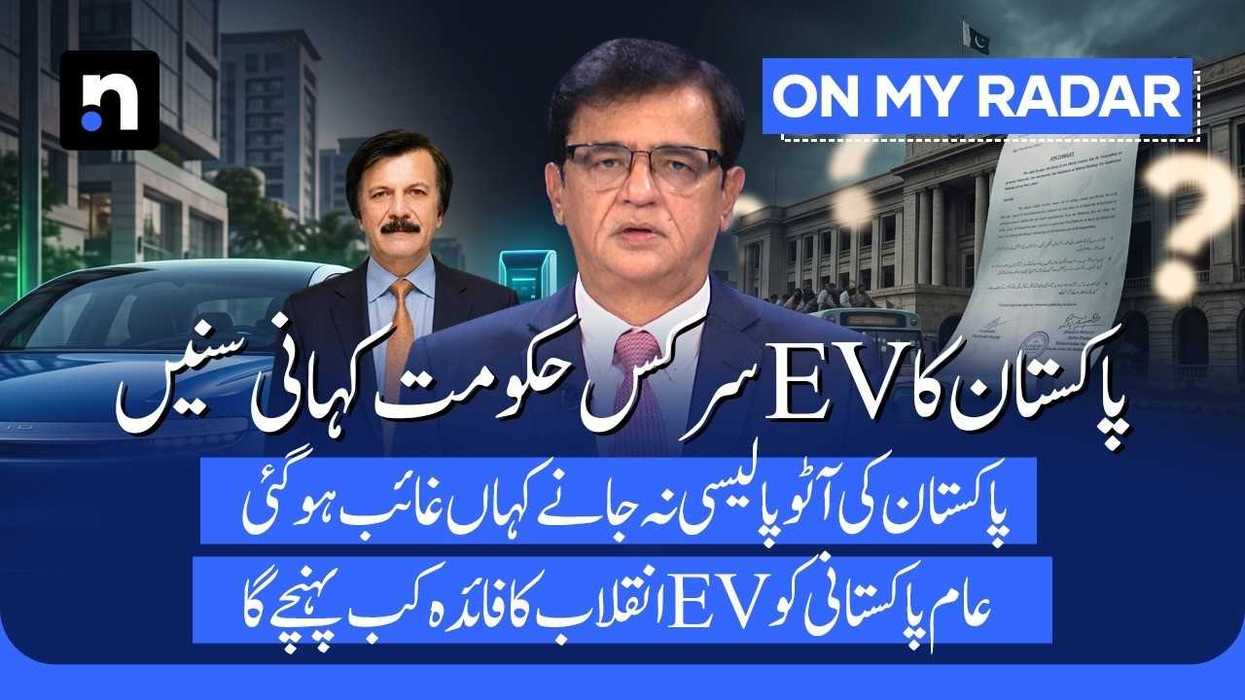
Pakistan’s delayed auto policy is raising questions over the government’s tax revenue as officials consider major incentives for new energy vehicles (NEVs), including electric vehicles, that could reduce annual revenue by an estimated Rs150 billion.
The previous auto policy expired June 30, 2026, and the new policy was scheduled to take effect July 1. However, the new framework has been delayed for about two and a half months, according to the discussion highlighted by Kamran Khan on his On My Radar show.
Media reports have said the proposed policy would give NEVs a sales tax rate of just 1%, along with exemptions from the Federal Excise Duty, Capital Value Tax and withholding tax. The government is also working to make financing for NEVs easier.
The main question, however, is the impact of these concessions on government revenue.
Estimates suggest Pakistan could sell about 50,000 NEVs annually. If the average duty and tax concession per vehicle is about Rs3 million, the government’s potential annual revenue loss could reach Rs150 billion.
The amount is significant as the government is already under pressure to create fiscal space and increase tax revenue, while meeting financial targets under its International Monetary Fund program.
There is little disagreement that Pakistan needs to move toward electric vehicles, according to Haroon Akhtar Khan, special assistant to the prime minister for industries and production. A shift to EVs could reduce the country’s fuel import bill, pollution and emissions while supporting the local EV industry.
But the benefit of such concessions should not be limited to people buying expensive electric cars, he said.
The funds could instead also be used to expand electric buses, charging infrastructure, electric motorcycles and rickshaws, public transportation, and local battery and auto-parts manufacturing on a large scale.
“Pakistan needs an auto policy that does not just make a few thousand vehicles cheaper, but makes travel cheaper, cleaner and easier for millions of Pakistanis,” Haroon Akhtar Khan said.



Comments
See what people are discussing