

SBP says investor confidence strengthens as reserves rise, risk metrics improve
Pakistan’s sovereign risk profile has improved sharply, with lower CDS spreads and stronger reserves

Haris Zamir
Business Editor
Experience of almost 33 years where started the journey of financial journalism from Business Recorder in 1992. From 2006 onwards attached with Television Media worked at Sun Tv, Dawn Tv, Geo Tv and Dunya Tv. During the period also worked as a stringer for Bloomberg for seven years and Dow Jones for five years. Also wrote articles for several highly acclaimed periodicals like the Newsline, Pakistan Gulf Economist and Money Matters (The News publications)
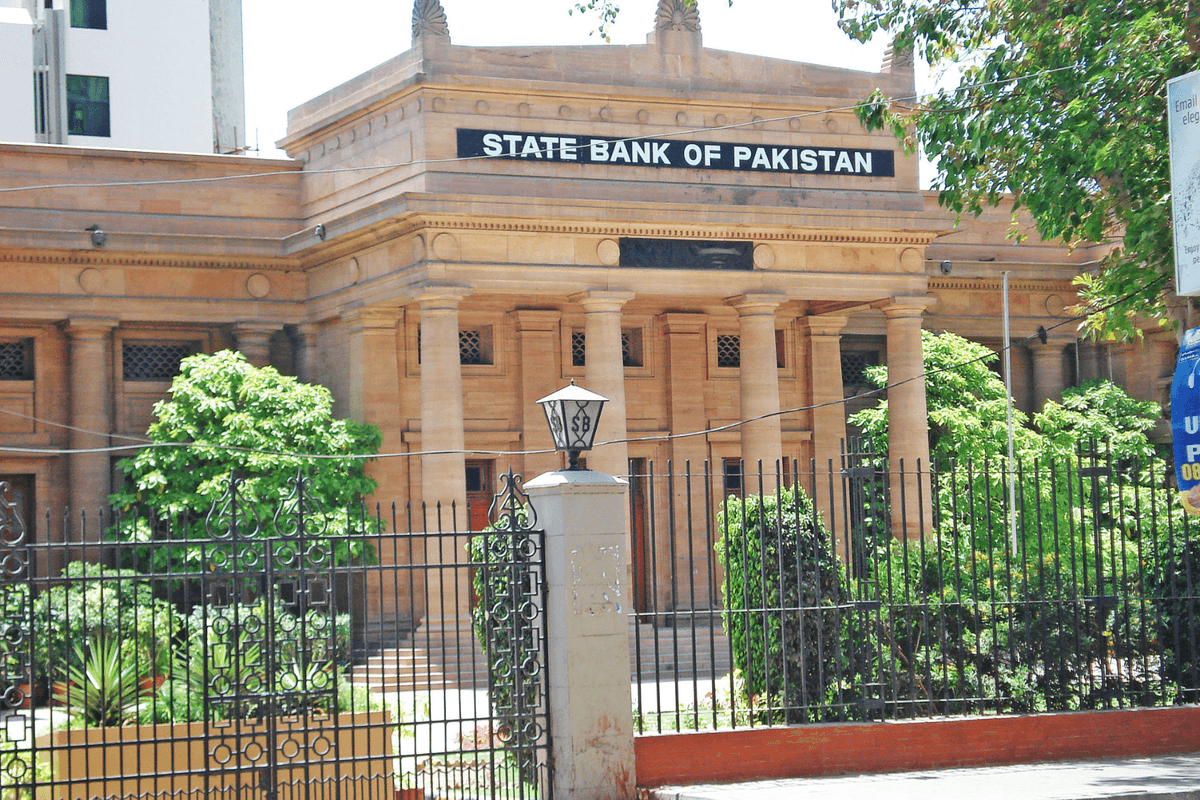
Pakistan’s sovereign risk profile has improved significantly, reflected in credit rating upgrades by all three major agencies, a sharp compression in Eurobond yields to single-digit levels, and a steep decline in the five-year credit default swap spread, according to the State Bank of Pakistan.
The five-year CDS spread has fallen from 7,851 basis points in December 2022 to about 384 basis points by December this year, underscoring a marked improvement in investor confidence.
Speaking at an analyst briefing on Monday, State Bank of Pakistan Governor Jameel Ahmed said the improvement in sovereign risk indicators reflects stronger policy credibility and a more stable macroeconomic outlook.
Reserves build despite repayments
Addressing foreign exchange market operations, Ahmed said the central bank’s dollar-buying interventions remained broadly in line with the previous fiscal year. Activity was subdued in the early months before picking up from September to November, supporting reserve accumulation while allowing the country to meet external payment obligations.
As a result, foreign exchange reserves continued to rise despite ongoing debt repayments, reaching $15.8 billion and exceeding the December target of $15.5 billion.
“With the planned buildup, the SBP aims to raise import cover to around three months by June 2026, broadly in line with the IMF forecast of 2.7 months,” Ahmed said.
On external debt, the governor said total repayment obligations stand at $25.8 billion, including $21.4 billion in principal and the remainder in interest. Of that amount, $9.7 billion has already been settled, comprising $5.3 billion rolled over and $4.4 billion repaid.
This leaves $16.2 billion outstanding, of which $9.3 billion is expected to be rolled over. The remaining amount will be repaid during fiscal year 2026.
Domestic indicators show mixed trends
On the domestic front, Ahmed said large-scale manufacturing growth remained strong, while fiscal balances posted surpluses in the first quarter of FY26, supported by profit transfers from the central bank.
However, growth in Federal Board of Revenue tax collections slowed, reinforcing the need for fiscal discipline and a coordinated monetary and fiscal policy stance to maintain macroeconomic stability and keep inflation within the 5% to 7% target range.
On the impact of recent floods, Ahmed said the economic fallout was significantly lower than initially projected and far less severe than in previous flood episodes.
As a result, authorities are more confident of achieving real GDP growth within the previously projected range of 3.25% to 4.25%, with growth likely to materialize toward the upper end of that range.
Manufacturing recovery broadens
The SBP said economic activity improved in the first four months of FY26 compared with the same period last year, though manufacturing and textiles remained among the weaker-performing sectors.
Within textiles, higher-value segments have begun to recover, while lower-value textiles continue to struggle.
The central bank said large-scale manufacturing has posted growth, with both the number of contributing subsectors and their relative weights improving, pointing to a more broad-based recovery.
External buffers strengthen
Ahmed said forward foreign exchange liabilities stood at $5.7 billion in early 2023 and have since been reduced to around $2 billion, representing a $3.7 billion decline in forward obligations.
The reduction has effectively added a cushion to reserves, strengthening Pakistan’s external buffer. Had forward liabilities remained at earlier levels, reported reserves would have been about $4 billion lower, he said.
The governor said the central bank is building reserves through multiple channels to enhance resilience and manage potential external shocks.
Broad money supply expanded by 14.9% since the last Monetary Policy Committee meeting, driven by continued deposit growth, while currency in circulation remained broadly flat.
The MPC noted that the currency-to-deposit ratio has declined meaningfully over the past two years, falling from around 42% in June 2023 to nearly 35% by June 2025.
External account, jobs and credit
The current account recorded a $0.7 billion deficit from July to October, which the MPC assessed as broadly consistent with its full-year target of 0% to 1% of GDP.
While imports are expected to rise alongside improving economic activity, exports have been constrained by a sharp drop in key food exports, particularly rice. Remittances, however, have remained resilient.
Net private sector credit reached PKR 187 billion, well above the historical average of PKR 138 billion. The SBP said a recovery in private sector activity has begun and is expected to strengthen further.
On employment, the SBP said the unemployment rate has risen mainly due to rapid labor force expansion, with job creation lagging slightly behind new entrants.




Comments
See what people are discussing