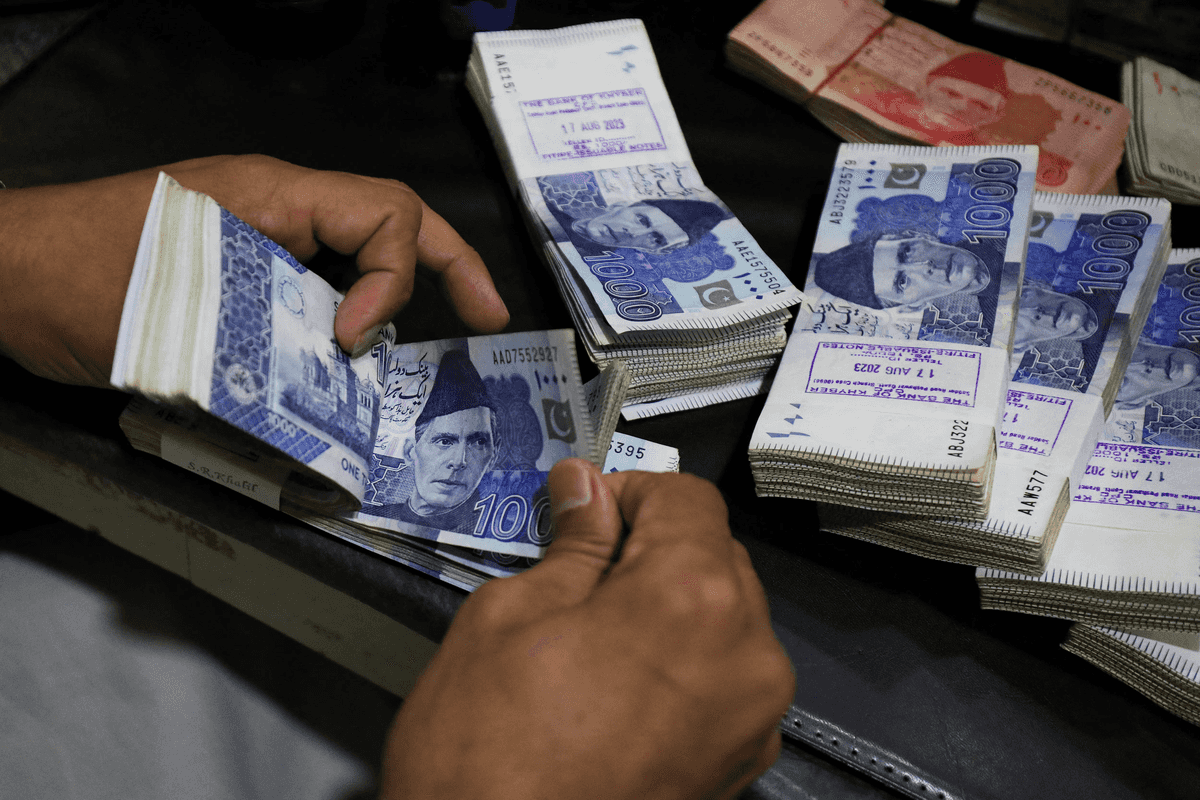
The State Bank of Pakistan (SBP) has signed an agreement with the International Finance Corporation (IFC), the private sector arm of the World Bank Group, to expand local currency financing and support private sector development in Pakistan.
Under the agreement—formalized through an International Swaps and Derivatives Association (ISDA) framework—the IFC will be able to manage currency risks more effectively and increase its investments in Pakistani rupees, a move expected to boost access to credit for businesses across key sectors.
The SBP said the partnership marks an important step toward unlocking financing for critical areas of the economy and supporting job creation nationwide.
“Promoting private sector growth in Pakistan is paramount to successful, sustainable economic development,” SBP Governor Jameel Ahmad said. “The partnership with IFC aims to enhance financing opportunities for the private sector.”
John Gandolfo, IFC Vice President and Treasurer for Treasury and Mobilization, said that with growing global volatility, access to local currency financing is becoming increasingly vital for emerging markets.
“Promoting this type of financing is a strategic priority for the World Bank Group and a catalyst for economic growth in Pakistan,” Gandolfo said.
Addressing currency risks
According to the SBP, the initiative is designed to help companies mitigate exchange rate risks, which often arise when businesses borrow in foreign currencies such as the U.S. dollar while earning revenues in local currency. Such currency mismatches can erode profitability and deter investment, particularly during periods of exchange rate fluctuation.
By facilitating more rupee-denominated lending, the SBP-IFC agreement seeks to strengthen local businesses’ financial resilience while improving overall foreign exchange liquidity in Pakistan.
The IFC has used similar arrangements in other developing economies, including Vietnam, Nigeria, and Kenya, to encourage local currency financing and help reduce exposure to global currency volatility.
Pakistan’s private sector, which contributes roughly 40% of GDP, has faced mounting challenges amid tight external financing conditions, inflation, and exchange rate volatility in recent years. The partnership aligns with ongoing efforts under the country’s Extended Fund Facility (EFF) with the International Monetary Fund (IMF) to promote financial sector stability and deepen capital markets.
The SBP said the collaboration underscores its commitment to fostering long-term economic resilience by encouraging private investment and reducing reliance on foreign-currency borrowing.
Through innovative financial instruments and partnerships such as this, IFC and SBP aim to create a more stable, inclusive financial environment for businesses to grow in Pakistan’s evolving economy.







Comments
See what people are discussing