


News Desk
The News Desk provides timely and factual coverage of national and international events, with an emphasis on accuracy and clarity.
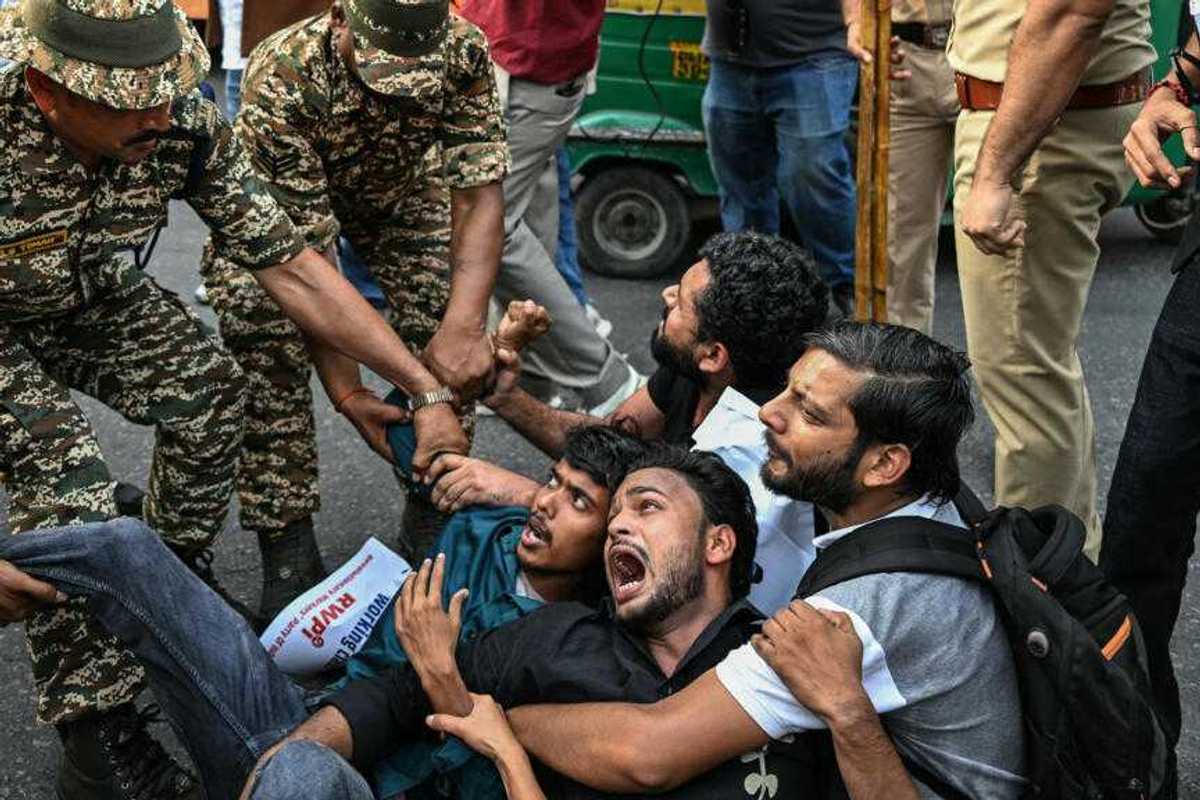
Protesters allege misconduct by the election chief during a large-scale revision of voter rolls.
AFP
Thousands of protesters marched in New Delhi on Monday to demand the resignation of India's election chief, Gyanesh Kumar, over alleged misconduct during a voter roll revision. Opposition parties and supporters of the youth-led Cockroach Janta Party joined the march towards the Supreme Court, defying a heavy security clampdown.
Why are protesters demanding India's election chief resign?
Protesters allege misconduct by the election chief during a large-scale revision of voter rolls. Critics say the exercise could benefit Prime Minister Narendra Modi's ruling Bharatiya Janata Party. The Election Commission of India denies wrongdoing and says the revision aims to remove duplicate, deceased and fraudulent entries.
What did protesters say during the Delhi march?
"You can see how big the crowd is already," demonstrator Abhay Aryan, 28, told AFP as marchers chanted slogans and waved placards. "The government has to listen to the voice of the people," he said.
A protester who gave his name as Mehvaish said he could no longer "tolerate the injustices" meted out by Modi's government. "Now if they take away our right to vote, what is left with us?" he said.
How many names were removed from India's voter rolls?
Media reports say the revision removed more than 133 million names from electoral lists. Critics say the measure has disproportionately affected minorities, particularly Muslims. Election authorities reject that framing and say the move targeted duplicate, deceased and fraudulent entries.
How have authorities responded to the protests in Delhi?
Authorities deployed thousands of security personnel across central Delhi for a third straight day. They erected hundreds of yellow metal barricades on roads leading to the center and kept six major metro stations shut.
"People are being stopped from reaching Delhi," opposition leader Rahul Gandhi said at a news conference on Monday. He said Delhi had been made into a fortress and accused Modi of shielding Kumar.
What happened to protesters and journalists detained in Delhi?
Local media reports say thousands of protesters, including organizers, were detained during a chaotic weekend. Most of them, including three top leaders of the "cockroach" movement, have since been released. Opposition figures accuse authorities of trying to suppress dissent through mass detentions.
Parliamentarian John Brittas of the Communist Party of India (Marxist) alleged he was "manhandled, dragged, assaulted" by police during Sunday's demonstrations. "This is not merely an assault on an MP. It is an assault on democratic freedoms and the rule of law," he said. Police did not respond to questions on detentions or their actions during a news conference on Sunday.
Several journalists covering the protest said they were detained despite displaying press cards. Digital journalist Nitin Katiyar told The Times of India that police punched him in the eye, a charge AFP could not immediately verify. Reporters Without Borders (RSF) said at least 16 journalists were detained over the weekend and called the police action "unacceptable".
Will the protests against the election chief continue?
The leaders of the Cockroach Janta Party, which has millions of social media followers, have pledged to continue protesting until Kumar steps down. The protests have become a major political challenge for Modi. They have drawn together opposition parties, student groups and activists angered by the voter roll revision.
Rights advocates and critics say Modi's government has eroded democratic freedoms during more than a decade in power, citing pressure on journalists, civil society groups and political opponents. The government rejects these allegations.



Comments
See what people are discussing