

Three killed and 36 wounded in Houthi missile and drone strikes on Riyadh and Abha airports
Saudi Arabia's General Authority of Civil Aviation confirmed that separate attacks on King Khalid International Airport in Riyadh and Abha International Airport killed three foreign nationals and injured 36 people, prompting coalition counter-strikes against Houthi missile platforms in Sanaa

News Desk
The News Desk provides timely and factual coverage of national and international events, with an emphasis on accuracy and clarity.
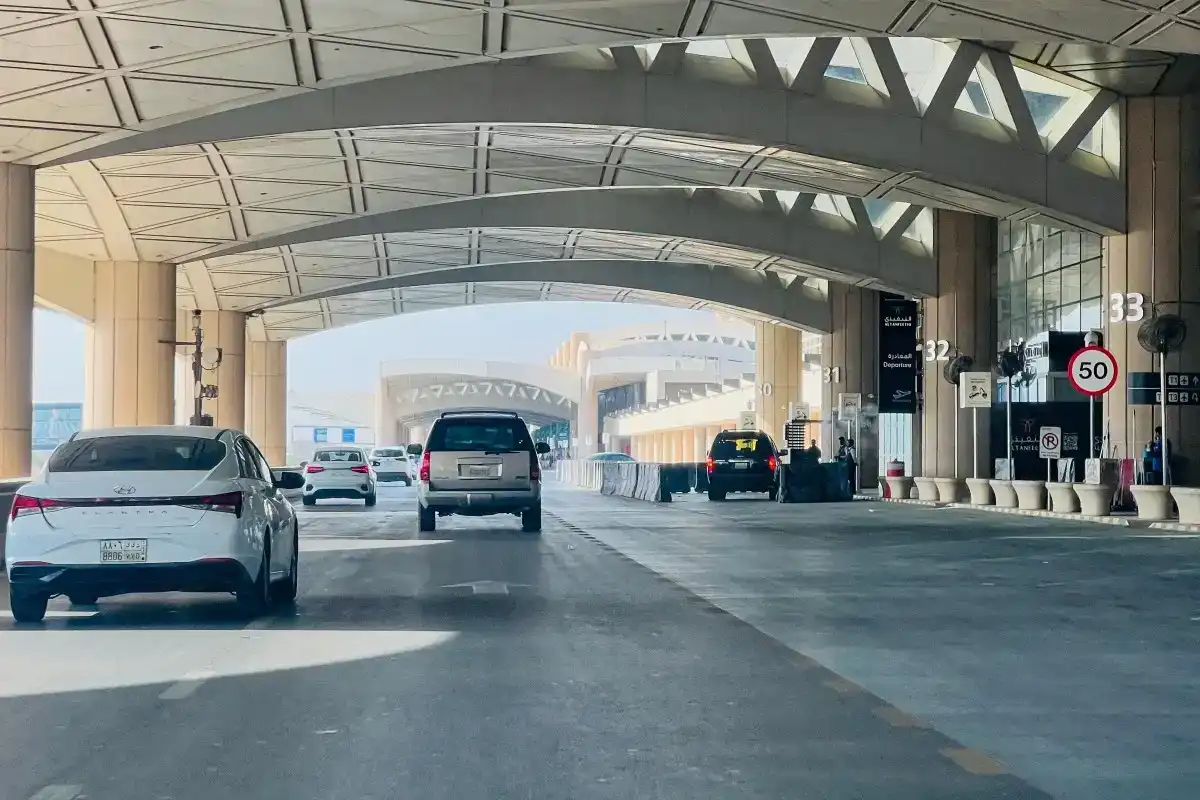
Cars drive past the gates of King Khalid International Airport in Riyadh on September 19, 2026.
AFP
Saudi Arabia's General Authority of Civil Aviation (GACA) confirmed on Wednesday that three foreign nationals were killed and 36 people were injured in attacks targeting King Khalid International Airport in Riyadh and Abha International Airport in the country's south.
A Pakistani national was among eight people injured in a Houthi attack on Riyadh’s King Khalid International Airport on Wednesday, Saudi authorities said, as strikes on two airports in the Kingdom killed three people and wounded 36 others amid escalating hostilities with Yemen’s Iran-aligned Houthi militia.
What casualties and damage resulted from the airport strikes in Riyadh and Abha?
According to official statements from GACA, the attack on Abha International Airport resulted in the deaths of an Egyptian and an Algerian national, along with injuries to 28 individuals ranging from minor to severe. In the capital, a strike on King Khalid International Airport killed a Sudanese resident and wounded eight others.
Emergency medical teams transported all injured persons to nearby hospitals, while civil aviation authorities coordinated with security agencies to assess structural damage and maintain operational safety across national air transport hubs.
The cross-border attacks mark a direct escalation against Saudi civil infrastructure as Houthi forces attempt to disrupt key transport networks.
What warning did the Houthis issue to international airlines?
Houthi military spokesman Yahya Saree announced the strike on social media, asserting that the missile accurately struck its target and caused operational disruptions at the airport. In his statement, Saree issued what he characterized as a final warning to commercial carriers, urging all international airlines to cease operating flights through Saudi airspace due to heightened operational danger and ongoing cross-border military operations.
The latest strike claim follows confirmed casualties from midweek airport attacks in Riyadh and Abha that killed three foreign nationals and injured dozens of residents. While Saudi authorities have not yet formally confirmed the impact or interception of Thursday morning's launch, coalition air defense networks remain on high alert across central and southern regions of the Kingdom.
How have coalition forces responded to the Houthi missile strikes?
The Saudi-led military coalition supporting Yemen's government reported that air defense systems successfully intercepted a ballistic missile in the skies north of Riyadh before it could strike central facilities. In immediate retaliatory operations, coalition aircraft tracked and destroyed the mobile ballistic missile launch platform in Yemen's Houthi-controlled capital, Sanaa, which had been utilized to execute the strikes against Riyadh.
The airport strikes arrive as pro-government Yemeni forces, supported by Saudi coalition air power and newly activated defense support from the Makkah Alliance, press forward with Operation Dawn of Yemen to regain territory across Taiz, Hodeida, and Sanaa.
According to reporting by Al Jazeera and Al Arabiya, civil aviation authorities continue to monitor airspace security while military forces maintain high readiness across the Kingdom's border regions.




Comments
See what people are discussing