

Trump claims Putin seeks Ukraine peace settlement while criticizing Zelensky over refinery strikes
US President Donald Trump stated following a phone call with Russian President Vladimir Putin that Moscow strongly desires a peace settlement, while calling for leadership change in Kyiv after Ukrainian President Volodymyr Zelensky criticized a US-Russia diesel agreement as a 'weak decision'

News Desk
The News Desk provides timely and factual coverage of national and international events, with an emphasis on accuracy and clarity.
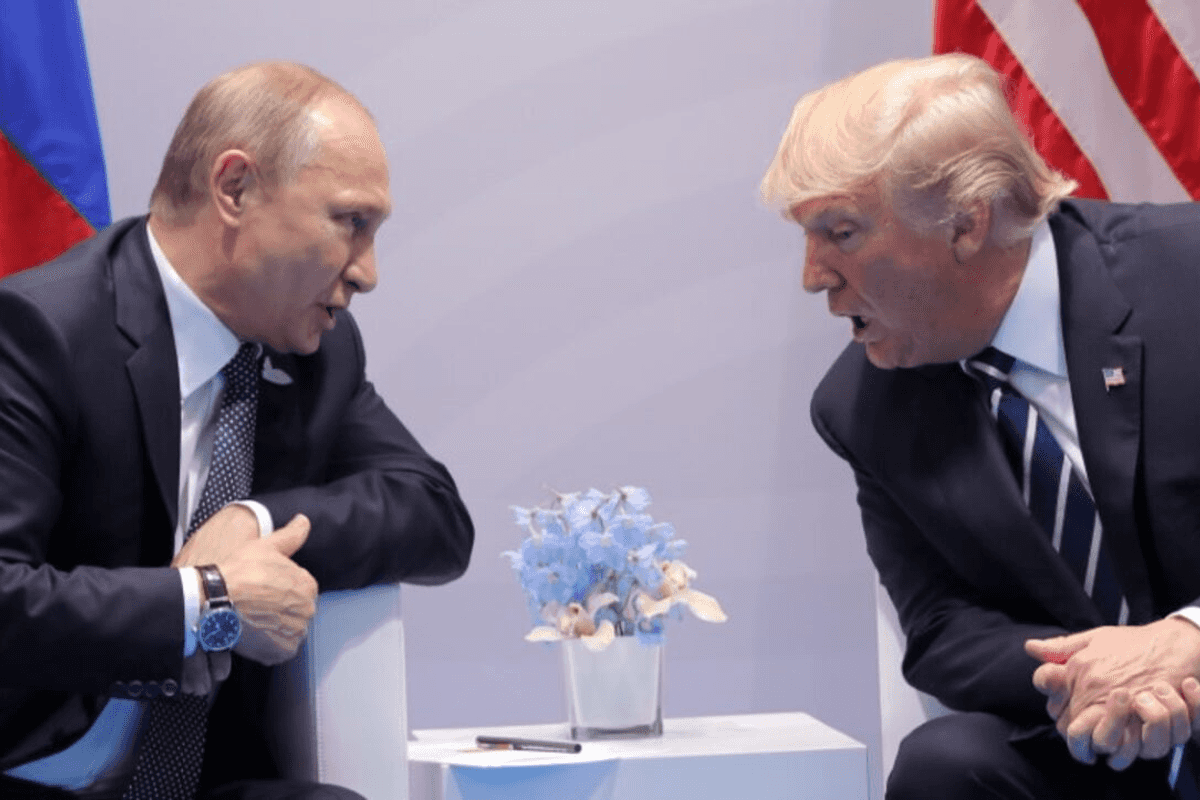
U.S. President Donald Trump stated on Saturday, October 10, 2026, at Joint Base Andrews that Russian President Vladimir Putin strongly desires a negotiated settlement to end the war in Ukraine, accusing Ukrainian President Volodymyr Zelensky of actively resisting compromise and exacerbating global fuel shortages.
What led to the sharp rift between Trump and Zelensky over Russian diesel sanctions?
The public clash follows a major agreement reached during a Friday phone call between President Trump and President Putin, under which the U.S. Treasury issued General License 135 to suspend energy sanctions and authorize the import of up to 4.8 million metric tons of Russian diesel to alleviate global fuel shortages linked to the ongoing U.S.-Iran conflict. President Zelensky harshly criticized the arrangement as a "weak decision" and an "investment in war," arguing that lifting energy sanctions provides Moscow with billions in revenue while Ukrainian civilians face continued military strikes.
In response, President Trump told reporters that Zelensky had disobeyed explicit U.S. requests to refrain from attacking Russian oil refineries, asserting that Ukrainian strikes on energy infrastructure risk worsening global diesel deficits. Trump suggested that it was time for Ukraine to hold elections and "get a new leader," arguing that a settlement could have been achieved much earlier through diplomatic compromise.
How are international lawmakers and market analysts responding to the energy deal?
The decision to ease energy sanctions on Moscow has drawn mixed reactions across Washington and international capitals. Members of the U.S. Congress and bipartisan delegations visiting Kyiv expressed concern that easing sanctions undermines economic pressure on the Kremlin, while U.S. Treasury officials and energy analysts emphasized that releasing Russian diesel reserves is essential to stabilizing global energy markets rocked by Persian Gulf shipping blockades.
Despite the diplomatic friction, Ukrainian military forces continue defense operations along the frontlines as heavy fighting persists across eastern and southern regions.
According to reporting by Arab News and Anadolu Agency, diplomatic delegations from European partner nations are attempting to mediate communication between Washington and Kyiv to preserve strategic coordination.





Comments
See what people are discussing