

Unsealed court filings reveal tech executives called AI scraping 'largest theft of labor in human history'
Newly unsealed documents in The New York Times' copyright lawsuit against Microsoft and OpenAI feature internal communications where tech executives privately described AI model training on publisher content as an unprecedented theft of labor and an existential threat to news publishers

News Desk
The News Desk provides timely and factual coverage of national and international events, with an emphasis on accuracy and clarity.
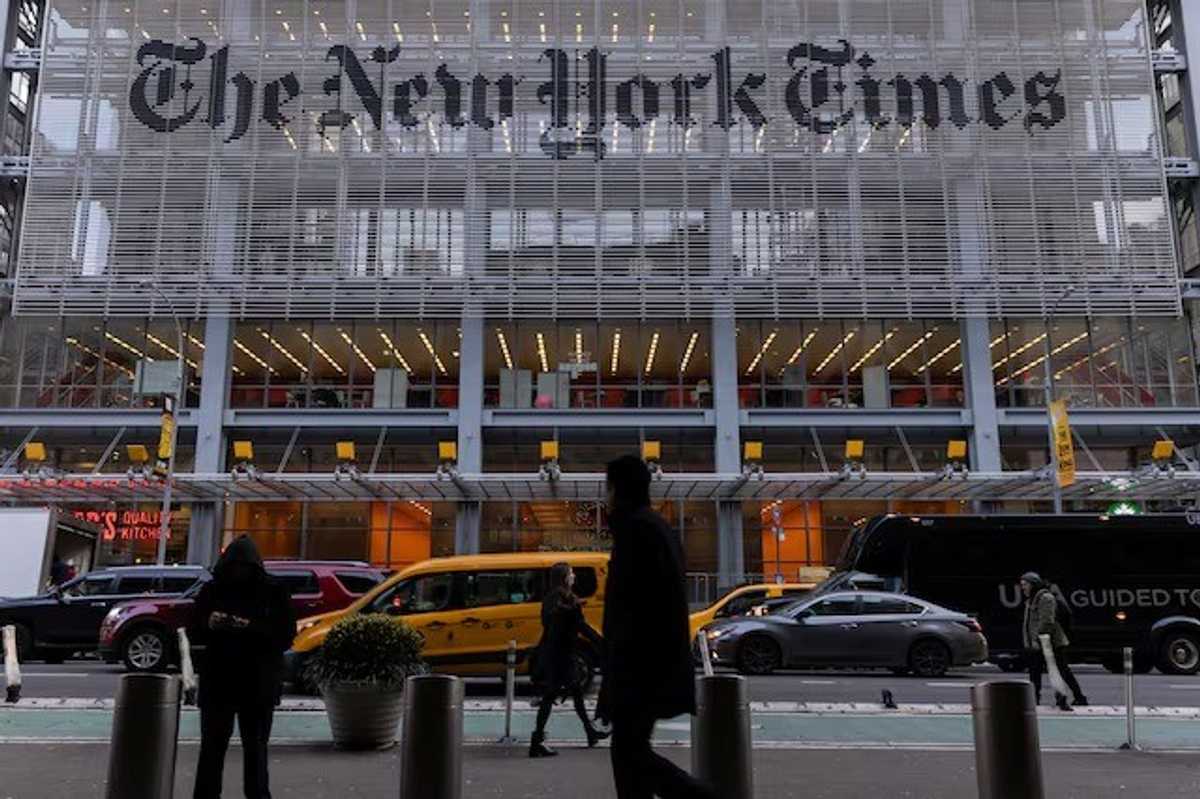
Unsealed court filings in The New York Times' landmark copyright lawsuit against OpenAI and Microsoft revealed on Thursday that internal executives at both tech firms privately expressed grave concerns that training generative artificial intelligence models on copyrighted news content constituted a massive unauthorized appropriation of human labor.
What key statements were revealed in the unsealed court filings?
The unredacted summary judgment motion submitted in New York federal court highlights internal communications by Brent Hecht, Microsoft’s Director of Applied Science. In internal documents cited by the plaintiffs, Hecht characterized the unauthorized scraping of millions of news articles as "an astonishing theft of unprecedented proportions" and potentially "the largest theft of labor in human history".
Hecht further cautioned that relying on a fair use defense for such widespread data extraction would "make a complete mockery of the idea of 'fair use'".
The filing also details internal records from OpenAI, where executives acknowledged that commercial AI outputs are "largely substitutive" for traditional news reporting and pose an "existential threat" to digital media business models. Additional court evidence indicates that OpenAI researchers discussed technical workarounds to bypass publisher paywalls, while internal traffic analyses showed that generative search features reduced referral clicks to news sites by up to 93 percent.
How have Microsoft, OpenAI, and the US government responded?
A spokesperson for Microsoft stated that Hecht’s remarks represented "one employee’s individual perspective" and do not reflect the official legal or corporate position of the company. Both Microsoft and OpenAI continue to maintain in court filings that utilizing publicly accessible web data to train large language models is transformative and fully protected under fair use law.
The US Department of Justice recently submitted a brief supporting the tech companies' position, contending that restricting AI training on publicly available data could hinder scientific progress, economic growth, and national security innovation. US District Judge Sidney Stein is currently evaluating the motions for summary judgment, with any potential trial expected no earlier than 2027.




Comments
See what people are discussing