

US Army Secretary Dan Driscoll resigns following policy clashes with Defense Secretary Pete Hegseth
US Secretary of the Army Dan Driscoll submitted his resignation to President Donald Trump following months of mounting friction with Defense Secretary Pete Hegseth over leadership dismissals, drone acquisition, and Army modernization efforts

News Desk
The News Desk provides timely and factual coverage of national and international events, with an emphasis on accuracy and clarity.
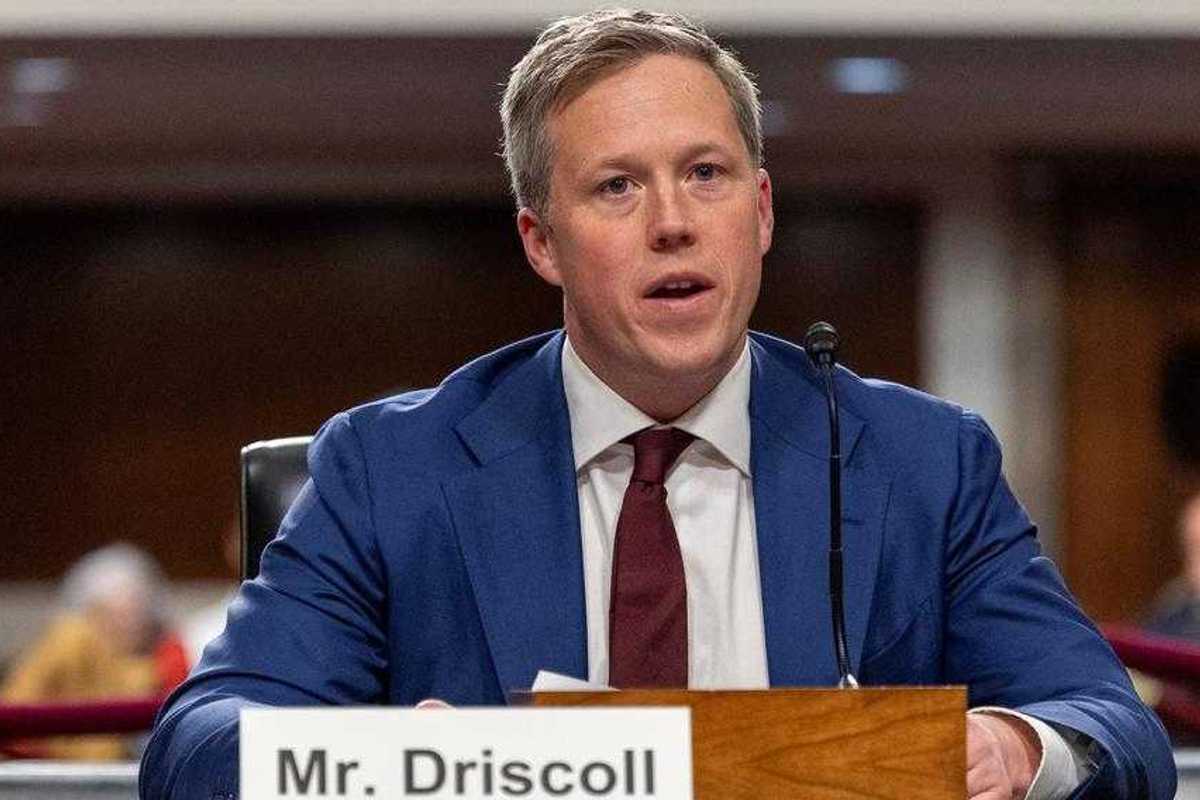
U.S. Secretary of the Army Dan Driscoll submitted his resignation on Monday, marking the latest high-profile departure from senior leadership at the Department of Defense.
Picture Courtesy: Stars and Stripes
U.S. Secretary of the Army Dan Driscoll submitted his resignation on Monday, marking the latest high-profile departure from senior leadership at the Department of Defense.
The White House confirmed the decision following initial reporting by The Wall Street Journal, which highlighted months of escalating policy and personal clashes between Driscoll and Secretary of Defense Pete Hegseth.
Why did Secretary Dan Driscoll submit his resignation?
Defense and administration officials confirmed that Driscoll met with President Donald Trump to discuss the current state of the Army before tendering his resignation. The core of the rupture stemmed from long-standing friction between Driscoll and Hegseth over high-level personnel changes, force readiness, and procurement strategies.
Relations between the two civilian defense leaders deteriorated significantly following Hegseth's April firing of General Randy George, the Army Chief of Staff with whom Driscoll worked closely on modernization initiatives and diplomatic outreach. Driscoll also pushed back against Hegseth's broader military command restructurings, including the demotion and retirement of top officers such as General Christopher Donahue. Furthermore, Driscoll's initiatives focused on rapid drone acquisition, low-cost interceptor production, and integrating tech-sector venture capital into Army procurement ran into bureaucratic resistance from Hegseth's office.
According to the Financial Times, Under Secretary of the Army Michael Obadal is expected to step into the role of acting secretary upon Driscoll's official departure.
What does Driscoll's departure mean for Pentagon leadership?
The resignation leaves the nation's largest military branch without a Senate-confirmed civilian or uniformed leader during an active conflict in the Middle East. With General Randy George ousted in April, Vice Chief of Staff General Christopher LaNeve continues to serve as acting Chief of Staff without a formal Senate confirmation.
White House Principal Deputy Press Secretary Anna Kelly praised Driscoll’s contributions, citing his leadership in advancing military readiness, streamlining acquisition, and representing the administration during diplomatic talks between Russia and Ukraine.
However, congressional leaders expressed sharp concern over the institutional instability. Senator Jack Reed, the ranking Democrat on the Senate Armed Services Committee, criticized the administration's Defense Department oversight, warning that Hegseth's continuous purging of civilian and military leadership inflicts long-term damage on military readiness and continuity.



Comments
See what people are discussing