


News Desk
The News Desk provides timely and factual coverage of national and international events, with an emphasis on accuracy and clarity.
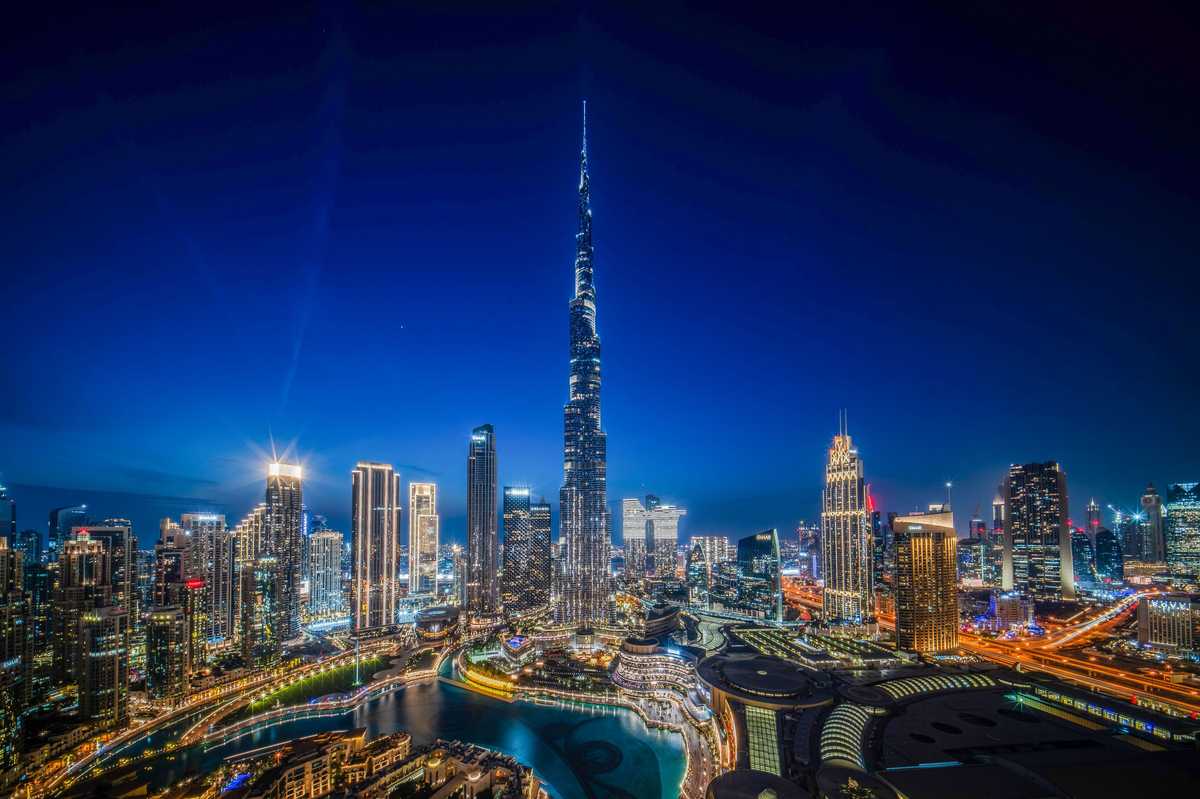
Abu Dhabi and Dubai have been named among 28 "cities to watch" in Oxford Economics' Global Cities Index, as Gulf cities show resilience amid regional uncertainty.
Abu Dhabi and Dubai have been named among 28 "cities to watch" in Oxford Economics' new Global Cities Index, The National reported. The UK-based advisory firm listed the two emirates, along with Riyadh, as contenders reshaping the global economic landscape, based on scores across five key metrics.
What is Oxford Economics' Global Cities Index?
The Global Cities Index ranks cities using five measures: economics, human capital, quality of life, environment and governance. Analysts describe the "cities to watch" group as rapidly evolving markets forging independent growth paths that policymakers can no longer ignore. Cities that perform well in one category tend to excel in others, creating a self-reinforcing cycle of success.
Which cities made the 2026 list of cities to watch?
Alongside the three Gulf cities, the list includes five African cities: Accra, Cairo, Dakar, Luanda and Nairobi. Five Asia-Pacific cities also feature: Bengaluru, Ho Chi Minh City, Kuala Lumpur, Shenzhen and Tashkent. Europe, Latin America and North America each contributed five cities to the list.
Liam Sides, director of city services and lead author of the report, said a strong economy drives quality-of-life gains that attract skilled talent. He said once a city enters this growth cycle, only major shocks can displace it.
How did Dubai perform in the Global Cities Index?
Dubai rose nine spots from the 2025 list to enter the top 50 at rank 42. It finished second in human capital and 53rd in economics. Analysts linked this rise to immigration reforms such as the Golden Visa and retirement visa programs, designed to encourage longer-term stays, particularly among higher-income individuals.
How did Abu Dhabi rank in the index?
Abu Dhabi slid 11 places to 84th overall, ranking sixth in human capital and 110th in economics. Analysts said economic development across the rest of the Emirates and the wider Gulf region feeds off the success of Abu Dhabi's economy. They added that the city remains in full economic diversification and transformation mode.
How did Riyadh perform compared to Dubai and Abu Dhabi?
Riyadh climbed 47 spots to reach 50th place, finishing fourth in human capital and 18th in economics. Oxford Economics called this a reflection of significant economic and social development in the Saudi capital. The report said Riyadh has been more shielded than other Middle Eastern cities from the US-Iran conflict, showing resilience through diversification efforts and targeted investment.
How is the Iran conflict affecting Gulf cities?
Analysts said the three Gulf cities have burst onto the global scene, increasingly attracting the world's highest-skilled workers and most innovative businesses. They said the conflict in Iran is currently threatening some of this progress. Deep financial buffers and strong long-term fundamentals, however, mean the region's major cities are expected to keep driving strong growth.
The Middle East's major cities have withstood pressure from the regional conflict through swift policies and safety measures. Business activity in the UAE's non-oil private sector improved in August at its fastest pace since December 2024, according to the seasonally adjusted S&P Global UAE Purchasing Managers' Index. Saudi Arabia's non-oil private sector also reported its strongest expansion in six months during August.
Oxford Economics said Middle Eastern cities have cemented themselves as key global players by attracting top talent and innovative companies. It warned that the Iran conflict threatens to undermine this growth model, since geopolitical uncertainty affects the region's ability to attract skilled workers and capital. The firm said this shows how challenges in one index category can weaken performance in others.
Which cities topped the overall Global Cities Index?
New York retained the top spot overall, followed by London and Paris, both of which held their 2025 positions. The rest of the top 10, dominated by US cities, includes Seattle, San Francisco, Dublin, Boston, San Jose in California, Tokyo and Zurich.
Oxford Economics said the advantage of these leading cities is self-reinforcing. Strong institutions and vibrant economies attract talent and capital, deepening the same conditions that drew them in the first place. Analysts said these cities function as engines of adaptation, meaning shocks tend to accelerate change rather than halt it.



Comments
See what people are discussing