

Casualties reported in Somali rescue operation for hijacked tanker with Pakistani crew onboard
Surviving crew members issued urgent distress calls following an armed rescue operation targeting the hijacked oil tanker MT Honour 25 off Puntland, amid reports of five seafarers killed—including three Pakistani nationals—and four others injured

Shayan Saleem
Correspondent
I am Shayan Saleem, a journalist with 14 years of experience in both news television and digital media. My expertise lies in feature storytelling, covering topics such as history, culture, tourism, information technology, character-driven narratives, and in-depth storytelling.
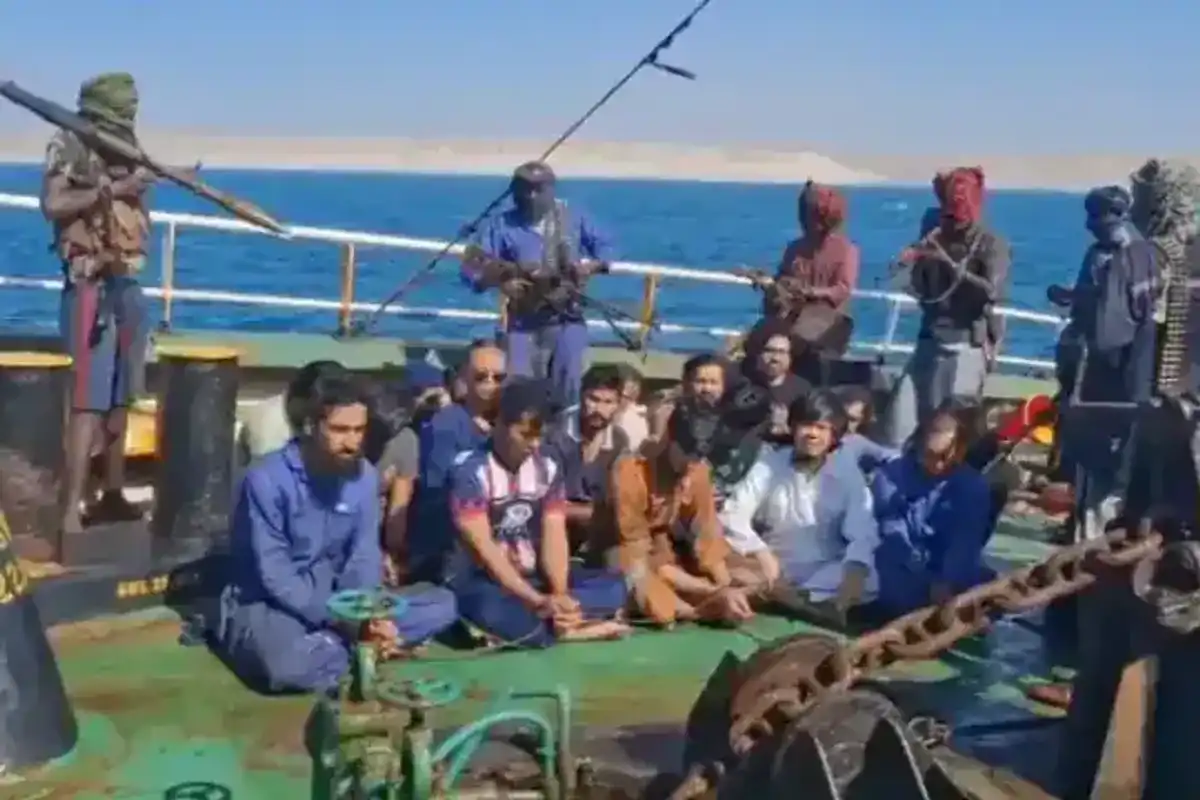
At least five crew members, including three Pakistani nationals, have reportedly been killed and four others injured during a rescue operation targeting the hijacked oil tanker MT Honour 25 off the coast of Somalia.
Picture Courtesy Social Media/X
At least five crew members, including three Pakistani nationals, have reportedly been killed and four others injured during a rescue operation targeting the hijacked oil tanker MT Honour 25 off the coast of Somalia.
The reports of casualties initially emerged from surviving seafarers and human rights advocates on Tuesday.
What occurred during the rescue operation on the MT Honour 25?
The Palau-flagged vessel had been held by Somali pirates since its capture in April 2026, with 17 crew members aboard, including 10 Pakistani nationals. In recorded audio distress calls conveyed directly from the tanker to Shaheen Burney—wife of prominent Pakistani human rights advocate Ansar Burney—surviving crew members detailed the violent firefight that erupted as Puntland Maritime Police Force units moved to retake the vessel.
Second Engineer Syed Hussain Yousuf, speaking alongside surviving Pakistani crew members Yasir, Imran Ali, and Yaseen, confirmed that the assault resulted in multiple casualties. Among those killed were three Pakistani seafarers, a Myanmar national serving as chief engineer, and an Indian crew member. Four additional seafarers—three Pakistanis and an Indonesian national—sustained injuries during the crossfire.
What is the current condition of the surviving crew and vessel?
The surviving seafarers are reportedly in critical condition aboard the immobilized tanker following the military intervention. The bodies of the five deceased crew members remain exposed on the ship’s open deck under the sun because the vessel has no refrigeration or freezer facilities. The four wounded seafarers have reportedly received no medical treatment since the operation concluded.
The ship’s steering mechanism was destroyed during the raid, leaving the vessel dead in the water. It is currently being towed side-by-side toward the Puntland port of Bosaso, a journey expected to take two to three days. The surviving crew has issued an urgent appeal to regional naval forces and international maritime authorities for a helicopter evacuation to provide emergency medical treatment to the wounded and recover the deceased.
Puntland security forces confirmed the apprehension of 16 suspected pirates during the operation, while Pakistani diplomatic officials continue coordinating with regional authorities over medical evacuations and consular assistance.
Pakistan’s Foreign Office had said before Puntland’s announcement that its mission in Djibouti, which is also accredited to Somalia, was contacting authorities to verify reports of the tanker’s release. It has yet to confirm the sailors’ identities or the casualties.
Months of captivity and calls for help
The crew had spent more than five months in captivity before the rescue operation. During that period, relatives and rights groups repeatedly raised concerns about the sailors’ deteriorating conditions, including reports of limited food, inadequate drinking water and little access to medicine. In one distress appeal, a crew member said the pirates had contacted Pakistani authorities but received no response.
The families of the Pakistani sailors also repeatedly called for government intervention. In May, relatives protested in Karachi demanding the safe release of the hostages, while further protests were held as the captivity continued. Families said they were increasingly distressed by the lack of progress toward securing the sailors’ release.
In September, family members staged an overnight sit-in outside the Ministry of Foreign Affairs’ liaison office on Sharea Faisal in Karachi. Police briefly detained some protesters as the demonstration was dismantled. The families subsequently appealed to foreign governments, the United Nations and the International Maritime Organization, saying their repeated appeals to Pakistani authorities had not produced a solution.
The Pakistani government has said it was pursuing diplomatic efforts. On June 9, Deputy Prime Minister and Foreign Minister Ishaq Dar spoke with Somalia’s foreign minister about the hostages and called for their safe release and repatriation. Pakistan’s Foreign Office said it had been actively engaging with Somali authorities following the hijacking.





Comments
See what people are discussing