


News Desk
The News Desk provides timely and factual coverage of national and international events, with an emphasis on accuracy and clarity.
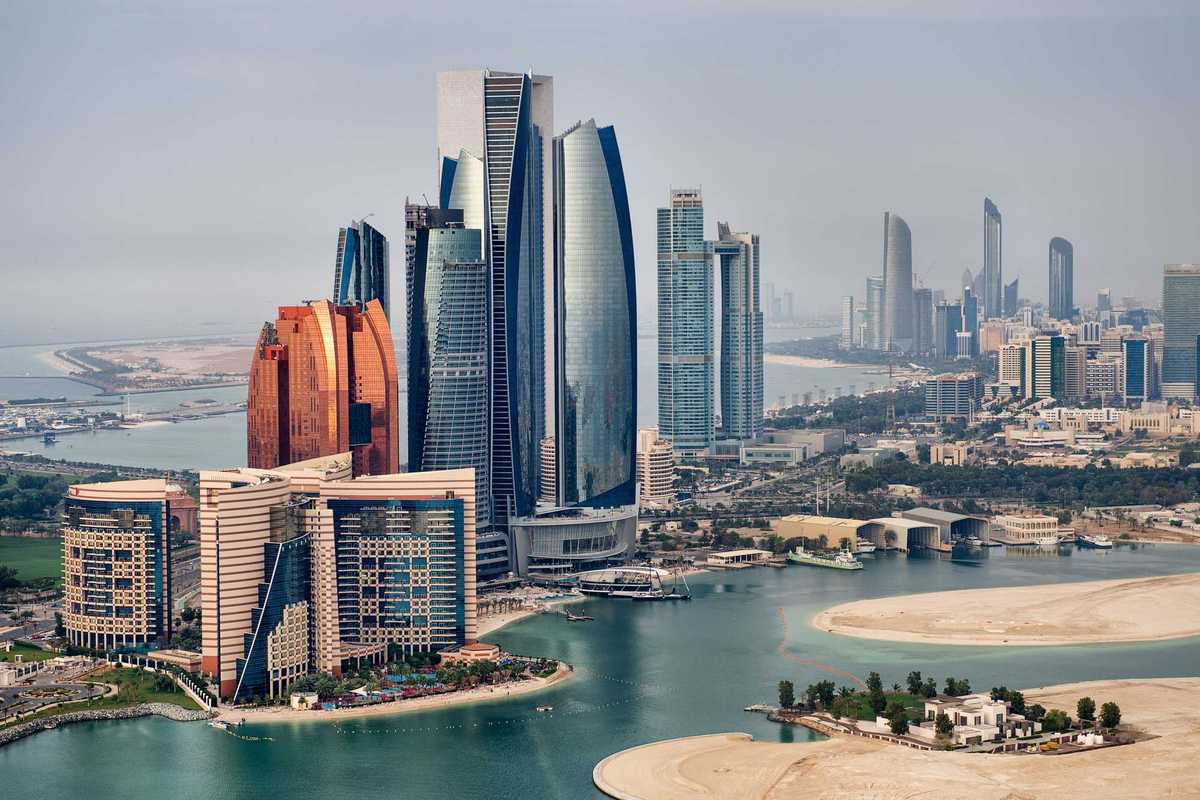
Abu Dhabi aims to attract Dh235 billion in investments across four economic clusters by 2045, creating 130,000 specialized jobs and adding more than Dh284 billion to its GDP.
WAM
Abu Dhabi aims to attract Dh235 billion ($64 billion) in investments across four specialized economic clusters by 2045, Gulf News reported.
The Abu Dhabi Department of Economic Development (ADDED) announced the target.
The clusters are expected to create 130,000 specialized jobs and add more than Dh284 billion to the emirate’s gross domestic product (GDP).
What are Abu Dhabi’s four economic clusters?
The four clusters are Smart and Autonomous Vehicle Industries (SAVI), Agriculture and Water Abundance (AGWA), Health, Endurance, Longevity and Medicine (HELM), and Finance, Insurance, Digital and Alternative Assets (FIDA). They target highly skilled talent in the innovation economy, according to Hamid Saiah Al Mazrouei, ADDED undersecretary.
How does Abu Dhabi plan to attract Dh235 billion in investments?
Al Mazrouei said the emirate is strengthening its global competitiveness. He cited quality investments, talent attraction, trusted regulatory frameworks, and strong partnerships with the private sector and the community. He said Abu Dhabi has made progress in attracting global talent and strengthening investor confidence.
He said the emirate’s operating model is built on seamless coordination between government entities. This approach is in line with LivEx 2026. ADDED monitors international competitiveness indicators covering talent, regulatory frameworks, infrastructure and digital development.
Specialized sectors within ADDED prepare studies and proposals with the relevant entities.
How are government entities working on the clusters?
Al Mazrouei cited the HELM cluster as an example of this collaboration. ADDED, the Abu Dhabi Investment Office (ADIO) and the Department of Health, Abu Dhabi launched it. The cluster supports economic growth and diversification and advances the emirate’s healthcare and life sciences ecosystem.
HELM also encourages the use of advanced, AI-enabled biotechnology to improve quality of life, he said.
He also highlighted the SAVI cluster. ADIO is working with the General Civil Aviation Authority, the Integrated Transport Center (Abu Dhabi Mobility), Abu Dhabi Maritime, Tawazun Industrial Park, Miral and the digital cluster of AD Ports Group. The Smart and Autonomous Systems Council supervises the work, which aims to advance transport systems using autonomous technologies across land, sea and air.
How does Abu Dhabi rank globally?
Al Mazrouei said the integrated approach has helped Abu Dhabi stay the best city to live in across the Middle East and North Africa. The Economist Intelligence Unit (EIU) gave it that ranking in 2026 for the eighth year in a row.
In the 2025 World Competitiveness Ranking by the International Institute for Management Development (IMD), Abu Dhabi ranked first globally in talent readiness, growth of the labor force and attraction of international students. It also ranked first in gross domestic savings as a share of GDP, the trade balance as a share of GDP and growth in commercial services exports.
The emirate ranked sixth in government efficiency and seventh in economic performance in the IMD ranking. It also ranked sixth globally in the human capital pillar of Oxford Economics’ Global Cities Index 2026.
How are investment and business activity growing in Abu Dhabi?
New economic licenses rose 21 percent in the first quarter of 2026 compared with the same period in 2025, Al Mazrouei said. Abu Dhabi Global Market (ADGM) saw assets under management rise 54 percent in the first half of 2026 compared with 2025. Its workforce reached 49,027, and active licenses rose to about 14,000.
Abu Dhabi’s real estate sector drew Dh13.8 billion in foreign direct investment in the first half of 2026. That is an increase of 309 percent from the same period last year. Non-resident investors came from 116 nationalities.
ADDED reports say Abu Dhabi’s real GDP has grown robustly for more than 18 consecutive quarters. Non-oil sectors contribute more than half of economic output, and the emirate is among the world’s top 10 economies in GDP per capita.
Why is Abu Dhabi attractive to investors?
Al Mazrouei said Abu Dhabi offers a diversified economy, a supportive legislative and regulatory environment, and advanced infrastructure. Its integrated ecosystem helps businesses set up, access markets and expand. He said the combined assets of the emirate’s sovereign wealth funds are estimated at more than $1.9 trillion.
Abu Dhabi also holds a sovereign credit rating of AA with a stable outlook.
He attributed growth in hospitality investment to genuine expansion and diversification in demand. He cited the emirate’s growing international appeal, rising visitor numbers and the expansion of business tourism and events. Abu Dhabi welcomed 26.6 million visitors in 2025, and the meetings, incentives, conferences and exhibitions (MICE) sector drew 2.2 million participants, up 40 percent.
How do quality of life and AI support Abu Dhabi’s economy?
Government reports describe quality of life as a core part of economic competitiveness. Capital flows to places where opportunities and talent are concentrated, and talent seeks cities with the best living environments. Competing for talent is therefore tied to competing for capital.
Reports also highlight Abu Dhabi’s ambition to become the world’s first government to run an integrated, AI-powered model by 2027. Al Mazrouei said ADDED is stepping up efforts to deliver AI-enabled services to investors through the Abu Dhabi Government’s TAMM application.
The department also uses advanced data and analytics to keep regulatory frameworks in step with investor and business needs.




Comments
See what people are discussing