

Stable rupee eroding Pakistan's export competitiveness, World Bank warns
Rupee has appreciated nearly 20% in real terms since FY24 despite trading in a narrow range against the US dollar, report finds

Business Desk
The Business Desk tracks economic trends, market movements, and business developments, offering analysis of both local and global financial news.
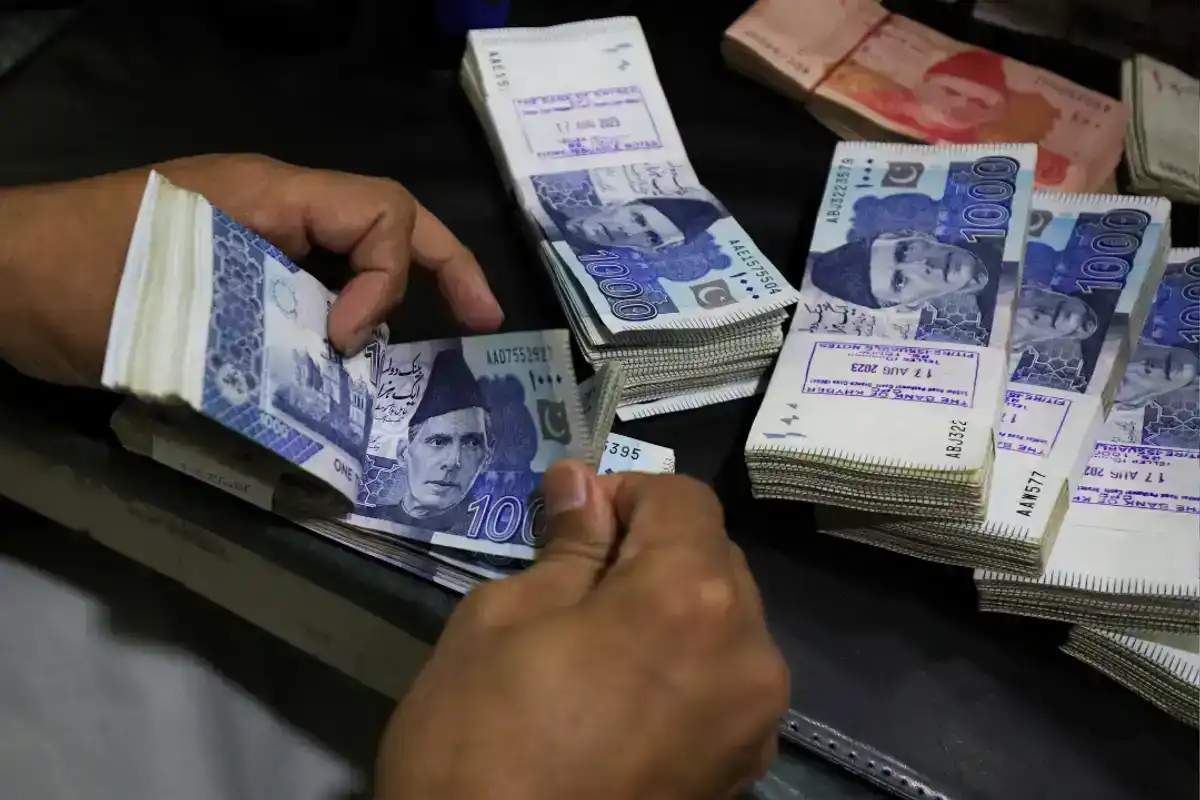
Pakistan's rupee has remained unusually stable against the US dollar since 2024, but its value has risen nearly 20% in inflation-adjusted terms since the start of fiscal year 2024 (FY24), weakening the country's export competitiveness, according to the World Bank.
In its October 2026 Pakistan Development Update: Attaining Escape Velocity, the bank said the rupee traded between PKR 278 and PKR 285 per dollar, with fluctuations remaining exceptionally small during FY25 and FY26.
The standard deviation of the exchange rate was below PKR 2 during those two years, equivalent to approximately 0.6% of its longer-term average.
The World Bank said this stability had persisted despite external economic shocks, including declining rice export prices and higher import costs following the Middle East conflict.
It said the exchange rate's limited response to changing market conditions suggested that it was not adjusting freely, potentially undermining business confidence and export competitiveness.
Why is a stable rupee hurting Pakistan's exports?
A stable exchange rate can weaken export competitiveness when domestic prices rise faster than those of trading partners. Although the rupee has changed little against the dollar, its inflation-adjusted value has increased, making Pakistani goods relatively more expensive internationally and potentially reducing exporters' ability to compete.
Pakistan's real effective exchange rate (REER), which measures the rupee's value against trading partners' currencies after adjusting for inflation, increased 10% between the end of June 2025 and July 2026.
Differences in inflation between Pakistan and its trading partners accounted for more than 8 percentage points of that increase.
The report noted that part of the nearly 20% appreciation since FY24 reversed the rupee's unusually sharp depreciation in FY23.
By July 2026, the REER was 5% to 9% above its long-term averages and trend. Maintaining its June 2025 level would have required the rupee to be approximately 9% weaker against the dollar, the World Bank estimated.
With inflation reaching 11.1% in August 2026, further real appreciation was likely unless the nominal exchange rate adjusted, it said.
The bank argued that a fully flexible, market-determined exchange rate would help Pakistan absorb external shocks, support private-sector confidence and prevent further erosion of competitiveness.
Exchange rate rigidity preceded past crises
The World Bank warned that efforts to maintain exchange rate stability during periods of external pressure had historically preceded balance-of-payments crises in Pakistan.
In 2008, 2018 and 2022, the country maintained relatively stable exchange rates despite widening current account deficits, eventually suffering reserve losses followed by sharp currency depreciations.
State Bank of Pakistan reserves fell from USD 18.1 billion in March 2016 to USD 9.8 billion in March 2018, after which the rupee depreciated by approximately one-third.
In 2022, reserves declined to around USD 3 billion, while a substantial premium emerged in the informal foreign exchange market.
When an informal exchange rate cap was removed in January 2023, the rupee lost 9.6% of its value in a single day.
The World Bank said delayed exchange rate adjustments could also distort business decisions. Exporters anticipating depreciation may delay converting foreign currency earnings, while importers may bring forward payments.
Large differences between official and informal exchange rates are also associated with lower recorded exports and capital flight.
The report cited evidence from 50 emerging markets between 1980 and 2011 showing that less flexible exchange rate regimes were associated with greater economic vulnerabilities and more frequent crises.
Export growth remains constrained
Pakistan's exports of goods and services amounted to just 9% of gross domestic product (GDP) in FY26, highlighting the country's limited export base.
The World Bank said Pakistan's projected current account deficits could remain financially sustainable largely because strong remittances covered almost the entire trade deficit.
However, this did not necessarily mean the rupee's exchange rate reflected the competitiveness of Pakistan's export sector.
The bank estimated that a 10% real depreciation of the rupee was associated with an approximately 5% increase in exports over the long term.
Only 13% of that eventual export response occurred in the first quarter after depreciation, compared with 46% following an appreciation.
The slower response reflects the time businesses need to find overseas buyers, limited access to financing and foreign buyers negotiating lower dollar prices after currency depreciation.
World Bank calls for broader trade reforms
The World Bank said a flexible exchange rate alone would not be enough to deliver sustained export growth.
It recommended implementing the National Tariff Policy, which aims to eliminate additional customs and regulatory duties within four to five years and reduce Pakistan's trade-weighted average tariff from 10.6% to below 6%.
Other priorities include making the Export-Import Bank of Pakistan fully operational, expanding export financing, improving product quality standards and simplifying customs procedures.
The bank also recommended negotiating additional preferential trade agreements to help Pakistani businesses enter new export markets.
Together, these reforms could help exporters respond more effectively to exchange rate changes and strengthen Pakistan's international competitiveness, the report said.





Comments
See what people are discussing