

Did Babar Azam put Pakistan's Test team back on track?
The series victory also gave Babar his ninth away Test win as Pakistan captain.

Zaid Hassan
Producer
Zaid Hassan, a seasoned sports journalist, led Cricket Pakistan as editor for four years, shaping its coverage with insightful analysis. Now a producer at Nukta, he expands into broader storytelling while remaining a key voice in Pakistan’s sports media.
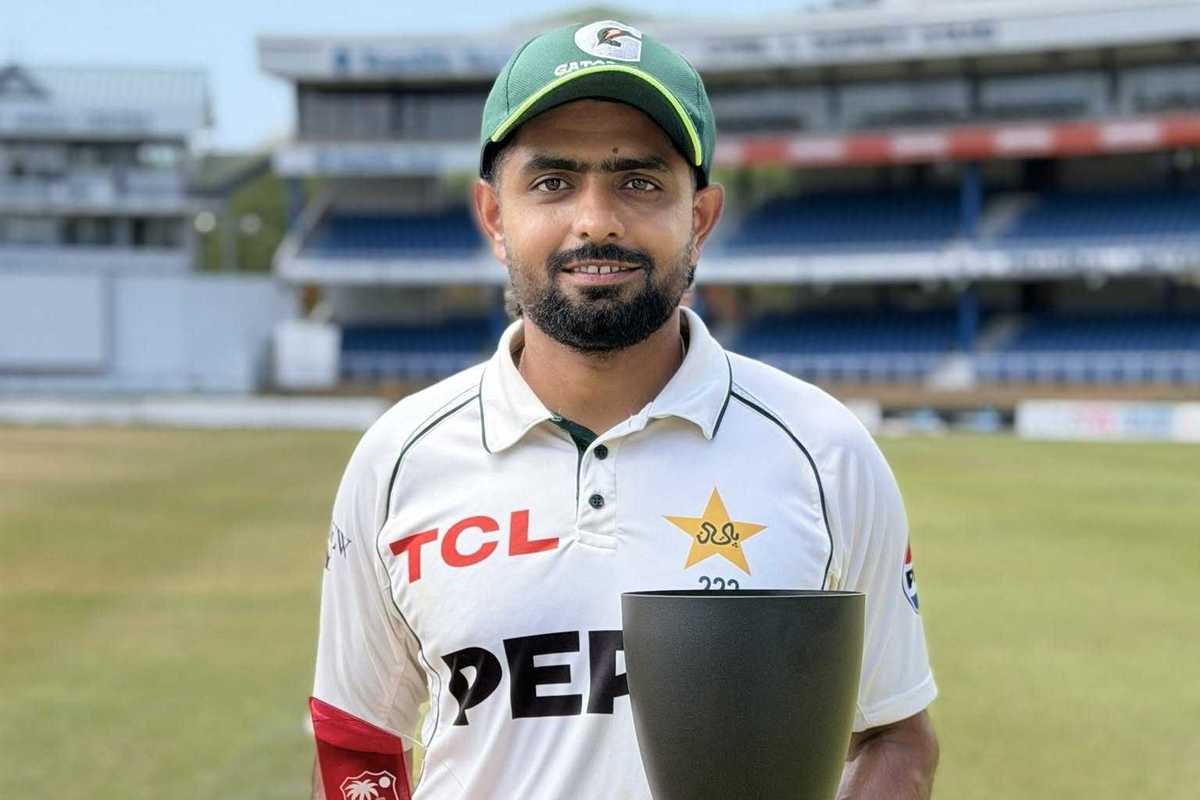
Pakistan Test captain Babar Azam poses with the trophy after a commanding eight-wicket victory over the West Indies in the second Test to square the series.
PCB
Pakistan snapped an eight-match winless streak away from home in Test cricket with a commanding eight-wicket victory over the West Indies to square the series. The emphatic triumph has reignited a familiar debate: has Babar Azam finally steered Pakistan's Test side back on the right path? While sterner tests await, the signs from Port of Spain were undoubtedly encouraging.
After suffering defeat in the opening Test, Pakistan needed more than just a response, they needed bold leadership. Babar delivered exactly that with a series of brave decisions that ultimately changed the course of the series.
Was dropping Mohammad Abbas the turning point?
Perhaps the most debated selection call was leaving out Mohammad Abbas despite his impressive eight-wicket haul in the first Test. On paper, it appeared to be a risky move.
However, Babar backed Sajid Khan instead, and the off-spinner repaid that faith with a match-winning eight-wicket performance. Rather than sticking with the safer option, Pakistan selected a bowler better suited to the conditions, and it proved to be the decisive tactical move of the match.
Did Pakistan outthink West Indies on the Queen's Park Oval pitch?
Babar's biggest victory may have come even before the first ball was bowled.
While West Indies relied on just one specialist spinner Jomel Warrican, Pakistan opted for two by pairing Sajid Khan with Ali Usman. The decision paid immediate dividends as Ali chipped in with six wickets, allowing Pakistan's spin attack to dominate the contest.
It was a reminder that reading conditions correctly can often be just as important as individual brilliance.
Did Pakistan's domestic performers justify their selection?
Pakistan also reintroduced Abdullah Shafique, who answered his critics with a magnificent unbeaten 160 that anchored the first innings.
Debutant Ubaid Shah justified his inclusion as well, dismissing both Amir Jangoo and West Indies captain Roston Chase at crucial moments.
These performances highlighted a noticeable shift in Pakistan's selection philosophy. Instead of relying solely on reputation, the team rewarded domestic performers in form, and that trust was repaid with match-winning contributions.
Can Pakistan overlook the failures of Rizwan and Salman?
Not everything went according to plan. Mohammad Rizwan (41 runs in 3 innings) and Salman Agha (20 runs in 3 innings) endured disappointing series with the bat.
However, their struggles should be viewed in context. Both were Pakistan's leading run-scorers during the previous Test series against Bangladesh, suggesting this dip in form is more likely temporary than a long-term concern.
Meanwhile, Babar ensured he led from the front himself, scoring 193 runs in four innings and providing the stability Pakistan required from its captain.
Is the England tour Babar's biggest captaincy test yet?
The series victory also gave Babar his ninth away Test win as captain, another impressive milestone.
Yet there remains an important caveat. None of those overseas victories have come against one of the established heavyweight Test nations.
That is why the upcoming away three-match Test series against England, starting from August 19 in Leeds, will be the true measuring stick. If Pakistan can compete, and more importantly win, under English conditions against stronger opposition, then the argument that Babar has truly revived Pakistan's Test cricket will carry far greater weight. Until then, the West Indies triumph should be seen as an encouraging step forward rather than the final destination.




Comments
See what people are discussing