

Bangladesh court sentences ex-ruling party leader to death over 2024 killings
The Mahbubul Alam Hanif death sentence was handed down in absentia over six Kushtia killings in 2024, while three Awami League leaders got life terms.

News Desk
The News Desk provides timely and factual coverage of national and international events, with an emphasis on accuracy and clarity.
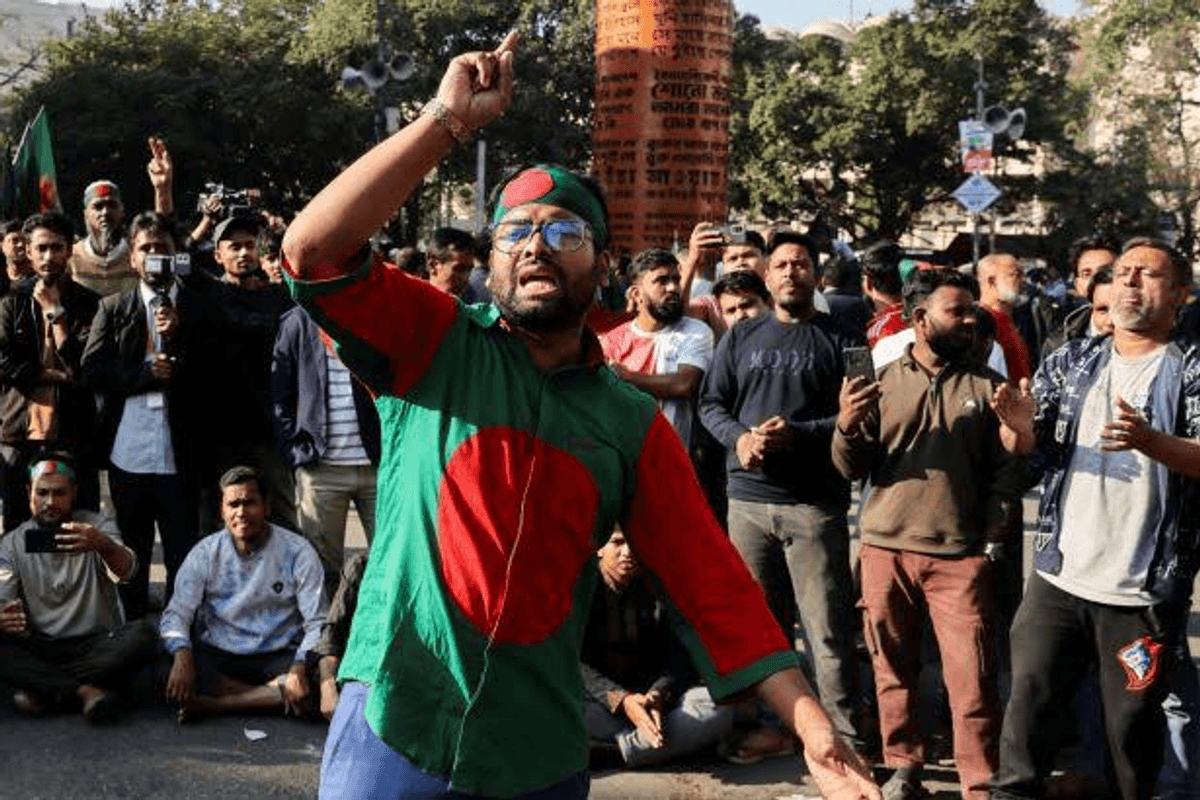
The tribunal convicted Hanif of crimes against humanity over the Aug. 5, 2024 killings in Kushtia.
Screengrab/Reuters/File
A Bangladesh tribunal handed Awami League leader Mahbubul Alam Hanif a death sentence in absentia on Thursday, Oct. 29, over the killing of six protesters in Kushtia during the 2024 uprising. Three other party leaders received life sentences, Bangladeshi media reported.
Why was Mahbubul Alam Hanif sentenced to death?
The tribunal convicted Hanif of crimes against humanity over the Aug. 5, 2024 killings in Kushtia. Prosecutors said he directed local party leaders to use maximum force and instructed activists, with police support, to open fire on unarmed protesters. Six people were shot dead.
Hanif, the party's joint general secretary, served as a minister under former Prime Minister Sheikh Hasina. He was convicted by the three-member International Crimes Tribunal-2, led by Chairman Nozrul Islam Chowdhury. The tribunal announced the verdict around noon Thursday, after the prosecution concluded its arguments on Oct. 5 and sought the maximum punishment for all four accused.
Who else was sentenced in the Kushtia case?
The three other leaders sentenced to life imprisonment were Sadruddin Khan, president of the Awami League's Kushtia district chapter and a former Zila Parishad chairman; district general secretary Azgar Ali; and Kushtia city general secretary Ataur Rahman Ata, The Star reported. All four men are absconding.
"The charges against the convicts were undoubtedly proved," chief prosecutor Md Aminul Islam told reporters. State-appointed defense lawyer Md Amir Hossain called the verdict "unacceptable."
The tribunal also ordered the confiscation of half of the immovable property owned by each convicted leader. Islam said the proceeds from the sale of the properties are to be distributed as compensation to the families of people killed or injured during the July 2024 movement, through the July Foundation or another statutory organization.
What were the charges against Hanif and the other leaders?
The tribunal framed three charges against Hanif and the other defendants on Nov. 2, 2025. The first concerned Hanif's alleged endorsement of provocative statements made by Awami League General Secretary Obaidul Quader at several events on July 15, 17 and 30, and Aug. 3, 2024.
At a discussion at the Jatiya Press Club on July 29, Hanif allegedly described protesters as Jamaat activists, criminals and communal elements, and incited violence against them. The prosecution said his statements encouraged and facilitated the use of lethal weapons against demonstrators, resulting in the deaths of more than 1,400 people and serious injuries to more than 25,000 others.
The second charge concerned a meeting at the Kushtia district Awami League office on July 27, 2024. Hanif allegedly directed Khan, Ali and Ata to use maximum force to suppress the anti-discrimination movement, and prosecutors accused all four leaders of inciting and facilitating attacks on protesters.
The prosecution said six demonstrators were shot dead and many others seriously injured in Kushtia on Aug. 5: Ashraful Islam, Suruj Ali Babu, Abdullah Al Mustakin, Osama, Bablu Farazi and Yusuf Sheikh. The third charge alleged that Hanif, Khan, Ali and Ata played a role in those killings. According to prosecutors, acting on directives involving then-Prime Minister Hasina, the accused instructed local Awami League leaders and activists, with police support, to open fire on unarmed protesters at several locations in Kushtia city.
How many people have been convicted over Bangladesh's 2024 uprising?
Thursday's verdict brings the total number of people convicted of crimes related to the 2024 uprising to 72. Of those, 23 have been sentenced to death, but only four are in custody.
According to the United Nations, as many as 1,400 people were killed between July and August 2024 as Hasina's government attempted to suppress the student-led uprising. Hasina's 15-year rule ended in August 2024 when she fled Bangladesh by helicopter to neighboring India, where she remains in hiding.
She was sentenced to death by hanging in absentia in November 2025 and has refused to recognize the court's authority. The government of Prime Minister Tarique Rahman, which won a landslide victory in February in Bangladesh's first elections since Hasina's ouster, has requested her extradition. Hasina, 78, has said she will return to Bangladesh of her own volition in December, despite the death sentence she faces.




Comments
See what people are discussing